Angelica
Angelica spp.
4 nurseries listed
Compare nurseries
4 nurseries · 12 matching options
4 locations on the map. Select a marker or a nursery to compare.
Preparing the map…
Your location isn’t saved. Confirm availability and visiting hours with the nursery.
About Angelica
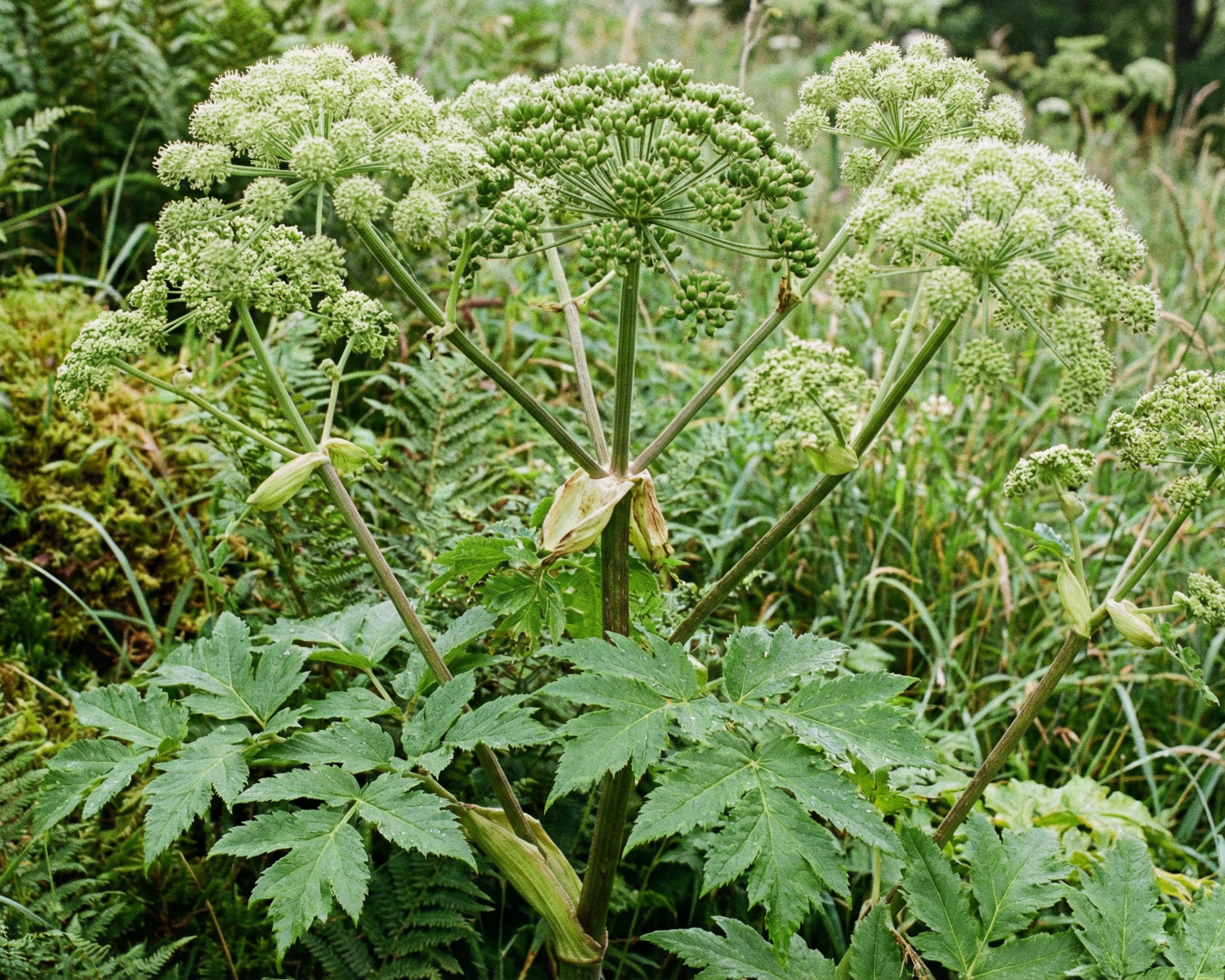
Angelica is a genus of about 90 species of tall, aromatic biennial and perennial herbs belonging to the carrot family (Apiaceae). Native to the temperate and subarctic regions of the Northern Hemisphere, these plants are found as far north as Iceland and Greenland. The name 'Angelica' is derived from the belief that an archangel revealed the plant's medicinal properties to humankind. While many species exist, the most well-known is garden angelica (Angelica archangelica), which is widely cultivated for its culinary and medicinal uses. Angelica plants are characterized by their impressive height, often growing from 1 to 3 meters tall. They have large, bipinnate leaves and produce large, umbrella-shaped clusters of small white or greenish-white flowers called umbels. The roots are typically thick, fleshy taproots. A notable characteristic of many Angelica species is the presence of furocoumarins, chemical compounds that can cause the skin to become sensitive to sunlight, a condition known as phytophotodermatitis. Due to their resemblance to highly poisonous plants like poison hemlock and water hemlock, it is crucial to be certain of the plant's identity before consumption. The genus has a long history of use in various cultures. In culinary applications, the young stems and midribs of garden angelica are candied and used as decorations for cakes and desserts. The roots and seeds are used to flavor alcoholic beverages such as gin and Chartreuse. Seacoast angelica (A. lucida) has been consumed as a wild alternative to celery. In traditional medicine, particularly in Asia with species like dong quai (A. sinensis), angelica root is used to treat a variety of ailments, including respiratory issues and menstrual disorders. The plant's 'angelic' healing powers were once believed to offer protection against poisons and evil spirits. Angelica thrives in cool climates and prefers moist, well-drained soil and partial shade, especially in warmer regions. They are often found growing near running water in the wild. As biennials, they typically produce foliage in their first year and flower in the second, after which the plant dies back. Propagation can be achieved through seeds or by taking root cuttings during the plant's second year. Their stately presence and attractive flowers also make them a striking addition to ornamental and herb gardens.
Plant facts
- Sun
- Partial Shade, Partial Sun
- Water
- Regular, High
- USDA zones
- 4-9
- Lifecycle
- Biennial