Anise (aniseed)
Pimpinella anisum
1 nursery listed
Compare nurseries
Nurseries with recorded shipping, across all locations. Confirm delivery to your address and availability on the nursery website.
No nursery options match these filters
Try another size or variety, or broaden your location. Options with unconfirmed variety names are included when All varieties is selected.
About Anise (aniseed)
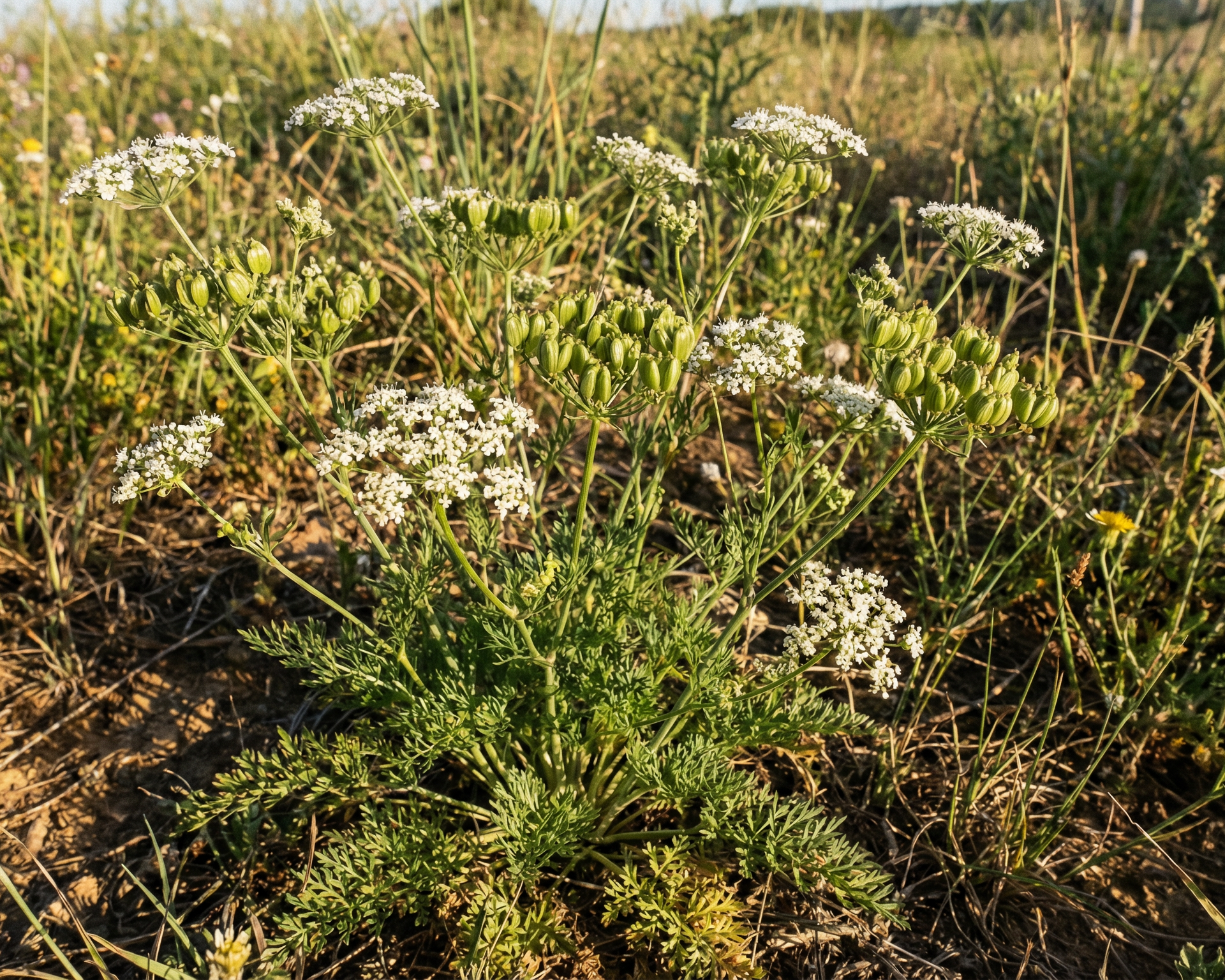
Anise (Pimpinella anisum), also known as aniseed, is a flowering plant belonging to the parsley family (Apiaceae). Native to the eastern Mediterranean region and Southwest Asia, this herb is celebrated for its aromatic seeds that impart a sweet, licorice-like flavor. Anise has a long history of cultivation, dating back approximately 4,000 years in Egypt, and has been widely used in various cultures for culinary and medicinal purposes. Although often confused with the unrelated star anise (Illicium verum), which possesses a similar flavor profile, Pimpinella anisum has its own distinct characteristics and applications. Anise is an herbaceous annual plant that typically grows to a height of 2 to 3 feet. It features two types of leaves: the basal leaves are simple and shallowly lobed, while the leaves higher up the stem are feathery and pinnately divided into multiple small leaflets. The plant produces small, white to yellowish flowers arranged in dense, compound umbels. The fruit, commonly referred to as aniseed, is a dry, oblong schizocarp that is harvested for its essential oil and culinary use. The seeds contain anethole, the primary chemical compound responsible for their characteristic aroma and taste. Aniseed is a versatile spice used in a wide array of culinary preparations around the world. It is a popular flavoring for pastries, candies, and baked goods, such as German Anisbrot and Italian pizzelle. The seeds are also used to season savory dishes, including meats and vegetables, and are a key ingredient in various liqueurs and spirits like absinthe, ouzo, and sambuca. Beyond its culinary significance, anise has a history of use in traditional medicine, primarily as a carminative to aid digestion and relieve flatulence. The leaves of the plant can also be used as a garnish or added to salads and soups for a mild licorice flavor.
Plant facts
- Sun
- Full Sun
- Water
- Regular, Drought Tolerant
- USDA zones
- 4-9
- Lifecycle
- Annual