 On site
Food Trek Farms
Fairburn, GA
1option
Listed as “Asparagus, 2+ year roots”
Variety not confirmedAsk about sizesCall for pricing
Catalog checked Nov 15, 2026. Confirm availability before visiting.
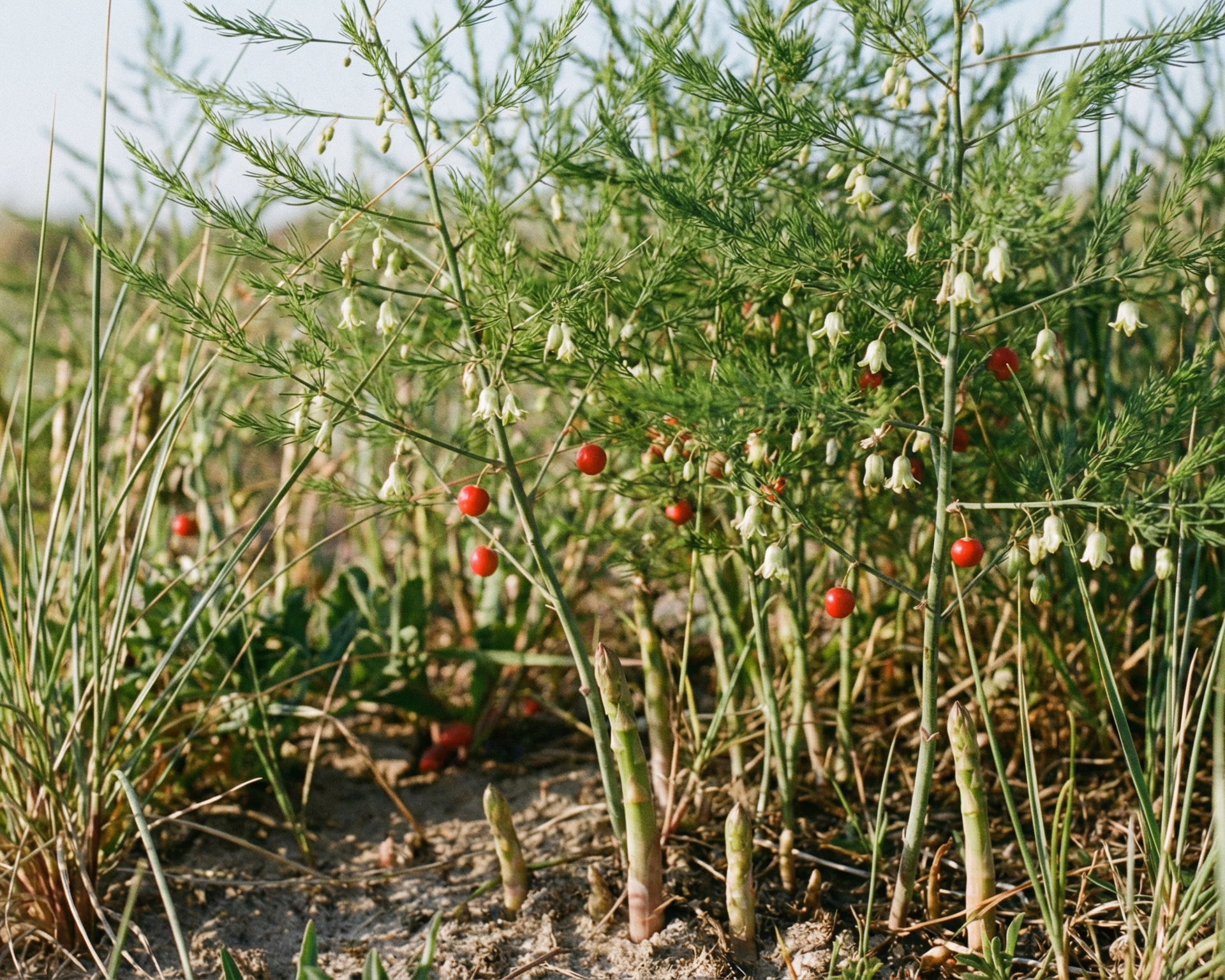
Asparagus officinalis
The genus Asparagus belongs to the Asparagaceae family and includes up to 300 species of flowering plants. These plants are native to a wide range of environments, from the rainforests of Africa to the semi-desert regions of Eurasia. Read more
3 nurseries · 4 matching options
On siteFairburn, GA
1option
Listed as “Asparagus, 2+ year roots”
Call for pricing
Catalog checked Nov 15, 2026. Confirm availability before visiting.
 On site
San Francisco, CA
2options
Listed as “Asparagus officinalis 'Mary Washington'”
Call for pricing
Catalog checked Nov 15, 2026. Confirm availability before visiting.
 On site
La Plata, MO
1option
Listed as “Garden Asparagus, Asparagus officinalis Zones 3-9”
$10.00
Catalog checked Nov 15, 2026. Confirm availability before visiting.
Showing 1 to 3 of 3 nurseries
Explore the complete plant collection, including varieties with no nursery listings yet.
Not yet listed: Atlas, Guelph Eclipse, Guelph Equinox, Jersey Giant, Jersey Knight, Jersey Supreme, Mary Washington, Millennium, Precoce d'Argenteuil, Purple Passion, UC 157, UC-157 F2, Violetto d'Albenga, Walker Deluxe, White Hawk
0 nurseries listed
The genus Asparagus belongs to the Asparagaceae family and includes up to 300 species of flowering plants. These plants are native to a wide range of environments, from the rainforests of Africa to the semi-desert regions of Eurasia. While some species are cultivated as ornamental plants, the most well-known member of this genus is Asparagus officinalis, the common garden asparagus, which has been prized as a vegetable since ancient Roman times.
Asparagus species can be either erect or climbing, and many are woody. They are characterized by their rhizomatous or tuberous roots, which give rise to fern-like branches. The true leaves are reduced to small scales, and many species have cladodes, which are flattened, leaflike stems that are photosynthetic. Most species are dioecious, meaning they have separate male and female plants. The small, greenish-yellow flowers that bloom in the spring are followed by red berries in the fall.
The primary use of the Asparagus genus is culinary. The young shoots of Asparagus officinalis are harvested in the spring and eaten as a vegetable. They can be served cooked or in salads and are a good source of vitamins and minerals. In addition to its culinary uses, some species of Asparagus have been used in traditional medicine. For example, the roots of Asparagus cochinchinensis are used in traditional Chinese and Korean medicine. Several African species are also grown as ornamental plants for their attractive foliage.
Garden asparagus (Asparagus officinalis) is a long-lived perennial that requires a dormant period to be productive. It grows best in full sun and in deep, loose, well-drained soils with a neutral pH. The plant is salt-tolerant, making it suitable for coastal gardens. Asparagus is typically grown from crowns, which are planted in trenches in the spring. The spears should not be harvested for the first two years to allow the plant to establish a strong root system. Once established, a plantation can be productive for 10 to 15 years or more.