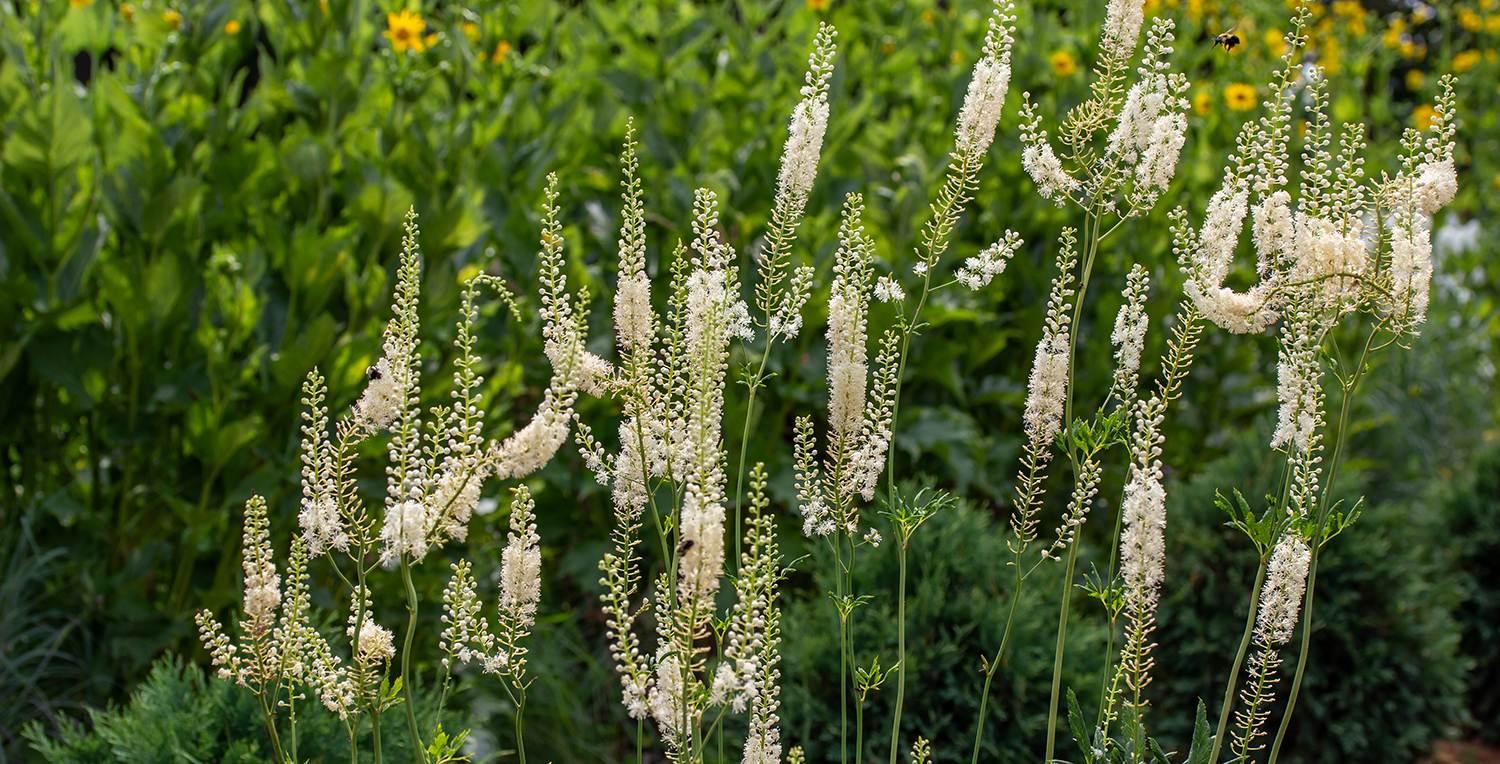
Black cohosh
Actaea racemosa
3 nurseries listed
Compare nurseries
3 nurseries · 3 matching options
3 locations on the map. Select a marker or a nursery to compare.
Preparing the map…
Your location isn’t saved. Confirm availability and visiting hours with the nursery.
About Black cohosh
Black Cohosh, scientifically known as Actaea racemosa and formerly Cimicifuga racemosa, is a tall, herbaceous perennial native to the woodlands of eastern North America. As a member of the buttercup family (Ranunculaceae), this plant is recognized by several common names, including black bugbane, black snakeroot, and fairy candle, which allude to its distinct characteristics and historical uses. The name "bugbane" stems from its historical use as an insect repellent, while "fairy candle" poetically describes its tall, elegant spires of white flowers that illuminate shady garden spots. This plant is prized for its dramatic foliage and late-season blooms. It typically grows in clumps, reaching heights of 4 to 6 feet, and sometimes even taller. The leaves are large, compound, and dark green, providing a bold texture in the garden. In late summer, it sends up tall, slender stems topped with long, feathery racemes of small, creamy white, fragrant flowers. Black Cohosh thrives in partial to full shade and prefers consistently moist, humus-rich soils, making it an excellent choice for woodland gardens and other shaded landscapes. The most significant aspect of Black Cohosh is its long history of medicinal use, particularly its role in women's health. The roots and rhizomes of the plant are harvested for their active compounds, which are believed to have effects on the endocrine system. It has been traditionally used by Native Americans for a variety of ailments and is widely used today in dietary supplements to alleviate symptoms of menopause, such as hot flashes, night sweats, and mood disturbances. While its efficacy is still a subject of scientific research, Black Cohosh remains a popular herbal remedy and a significant plant in both traditional and modern wellness practices.
Plant facts
- Sun
- Partial Shade, Full Shade
- Water
- Regular
- USDA zones
- 3-8
- Lifecycle
- Perennial