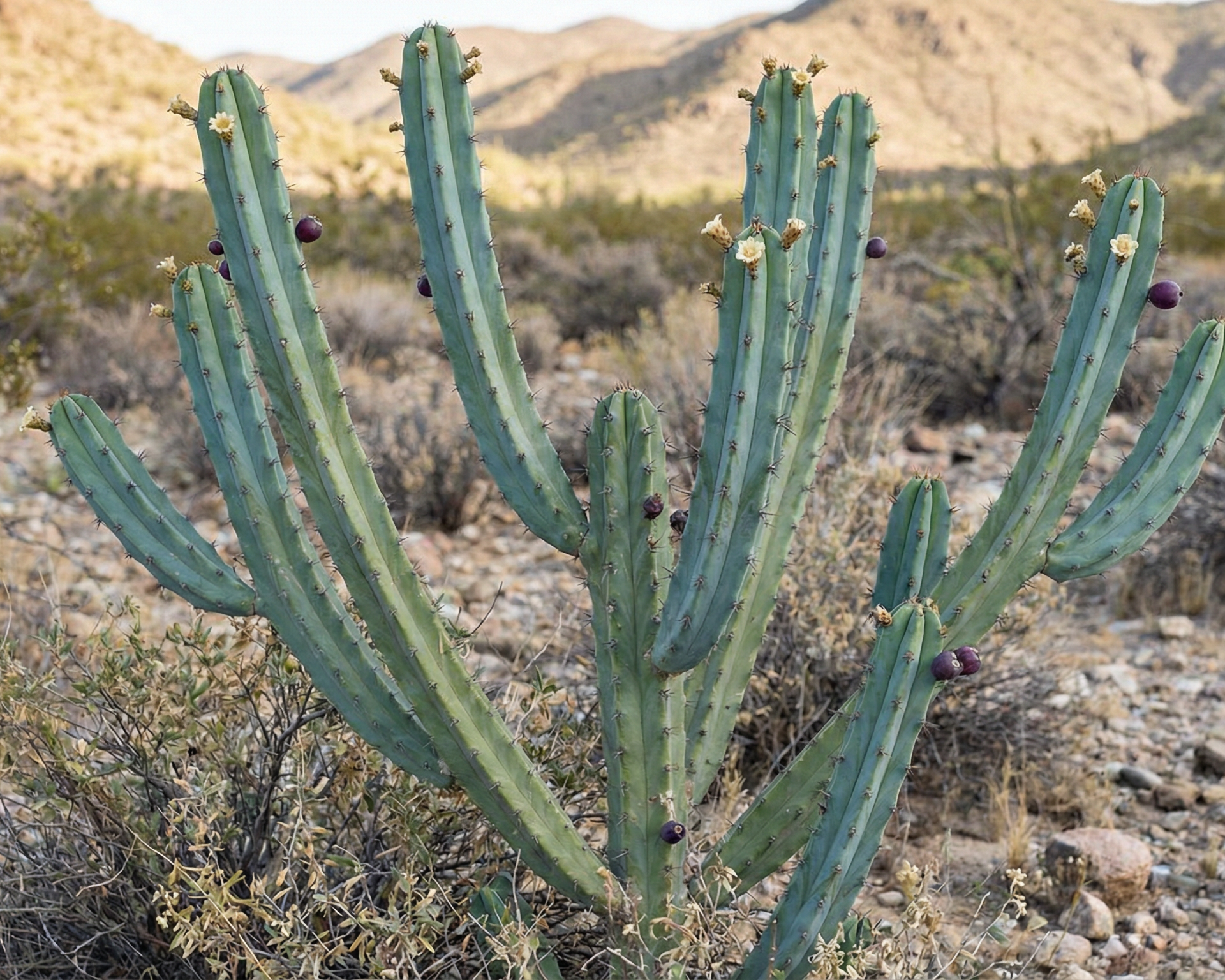
Blue Myrtle Cactus
Myrtillocactus geometrizans
4 nurseries listed
Compare nurseries
4 nurseries · 9 matching options
4 locations on the map. Select a marker or a nursery to compare.
Preparing the map…
Your location isn’t saved. Confirm availability and visiting hours with the nursery.
About Blue Myrtle Cactus
Myrtillocactus, commonly known as the Blue Myrtle Cactus or Whortleberry Cactus, is a genus of tree-like cacti native to the arid regions of central and northern Mexico. The most well-known species is Myrtillocactus geometrizans, which is widely cultivated for its striking blue-green, candelabra-like stems. These cacti are a familiar sight in their native habitat, often forming dense stands and creating a unique desert landscape. The genus name Myrtillocactus is derived from the Greek word "myrtillus," meaning "small myrtle," referring to the small, berry-like fruits. The key characteristic of the Blue Myrtle Cactus is its distinctive coloration. The stems are a powdery blue-green, covered in a waxy coating that helps to protect the plant from the intense desert sun. The cacti typically have 5-8 ribs and are armed with short, black spines. In the spring and summer, they produce small, creamy-white flowers that are followed by small, dark purple, edible fruits. These fruits, known locally as "garambullos," are sweet and are often sold in local markets. Beyond its ornamental value, the Blue Myrtle Cactus has several uses. The garambullo fruits are a food source in Mexico, eaten fresh or used to make jams and other preserves. The cactus itself is a popular ornamental plant, prized for its unique color and architectural form. It is frequently used in xeriscaping and as a houseplant in temperate climates. While there are some traditional medicinal uses reported, these are not well-documented in scientific literature. Growing Blue Myrtle Cactus is relatively easy, provided the right conditions are met. They require plenty of sunlight, at least five hours of direct sun per day, to thrive and maintain their vibrant color. A well-draining soil mix is essential to prevent root rot, and they should be watered thoroughly only when the soil has completely dried out. These cacti are drought-tolerant and prefer hot, dry conditions. They are not frost-tolerant and should be protected from freezing temperatures.
Plant facts
- Sun
- Full Sun
- Water
- Drought Tolerant, Low
- USDA zones
- 9-11
- Lifecycle
- Perennial