Borage
Borago officinalis
2 nurseries listed
Compare nurseries
2 nurseries · 2 matching options
2 locations on the map. Select a marker or a nursery to compare.
Preparing the map…
Your location isn’t saved. Confirm availability and visiting hours with the nursery.
About Borage
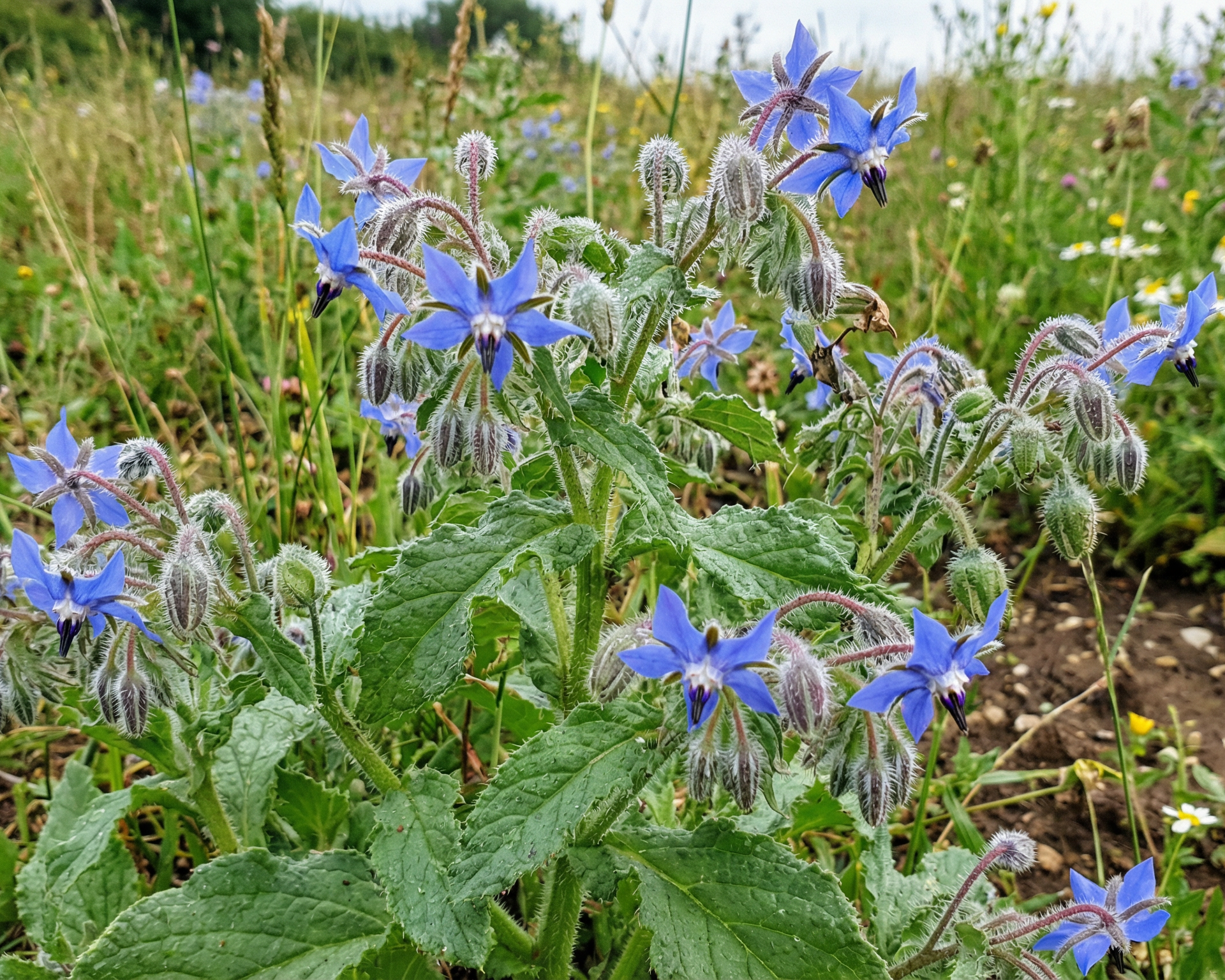
Borage (genus Borago) is a small genus of herbaceous plants native to the Mediterranean region. It belongs to the Boraginaceae family, which also includes forget-me-nots and comfrey. The most well-known species is Borago officinalis, which is widely cultivated for its culinary and medicinal uses and has naturalized in many other regions. The name ""Borago"" is thought to derive from the Latin word ""burra,"" meaning ""hairy garment,"" a reference to the bristly hairs covering the leaves and stems of the plant. Borage is an annual herb characterized by its bristly or hairy texture. It typically grows to a height of 60-100 cm. The leaves are alternate, simple, and can be 5–15 cm long. The plant produces vibrant, star-shaped flowers, which are most often a striking blue, though pink and white variations exist. These flowers have five narrow, triangular-pointed petals and are a favorite of bees. Borage has a long history of culinary and medicinal use. The leaves have a refreshing cucumber-like taste and are often used in salads, soups, and drinks. The flowers are also edible and are used as a garnish for salads, desserts, and cocktails. Medicinally, borage is best known for its seed oil, which is a rich source of gamma-linolenic acid (GLA), an omega-6 fatty acid. Borage oil is often used as a supplement for its anti-inflammatory properties. In the garden, borage is a valuable companion plant, attracting pollinators and accumulating trace minerals in the soil.
Plant facts
- Sun
- Full Sun, Partial Sun
- Water
- Regular, Drought Tolerant
- USDA zones
- 3-10
- Lifecycle
- Annual
Variety guides
Explore the complete plant collection, including varieties with no nursery listings yet.