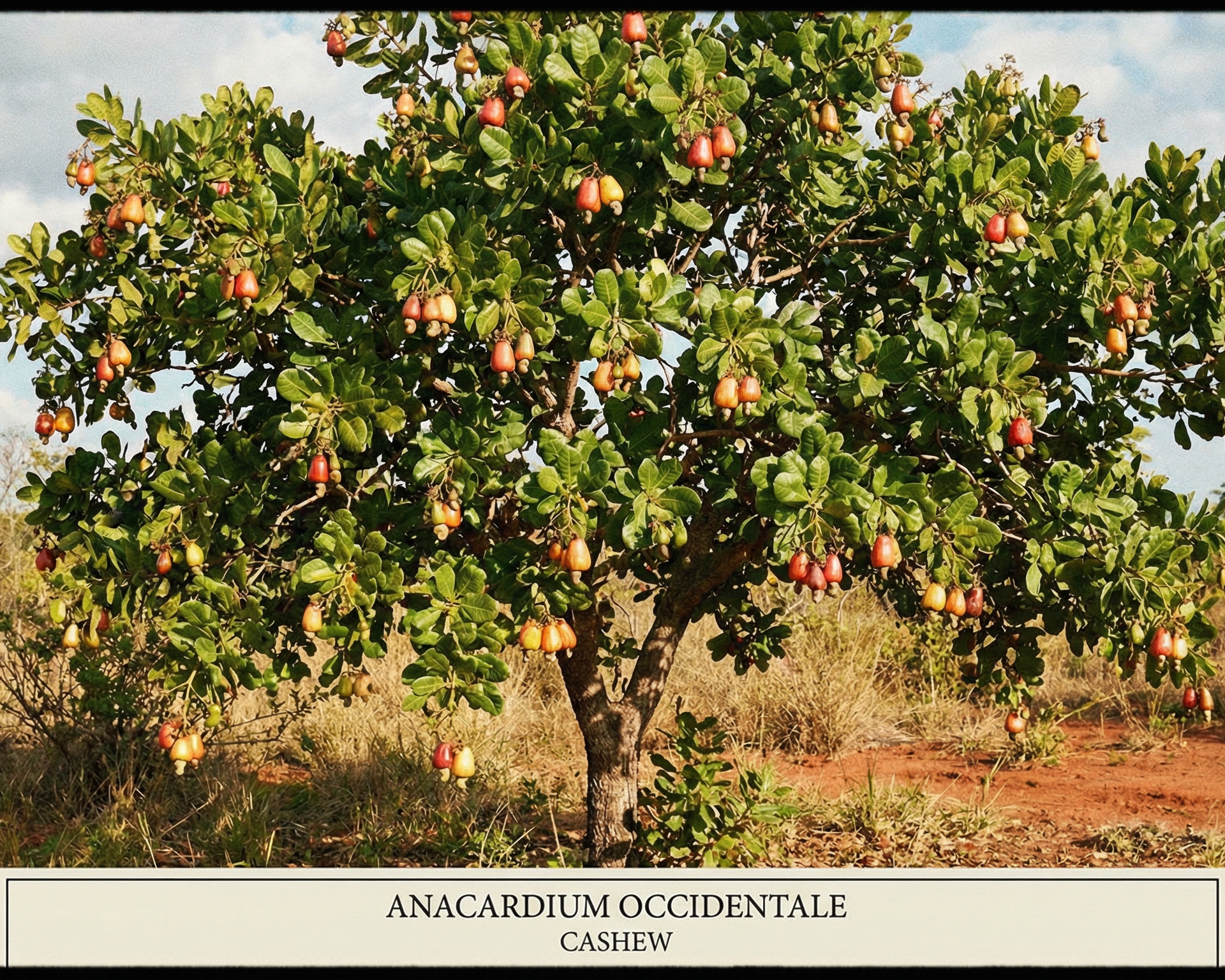
Cashew
Anacardium occidentale
4 nurseries listed
Compare nurseries
Nurseries with recorded shipping, across all locations. Confirm delivery to your address and availability on the nursery website.
No nursery options match these filters
Try another size or variety, or broaden your location. Options with unconfirmed variety names are included when All varieties is selected.
About Cashew
Anacardium, commonly known as the cashew genus, is a group of flowering plants belonging to the family Anacardiaceae. Native to the tropical regions of the Americas, this genus comprises about 11 to 20 species, with the most prominent and economically significant being Anacardium occidentale, the tree that produces the world-renowned cashew nut and cashew apple. The name Anacardium is derived from Greek, referring to the nut's distinctive heart-like shape, which is located outside of the fruit. The key characteristics of Anacardium species are their resinous bark and the production of a caustic, oily substance in the shells of their nuts, which can cause skin irritation. The trees are typically evergreen, with simple, leathery leaves. The most famous feature is the unique fruit structure: a fleshy, pear-shaped stalk called the cashew apple, which is a "false fruit," and the true fruit, a kidney-shaped drupe (the cashew nut) that grows at the end of the apple. Beyond its culinary importance, the cashew plant has various uses. The nut is a globally popular food, consumed roasted, and is a key ingredient in many cuisines. The cashew apple is also edible and is often juiced or made into jams and alcoholic beverages. The caustic oil from the nutshell, known as cashew nutshell liquid (CNSL), has industrial applications, including in the production of resins, friction linings for brakes, and insecticides. The wood of some species is also used locally for construction and furniture.
Plant facts
- Sun
- Full Sun
- Water
- Regular, Drought Tolerant
- USDA zones
- 10-12
- Lifecycle
- Perennial