Christmas Palm
5 nurseries listed
Compare nurseries
Nurseries with recorded shipping, across all locations. Confirm delivery to your address and availability on the nursery website.
No nursery options match these filters
Try another size or variety, or broaden your location. Options with unconfirmed variety names are included when All varieties is selected.
About Christmas Palm
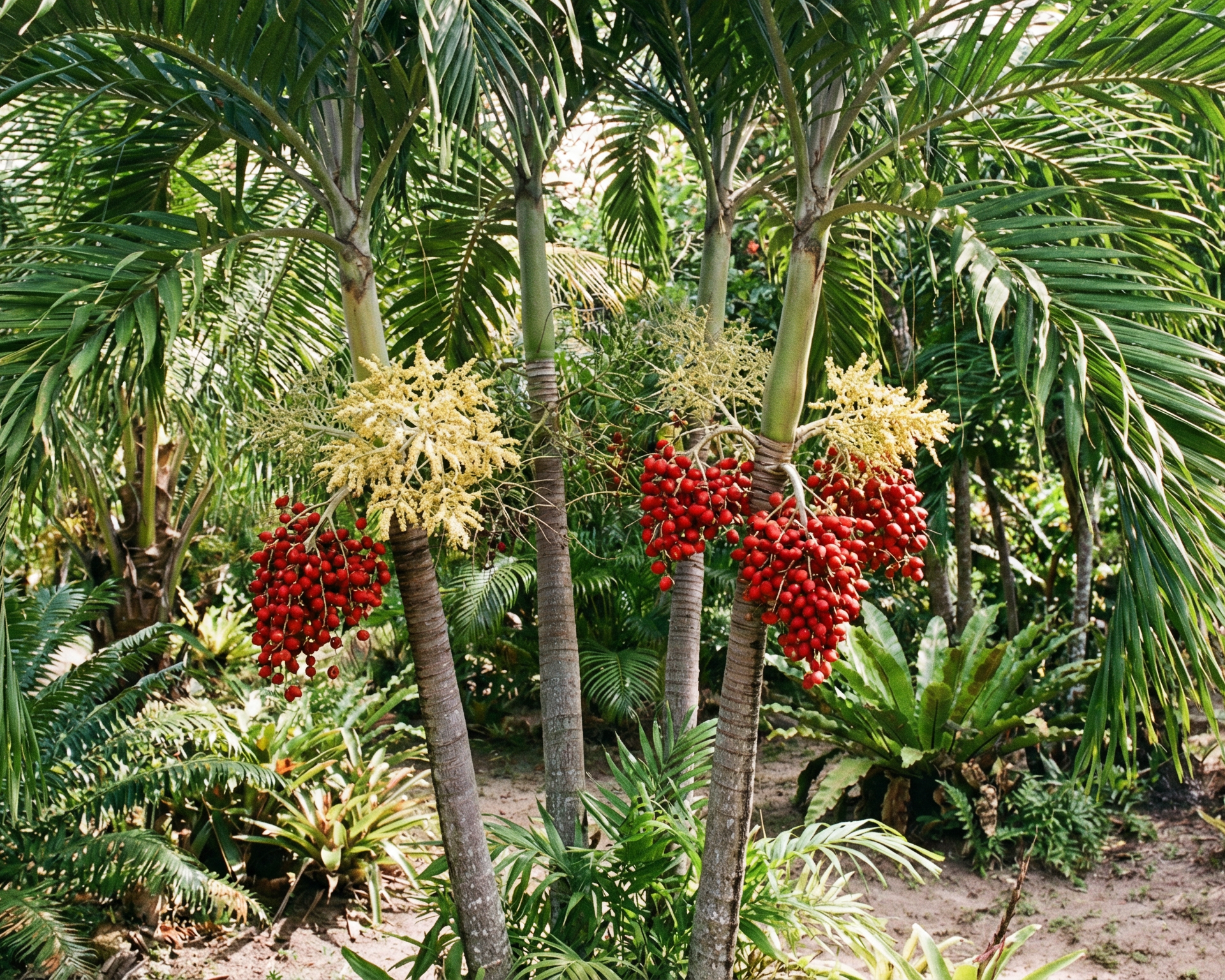
The Christmas Palm (Adonidia merrillii), also known as the Manila Palm, is a popular and attractive palm tree native to the Philippines and parts of Malaysia. It is a member of the Arecaceae family and is widely cultivated in tropical and subtropical regions around the world for its ornamental value. Its common name, "Christmas Palm," is derived from the clusters of bright red fruits that ripen in the winter, resembling Christmas ornaments. This palm is favored for its relatively small size and slender, elegant appearance, making it a versatile choice for a variety of landscape applications. The Christmas Palm is a single-trunked palm that typically reaches a height of 15 to 25 feet. It has a smooth, gray trunk that is topped with a crown of 10-12 arching, pinnate (feather-like) leaves. The leaves are a vibrant green and can grow up to 5 feet long. One of the desirable characteristics of this palm is that it is self-pruning, meaning that old, dead fronds will naturally fall off, reducing the need for maintenance. In the summer, the palm produces inconspicuous cream-colored flowers, which are followed by green, olive-sized fruits that mature to a brilliant red in the late fall and winter. Due to its manageable size and attractive appearance, the Christmas Palm is a popular choice for residential and commercial landscaping. It is often planted in small groupings to create the illusion of a multi-trunked palm, and it is also well-suited for container planting on patios and decks. In cooler climates, it can be grown as a houseplant if provided with enough light. While primarily an ornamental plant, the fruit is sometimes used as a substitute for the betel nut in some cultures. Christmas Palms thrive in full sun but can tolerate partial shade. They prefer moist, well-drained soil and are not particularly drought-tolerant. They are not cold-hardy and are best suited for USDA zones 10-11. A significant concern for this palm is its susceptibility to lethal yellowing, a fatal disease that affects many palm species. It can also be prone to nutrient deficiencies, particularly boron, so regular fertilization with a palm-specific fertilizer is recommended, especially when grown in nutrient-poor soils.