Cornell Farm
Portland, OR
1 named variety · 1 option
Blue Boy
Ask about sizesCall for pricing
Catalog checked Oct 15, 2026. Confirm availability before visiting.
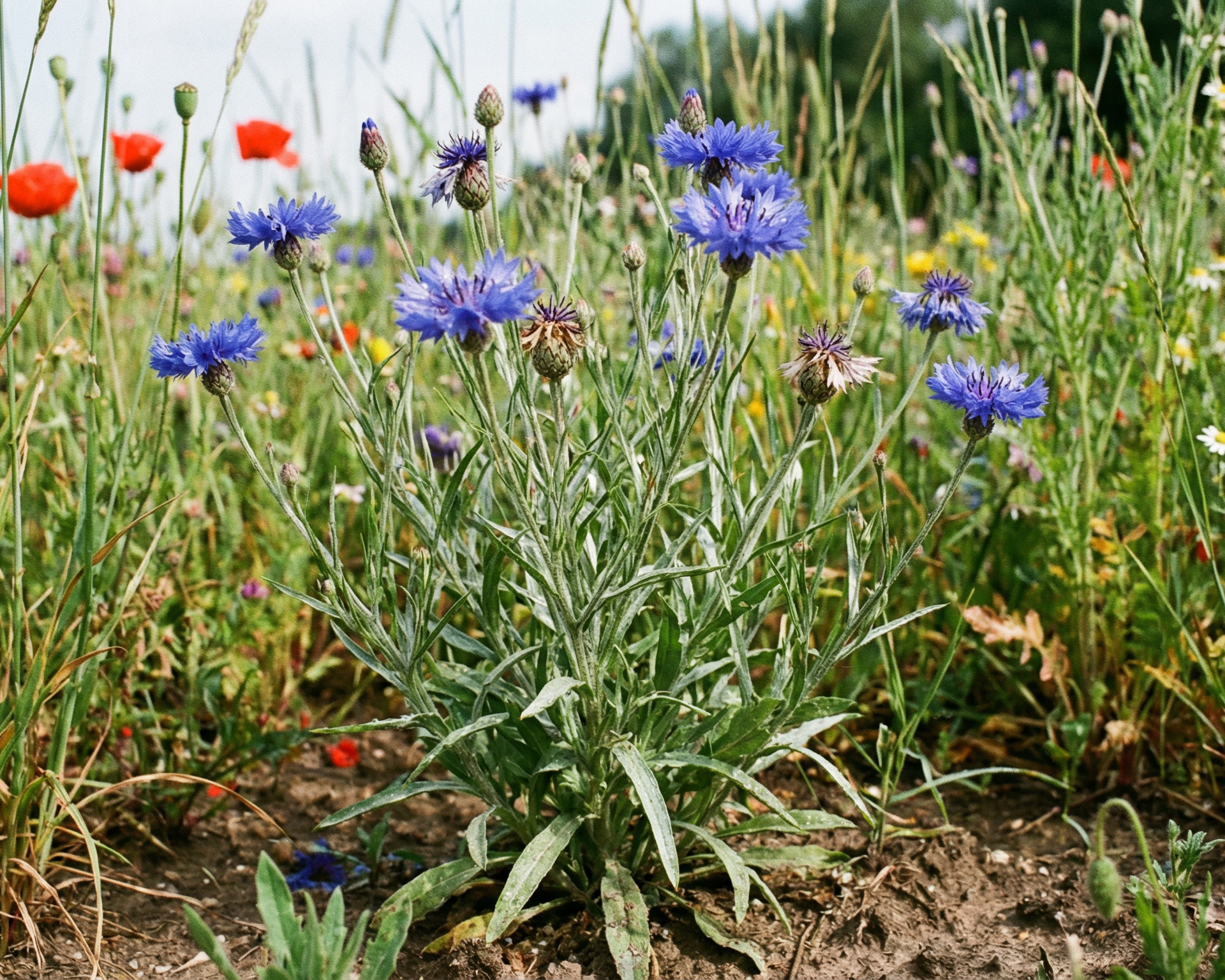
Centaurea cyanus
1 nursery nationwide · 1 named varieties
Choose a city or ZIP to find nearby growers. Showing nationwide listings until you choose an area.
1 nursery · 1 matching option
Portland, OR
1 named variety · 1 option
Blue Boy
Call for pricing
Catalog checked Oct 15, 2026. Confirm availability before visiting.
Showing 1–1 of 1 nurseries
Centaurea, a genus of over 700 species of herbaceous, thistle-like flowering plants in the family Asteraceae, is commonly known as cornflower, knapweed, or starthistle. The name “Cornflower” is most often associated with Centaurea cyanus, a popular garden annual. The genus is native to the Old World, with a high concentration of species in the Middle East and surrounding regions. The name Centaurea is derived from the Greek myth of Chiron, the centaur, who was said to have used a plant from this genus for its medicinal properties. Cornflowers are characterized by their robust and often weedy growth habit. Their leaves are typically deeply lobed, especially on the lower parts of the plant, and become more entire towards the top. The flowers, which are actually composite flower heads called pseudanthia, come in a wide range of colors, including vibrant blues, reds, and yellows. These flower heads are composed of central disk florets and outer ray florets, which are often sterile and differ in morphology. The entire flower head is supported by a cup-like structure of scaly bracts, which gives some species the name “basketflowers.” Many species have a long, strong taproot, which allows them to thrive in arid conditions. Several species of Centaurea are cultivated as ornamental plants in gardens, with the annual cornflower (Centaurea cyanus) and the perennial cornflower (Centaurea montana) being among the most popular. Beyond their ornamental value, many Centaurea species are important sources of nectar for pollinators, including bees and butterflies. Some species are even planted in “beetle banks” near agricultural fields to attract beneficial insects that can help control pests. However, some species, such as diffuse knapweed (Centaurea diffusa) and yellow starthistle (Centaurea solstitialis), have become invasive weeds in North America, causing significant problems in agriculture and natural ecosystems. Cornflowers are generally easy to grow and are adaptable to a variety of conditions. They thrive in full sun and well-drained soil, and many species are tolerant of drought and poor soil. To encourage a longer blooming period and prevent self-seeding, it is recommended to deadhead the spent flowers. Perennial varieties may need to be divided every two to three years to maintain their vigor. While generally hardy, they can be susceptible to certain pests and diseases, though significant problems are uncommon.
Explore the complete plant collection, including varieties with no nursery listings yet.