Everglades Farm
Homestead, FL
6 options
From $29.95
Catalog checked Oct 1, 2026. Confirm availability before visiting.
Selenicereus undatus
2 nurseries listed · 1 named varieties
2 nurseries · 7 matching options
Homestead, FL
6 options
From $29.95
Catalog checked Oct 1, 2026. Confirm availability before visiting.
From $49.99
Catalog checked Oct 1, 2026. Confirm availability before visiting.
Showing 1–2 of 2 nurseries
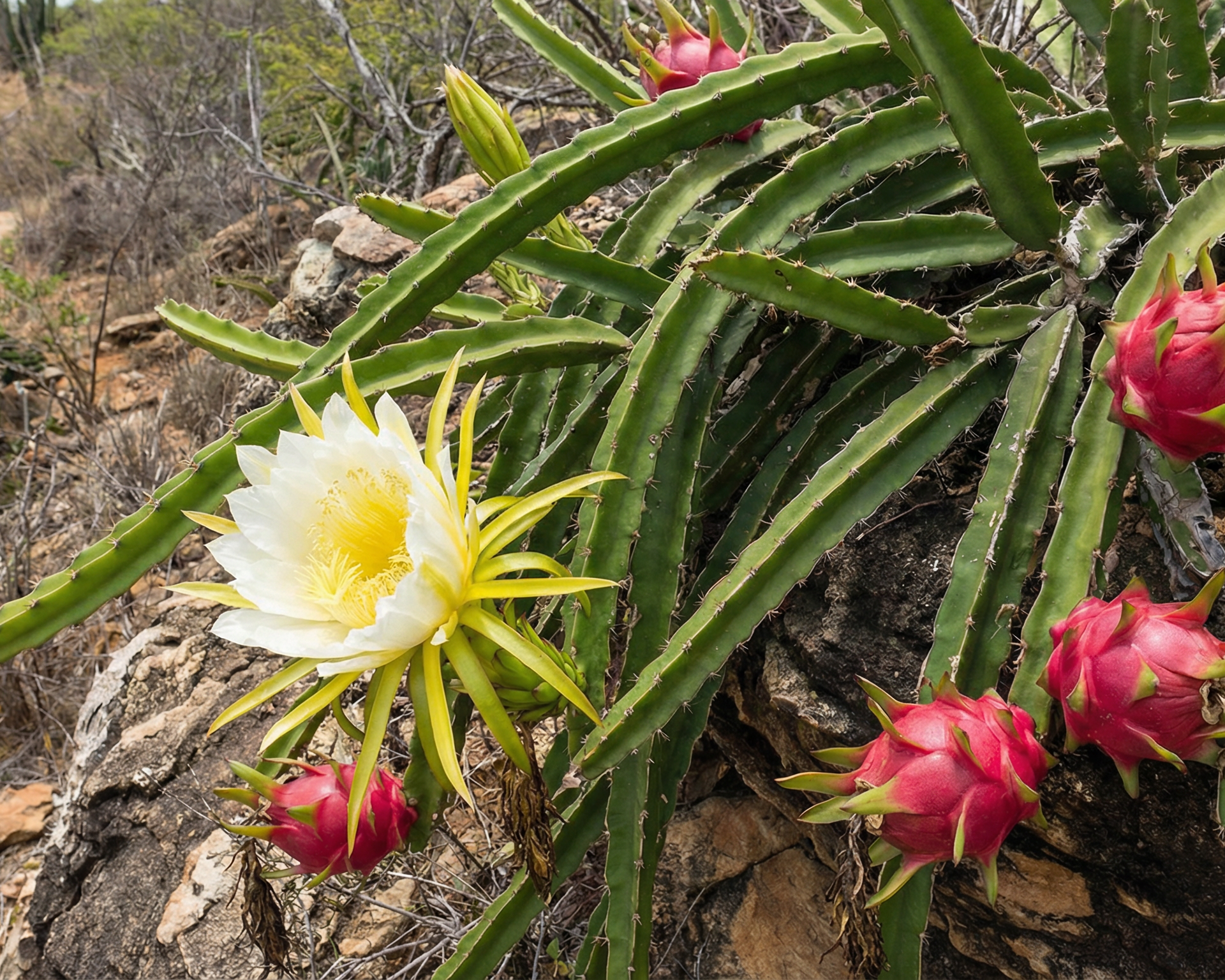
Dragon Fruit, known botanically as Selenicereus undatus, is a spectacular tropical fruit and a member of the Cactaceae family. Native to a region stretching from Mexico to Honduras, this plant is the most widely cultivated species within the Selenicereus genus. It is also commonly referred to as Pitaya, Pitahaya, or Strawberry-Pear. The name Selenicereus is derived from the Greek moon goddess 'Selene', a nod to the genus's characteristic night-blooming flowers. The common name, Dragon Fruit, is inspired by the appearance of its fruit, which is enveloped in prominent, scale-like bracts, resembling the hide of a mythical dragon. As a climbing, epiphytic cactus, Dragon Fruit features sprawling, fleshy, three-sided green stems that use aerial roots to cling to surfaces like trees or rocks for support. Its most dramatic feature is its magnificent, nocturnal flowers. These large, white, and fragrant blossoms can measure up to 12 inches in diameter and bloom for only a single night, from dusk until dawn. Following the bloom, the plant produces its iconic fruit. The fruit is an ovoid berry, typically with bright pink or red skin, though some varieties are yellow. The inner flesh, which can be white or red, is dotted with tiny, edible black seeds and has a texture often compared to that of a kiwi. The primary significance of Dragon Fruit lies in its use as a food source. It is cultivated commercially in numerous tropical and subtropical regions around the world for its sweet, mildly acidic, and refreshing fruit, which is rich in antioxidants, fiber, and vitamin C. The fruit is typically eaten fresh, and its vibrant juice is used to color beverages and other foods. Beyond the fruit, the large, beautiful flowers are also edible and are sometimes used to make tea. Its vining habit and stunning, short-lived flowers also make it a popular ornamental plant for tropical gardens and greenhouses. Dragon Fruit thrives in warm, humid climates with plenty of sunlight. It requires well-drained soil, such as a sandy loam or a cactus potting mix, to prevent root rot. During its growing season in the spring and summer, it needs consistent moisture but should be allowed to dry out slightly between waterings. Watering is reduced during the cooler winter months. Due to its climbing nature, providing a sturdy trellis, arbor, or other support structure is essential for healthy growth and fruit production. While it is a tropical plant, it can be grown in containers in cooler climates and brought indoors during the winter.
Explore the complete plant collection, including varieties with no nursery listings yet.