Forsythia
Forsythia spp.
2 nurseries listed
Compare nurseries
2 nurseries · 2 matching options
2 locations on the map. Select a marker or a nursery to compare.
Preparing the map…
Your location isn’t saved. Confirm availability and visiting hours with the nursery.
About Forsythia
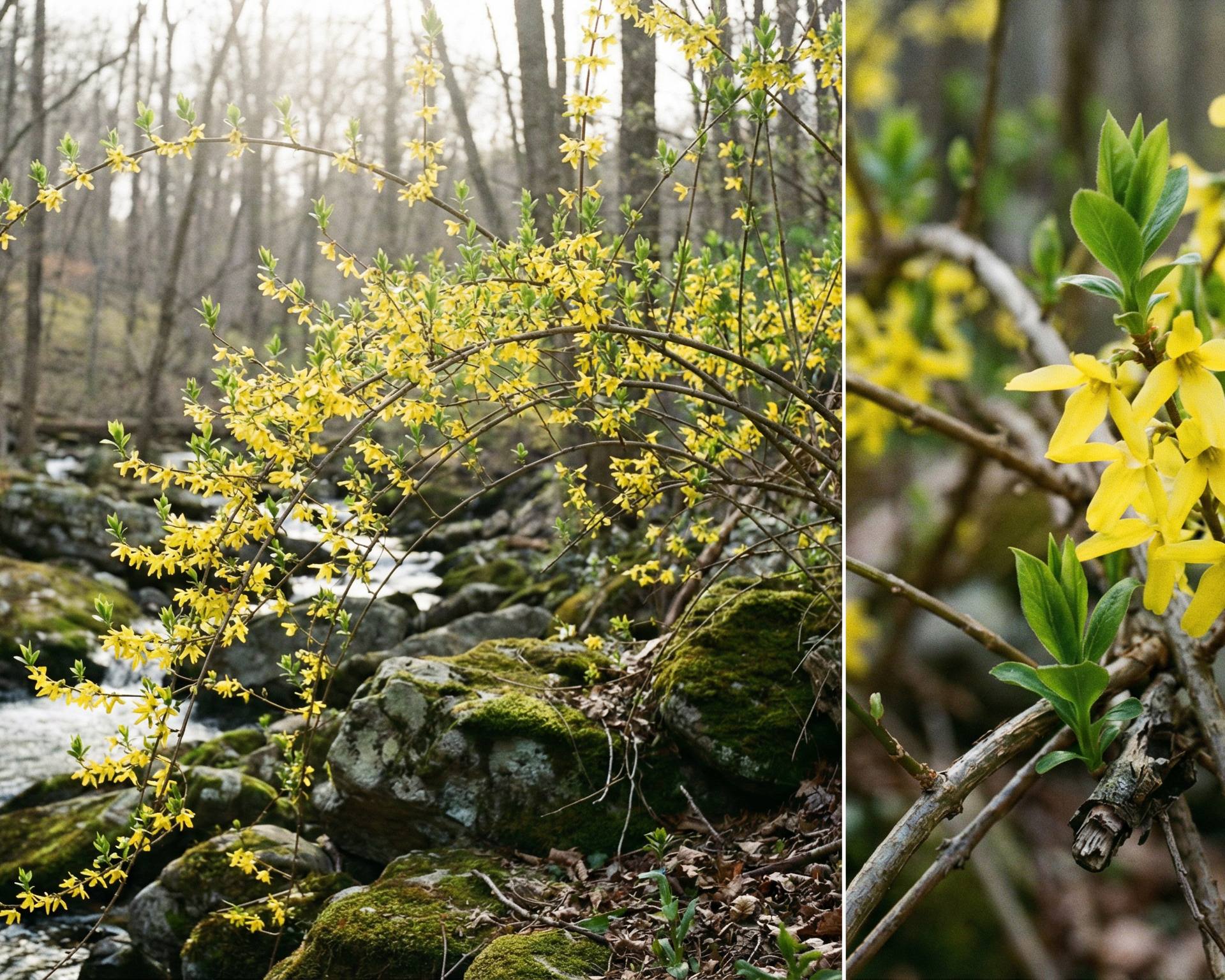
Forsythia is a genus of flowering plants in the olive family, Oleaceae. It is named after William Forsyth, a Scottish botanist and a founding member of the Royal Horticultural Society. The genus encompasses about 11 species, most of which are native to eastern Asia, with one species native to southeastern Europe. Forsythia is also known by the common names Easter Tree and Golden Bells, a reference to its early spring bloom of bright yellow flowers. These deciduous shrubs are known for their vibrant, four-petaled yellow flowers that bloom in early spring before the leaves emerge. The flowers are bell-shaped and produced in small clusters along the stems. The leaves are typically simple, though sometimes trifoliate, with a serrated or entire margin. The fruit is a dry capsule containing several winged seeds. Forsythia species are fast-growing and can reach heights of 1 to 3 meters, with some species growing up to 6 meters tall. Forsythia is a popular ornamental plant in gardens and parks, valued for its reliability and the cheerful display of its early spring flowers. It can be used as a specimen plant, in mixed borders, or as a hedge. The flowers are also edible and can be used in salads or as a garnish. In traditional Chinese medicine, the fruit of Forsythia suspensa is used for its anti-inflammatory and detoxifying properties. The plant is also used to make a traditional Korean musical instrument called the taepyeongso, a type of oboe. Forsythia is an easy-to-grow and low-maintenance shrub. It thrives in full sun to partial shade and prefers loose, medium-moisture, well-drained soils. It is tolerant of a wide range of soil conditions and is drought-tolerant once established. Pruning should be done right after flowering to ensure the development of flower buds for the following year. The plant is generally resistant to pests and diseases, making it a hardy and reliable choice for many gardeners.
Plant facts
- Sun
- Full Sun, Partial Sun
- Water
- Regular, Drought Tolerant
- USDA zones
- 4-8
- Lifecycle
- Perennial