Eureka Farms Nursery
Miami, FL
30 options
From $75.00
Catalog checked Oct 1, 2026. Confirm availability before visiting.
Plumeria rubra
1 nursery listed
1 nursery · 30 matching options
Miami, FL
30 options
From $75.00
Catalog checked Oct 1, 2026. Confirm availability before visiting.
Showing 1–1 of 1 nurseries
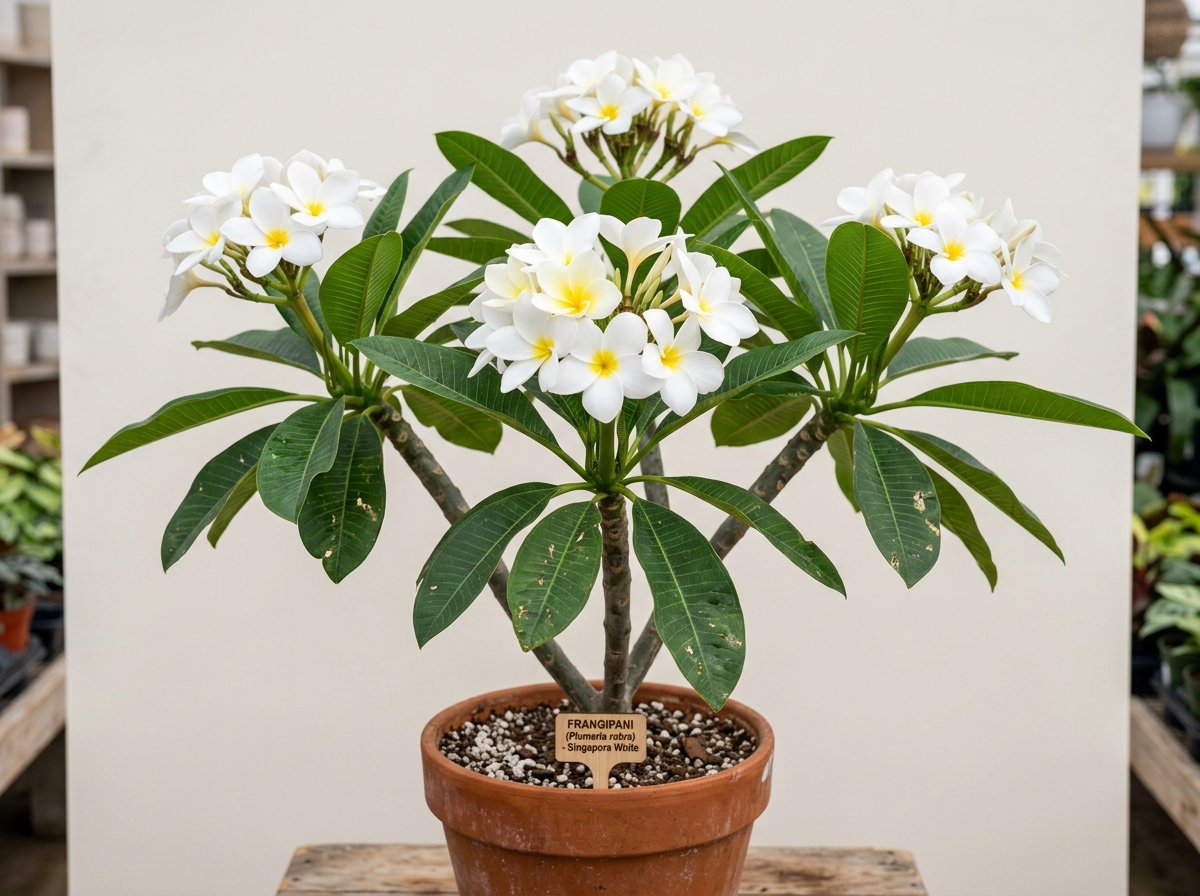
Plumeria, more commonly known as Frangipani, is a genus of flowering plants belonging to the Apocynaceae family. The name 'Plumeria' honors the 17th-century French botanist Charles Plumier, who documented many plant species in the New World. The genus comprises approximately 18 species of deciduous shrubs and small trees native to the tropical regions of the Americas, including Mexico, Central America, the Caribbean, and Brazil. Due to their beautiful and fragrant flowers, they are widely cultivated as ornamental plants in tropical and subtropical climates worldwide, and have become naturalized in many parts of Asia and the Pacific Islands. The most striking feature of the Frangipani is its flowers, which are borne in clusters at the ends of the branches. These flowers are characterized by their waxy, five-petaled structure and come in a variety of vibrant colors, including white, yellow, pink, and red, often with a contrasting yellow center. The flowers are highly fragrant, especially in the evening, emitting a scent with notes of jasmine, citrus, and gardenia. This strong fragrance serves to attract sphinx moths for pollination, despite the flowers not producing any nectar. The leaves of the Plumeria are large, leathery, and typically clustered at the branch tips. The branches themselves are thick and succulent, containing a milky latex sap that is a common characteristic of the Apocynaceae family and can be an irritant to the skin and eyes. Frangipani holds significant cultural and practical importance in many parts of the world. In the Pacific Islands, particularly Hawaii, the flowers are famously used to create leis, which are traditional garlands worn as a symbol of affection, welcome, or celebration. In some Asian cultures, the trees are considered sacred and are often planted in temple grounds and cemeteries. The fragrant oil extracted from the flowers is a popular ingredient in perfumes and cosmetics. While the plant is primarily grown for its ornamental value, it is important to note that the milky sap is toxic and should be handled with care.