Ginseng
Panax spp.
1 nursery listed
Compare nurseries
Nurseries with recorded shipping, across all locations. Confirm delivery to your address and availability on the nursery website.
No nursery options match these filters
Try another size or variety, or broaden your location. Options with unconfirmed variety names are included when All varieties is selected.
About Ginseng
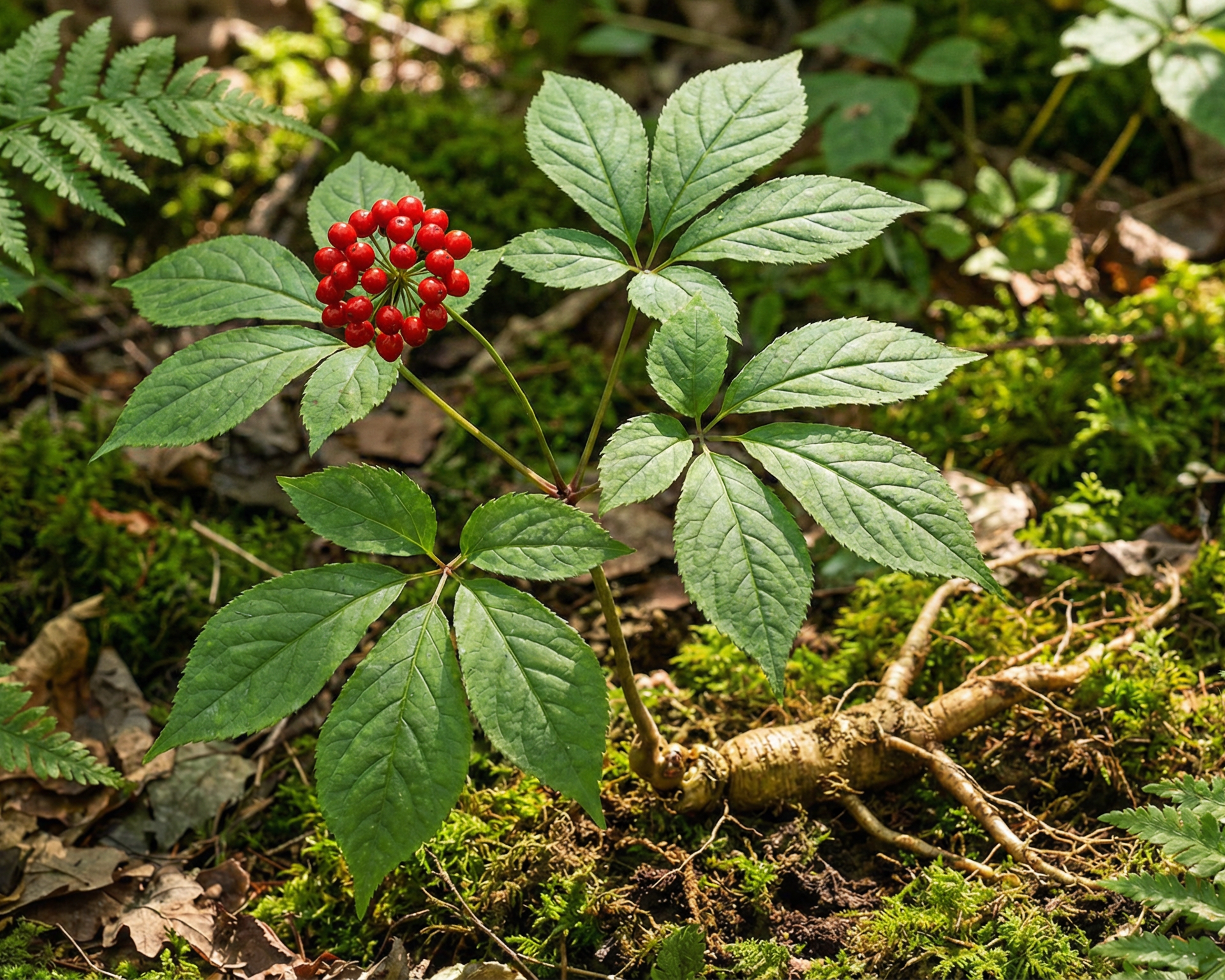
Panax (Ginseng) Panax, commonly known as ginseng, is a genus of slow-growing perennial plants with fleshy roots, belonging to the Araliaceae family. The name Panax is derived from the Greek word "panacea," meaning "all-healing," which reflects the plant's extensive use in traditional medicine for centuries. The genus includes several species, with Panax ginseng (Asian ginseng) and Panax quinquefolius (American ginseng) being the most well-known and commercially cultivated. These plants are native to mountainous regions of eastern Asia and North America, thriving in cool, shaded environments. Key Characteristics Ginseng plants are characterized by a single stem that emerges from a taproot, which can vary in shape but is often forked and resembles a human figure. The plant produces a whorl of leaves at the top of the stem, and mature plants bear a small cluster of greenish-white flowers that develop into red berries. The most valued part of the plant is its root, which contains active compounds called ginsenosides. These compounds are believed to be responsible for the medicinal properties of ginseng. Uses and Significance Ginseng has been a cornerstone of traditional Chinese medicine for thousands of years and is also used in Native American herbal remedies. It is considered an adaptogen, a substance that helps the body resist various stressors. Today, ginseng is widely consumed as a dietary supplement and is purported to have numerous health benefits, including improving cognitive function, boosting the immune system, and reducing fatigue. Its culinary uses are less common, but the root is sometimes used in soups and teas. The global demand for ginseng has led to extensive cultivation and a significant international trade, highlighting its economic and cultural importance.
Plant facts
- Sun
- Partial Shade, Full Shade
- Water
- Regular
- USDA zones
- 3-7
- Lifecycle
- Perennial