Ironwort (Greek mountain tea)
Sideritis spp.
1 nursery listed
Compare nurseries
1 nursery · 1 matching option
1 location on the map. Select a marker or a nursery to compare.
Preparing the map…
Your location isn’t saved. Confirm availability and visiting hours with the nursery.
About Ironwort (Greek mountain tea)
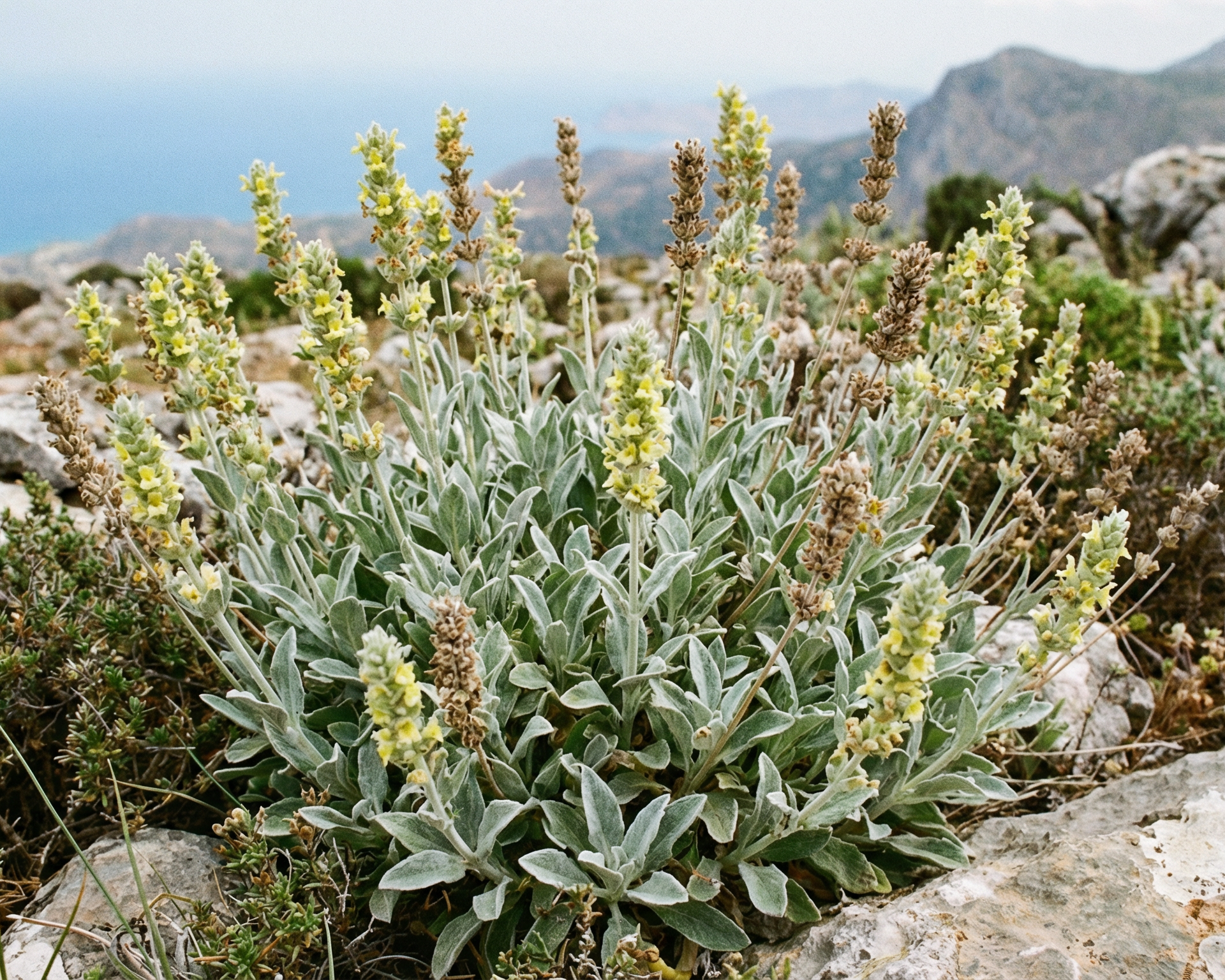
Ironwort, scientifically known as Sideritis, is a genus of flowering plants belonging to the mint family, Lamiaceae. The name Sideritis is derived from the Greek word "sideros," meaning iron, alluding to the plant's historical use in treating wounds inflicted by iron weapons. Commonly referred to as mountain tea or shepherd's tea, this genus encompasses over 150 species, predominantly found in Mediterranean regions, the Balkan Peninsula, the Iberian Peninsula, and Macaronesia. These plants are typically found in sunny, rocky areas at high altitudes, often above 1000 meters. Ironwort plants are characterized as perennial herbs or small shrubs that can grow to a height of 30 to 50 centimeters. They have simple, opposite leaves that are often covered in a fine, downy felt, giving them a grey-green appearance. The flowers are typically small, pale yellow, and arranged in dense whorls along the stem, forming a spike-like inflorescence. The entire plant is aromatic, with a scent often described as a blend of citrus, mint, and cinnamon. This aromatic quality is due to the presence of essential oils, which are a key component of the plant's chemical profile. For centuries, Ironwort has been highly valued for its medicinal and culinary applications. It is most famously used to prepare a herbal infusion known as "mountain tea." This tea is traditionally made by boiling the dried stems, leaves, and flowers of the plant. It is a popular beverage in many Mediterranean countries, often enjoyed with honey and lemon. In traditional medicine, Ironwort has been used to treat a wide range of ailments, including colds, digestive issues, inflammation, and anxiety. Modern scientific research has begun to explore these traditional uses, with studies investigating its anti-inflammatory, antioxidant, and antimicrobial properties. Some research has even suggested its potential in the prevention and treatment of Alzheimer's disease. Cultivating Ironwort is relatively straightforward, as it is a hardy and low-maintenance plant. It thrives in well-drained, nutrient-poor, and calcareous soils, and requires a sunny location to flourish. The plant is drought-tolerant and can withstand cold temperatures, making it suitable for a variety of climates. Propagation can be achieved through seeds or cuttings. For harvesting, the aerial parts of the plant are typically collected during the flowering season and then dried for later use. Due to over-harvesting in the wild, some species of Sideritis are now considered endangered, making cultivation an important practice for conservation.
Plant facts
- Sun
- Full Sun
- Water
- Low, Drought Tolerant
- USDA zones
- 7-10
- Lifecycle
- Perennial