Larch
Larix spp.
5 nurseries listed
Compare nurseries
Nurseries with recorded shipping, across all locations. Confirm delivery to your address and availability on the nursery website.
No nursery options match these filters
Try another size or variety, or broaden your location. Options with unconfirmed variety names are included when All varieties is selected.
About Larch
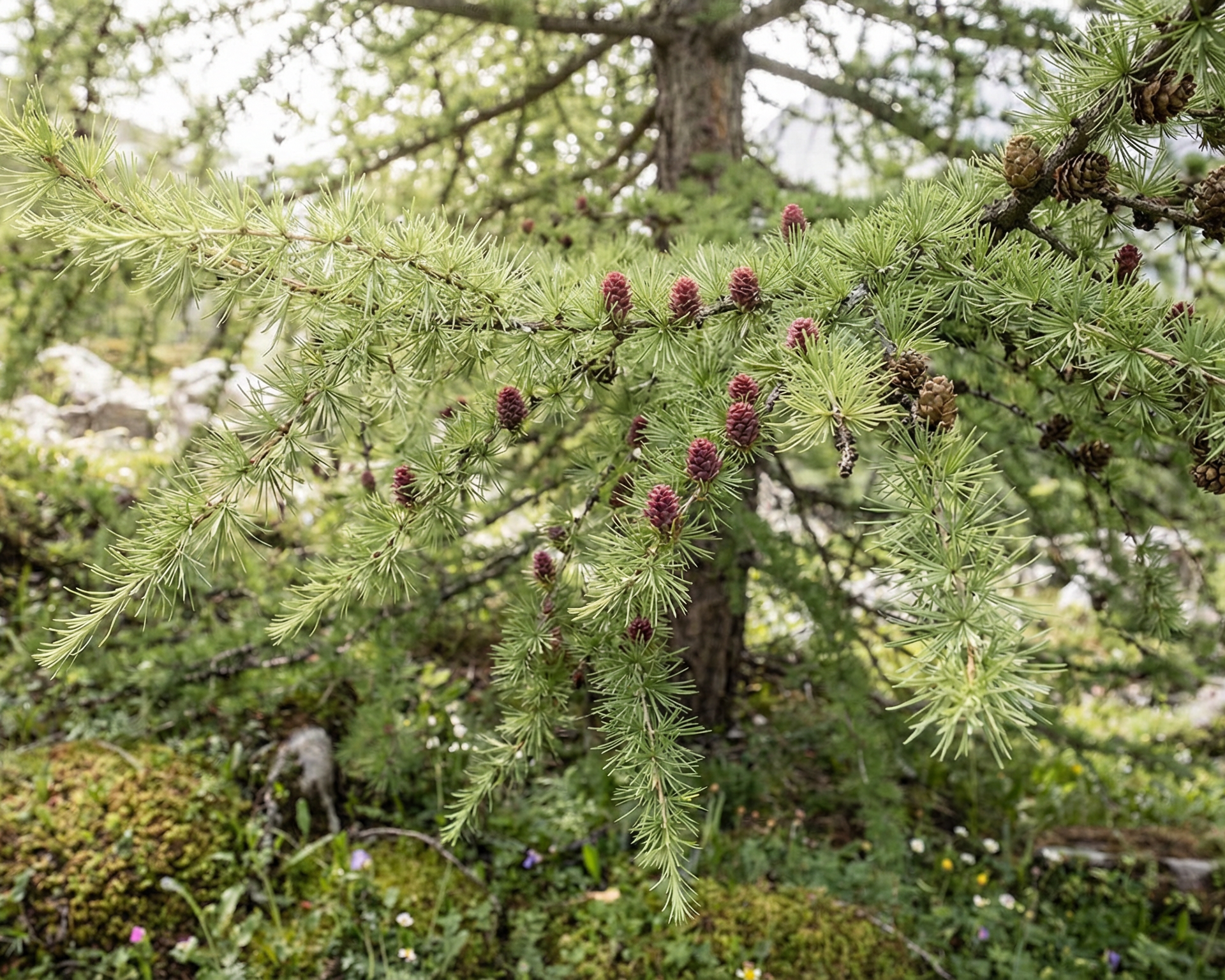
Larches, belonging to the genus Larix, are a unique group of coniferous trees known for being deciduous, meaning they shed their needles in the autumn. Native to the cooler, temperate, and subarctic regions of the Northern Hemisphere, larches are a dominant feature in the boreal forests of Siberia and Canada, making them one of the most abundant tree genera on Earth. The genus comprises about 10 to 12 species, with some species like the Tamarack (Larix laricina) found in North America, the European Larch (Larix decidua) in the mountains of central Europe, and the Japanese Larch (Larix kaempferi) in Japan. One of the most distinctive features of larches is their foliage. The trees produce soft, light green, needle-like leaves that are arranged in spirals on new growth and in dense clusters on short spurs of older twigs. In the fall, these needles turn a brilliant golden-yellow before falling, a characteristic that sets them apart from their evergreen coniferous relatives. The cones of larches are small and woody, and they typically remain on the tree for several years before falling. The bark of a young larch is smooth, but it becomes thick and scaly as the tree matures. Larches are generally fast-growing and can reach impressive heights, with some species, like the Western Larch (Larix occidentalis), growing up to 200 feet tall. Larch wood is highly valued for its strength, hardness, and durability, making it a popular choice for a variety of construction purposes. It is commonly used for building boats, fences, and decks, as well as for telephone poles and railroad ties. Beyond its use as timber, some species of larch are cultivated as ornamental trees, prized for their graceful, pyramidal shape and stunning autumn color. The European Larch, for instance, is the source of Venice turpentine, an oleoresin with various industrial applications. Some traditional medicinal uses have also been reported, with certain parts of the tree used to treat a range of ailments. In terms of cultivation, larches thrive in full sun and prefer well-drained, moist soil. They are well-suited to cooler climates and are generally hardy and low-maintenance trees. While they are relatively resistant to pests and diseases, they can be susceptible to some issues, such as the larch casebearer and certain fungal diseases. It is also important to note that while they are conifers, their deciduous nature means they will lose their needles each year, a fact that can sometimes surprise those unfamiliar with the genus.
Plant facts
- Sun
- Full Sun
- Water
- Regular, Drought Tolerant
- USDA zones
- 2-7
- Lifecycle
- Perennial