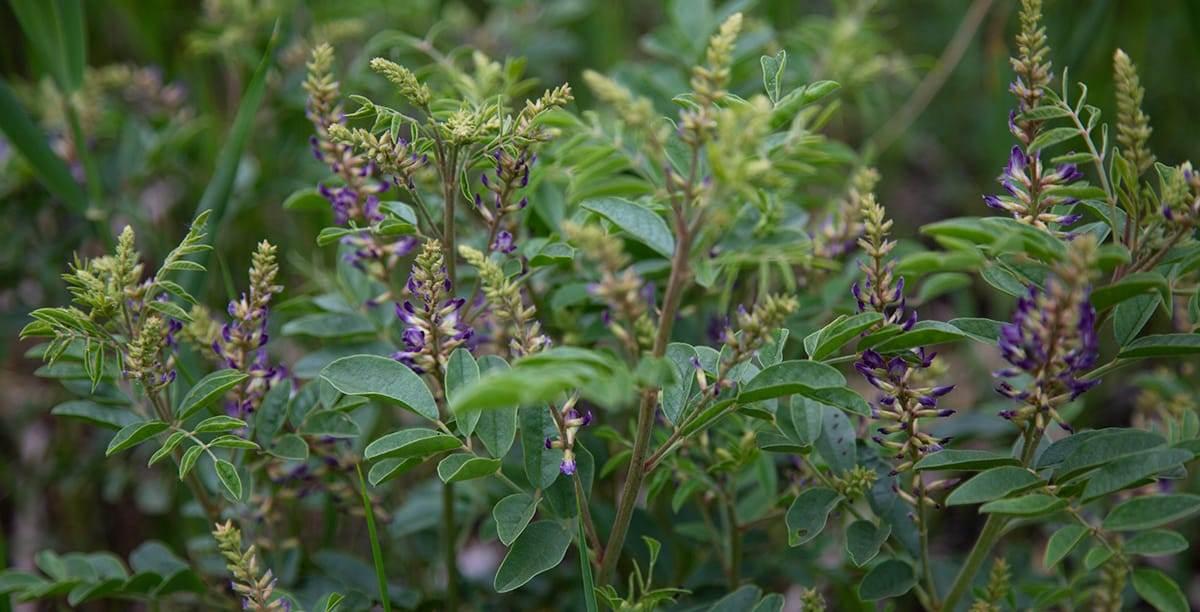
Liquorice
Glycyrrhiza glabra
1 nursery listed
Compare nurseries
1 nursery · 1 matching option
1 location on the map. Select a marker or a nursery to compare.
Preparing the map…
Your location isn’t saved. Confirm availability and visiting hours with the nursery.
About Liquorice
Licorice, the common name for plants of the Glycyrrhiza genus, is a group of about 20 species of perennial herbs and subshrubs belonging to the legume family (Fabaceae). Native to temperate and subtropical regions of Eurasia, Australia, and the Americas, these plants are most famous for their sweet-tasting roots. The name Glycyrrhiza itself is derived from the Greek words 'glykys' (sweet) and 'rhiza' (root). The most well-known species is Glycyrrhiza glabra, which is the primary source of the licorice flavoring used in confectionery and beverages worldwide. Licorice plants are characterized by their extensive root systems, which include both a main taproot and a network of rhizomes. These roots are the most economically important part of the plant, containing the compound glycyrrhizin, which is 30-50 times sweeter than sucrose. The plants typically grow to a height of about one meter and have pinnate leaves with 9-17 leaflets. In late summer, they produce inconspicuous flowers that range in color from purple to pale whitish-blue and are followed by the formation of seed pods. The use of licorice root dates back thousands of years, with a long history in traditional medicine across various cultures. It has been used to treat a wide range of ailments, including stomach ulcers, sore throats, bronchitis, and adrenal gland disorders. The active compound, glycyrrhizin, has been shown to have anti-inflammatory, antiviral, and anti-ulcer properties. In addition to its medicinal uses, licorice is widely used as a flavoring agent in candies, herbal teas, and other food products. It is also used in the tobacco industry to flavor cigarettes.
Plant facts
- Sun
- Full Sun
- Water
- Regular, Low, Drought Tolerant
- USDA zones
- 6-10
- Lifecycle
- Perennial