Mahogany
Swietenia spp.
3 nurseries listed
Compare nurseries
3 nurseries · 27 matching options
3 locations on the map. Select a marker or a nursery to compare.
Preparing the map…
Your location isn’t saved. Confirm availability and visiting hours with the nursery.
About Mahogany
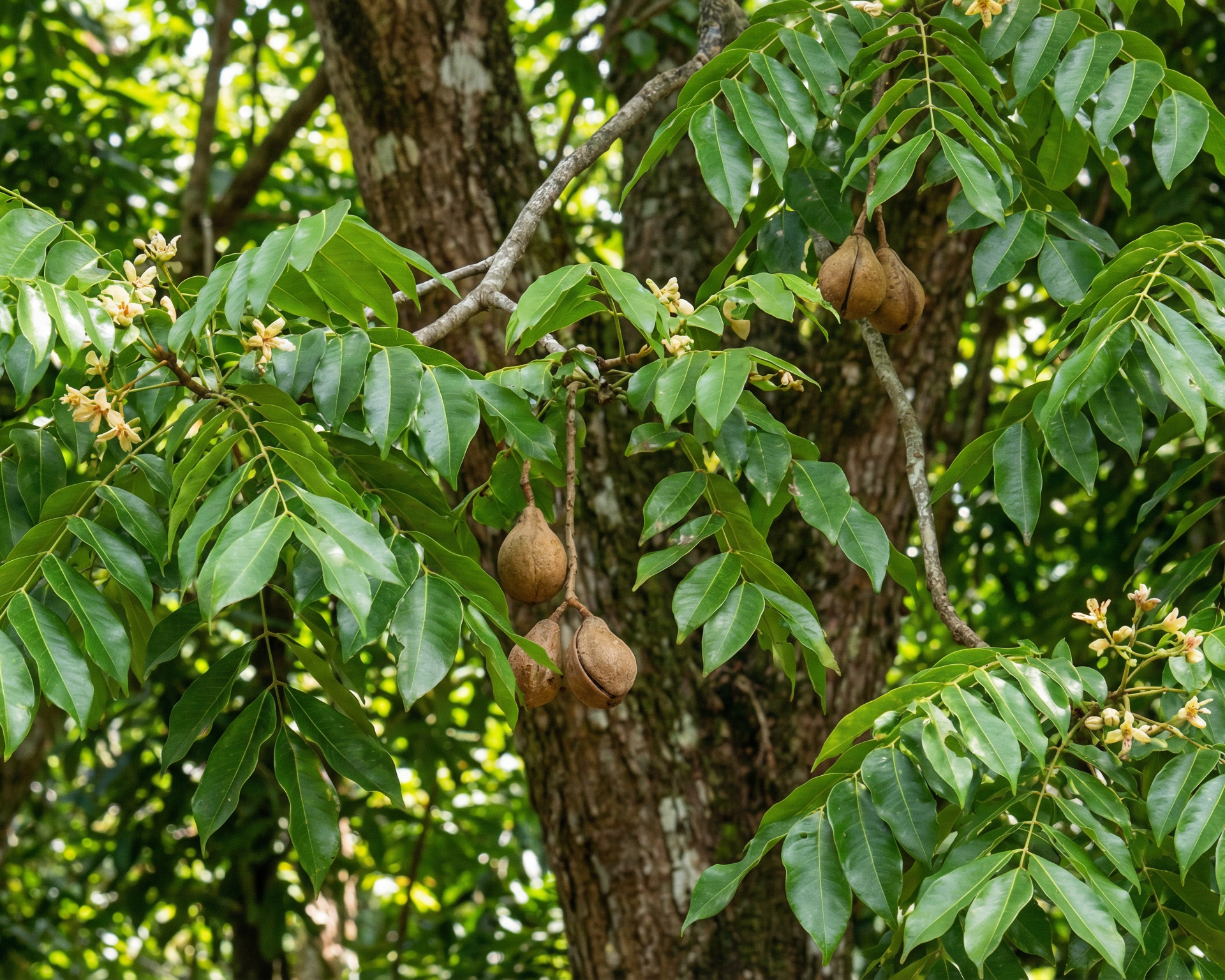
Mahogany (Swietenia) Swietenia, commonly known as Mahogany, is a genus of trees belonging to the Meliaceae family, which also includes the chinaberry. Native to the Neotropics, its range extends from southern Florida and the Caribbean through Mexico and Central America, down to Bolivia. The genus was named in honor of Gerard van Swieten, an 18th-century Dutch-Austrian physician. While there are several species within the genus, including Swietenia mahagoni (West Indian Mahogany) and Swietenia macrophylla (Honduran Mahogany), the term "Mahogany" is the most recognized common name for the group, celebrated for its valuable and beautiful wood. Mahogany trees are medium to large, typically reaching heights of 20 to 45 meters with impressive trunk diameters of up to 2 meters. They feature a dense, rounded crown and a buttressed trunk base in mature specimens. The leaves are pinnately compound, composed of several pairs of leaflets, and are deciduous to semi-evergreen, shedding just before new growth appears. In the spring, the trees produce clusters of small, inconspicuous, greenish-yellow flowers. These are followed by large, woody, pear-shaped fruit capsules that split open to release numerous winged seeds, which are then dispersed by the wind. The primary significance of the Swietenia genus lies in its timber. The heavy, durable, and straight-grained wood, with its characteristic reddish-brown hue that darkens over time, is highly prized for high-quality furniture, cabinetry, musical instruments, and boat building. Beyond its use for timber, Mahogany also has a history of medicinal and cultural applications. The bark has been traditionally used as an antiseptic and astringent, and for treating fevers and diarrhea. The fruit of Swietenia macrophylla, known as "sky fruit," is marketed in some regions as a natural remedy. These trees are also widely planted as ornamental shade trees and street trees in tropical and subtropical regions. In terms of cultivation, Mahogany trees thrive in warm climates, specifically USDA zones 10-11. They prefer deep, fertile, and well-drained soils and grow best in full sun to partial shade. While they require consistent moisture, established trees can tolerate short periods of drought. One of the main challenges in cultivating Mahogany is its susceptibility to the mahogany shoot borer moth (Hypsipyla grandella), which can damage the tree's form by attacking the terminal shoot. Due to extensive logging, some species, such as Swietenia mahagoni in Florida, are now considered endangered in their native habitats, and all species of Swietenia are listed by CITES to regulate their international trade.
Plant facts
- Sun
- Full Sun
- Water
- Regular
- USDA zones
- 10-11
- Lifecycle
- Perennial