Mangosteen
Garcinia mangostana
1 nursery listed
Compare nurseries
1 nursery · 3 matching options
1 location on the map. Select a marker or a nursery to compare.
Preparing the map…
Your location isn’t saved. Confirm availability and visiting hours with the nursery.
About Mangosteen
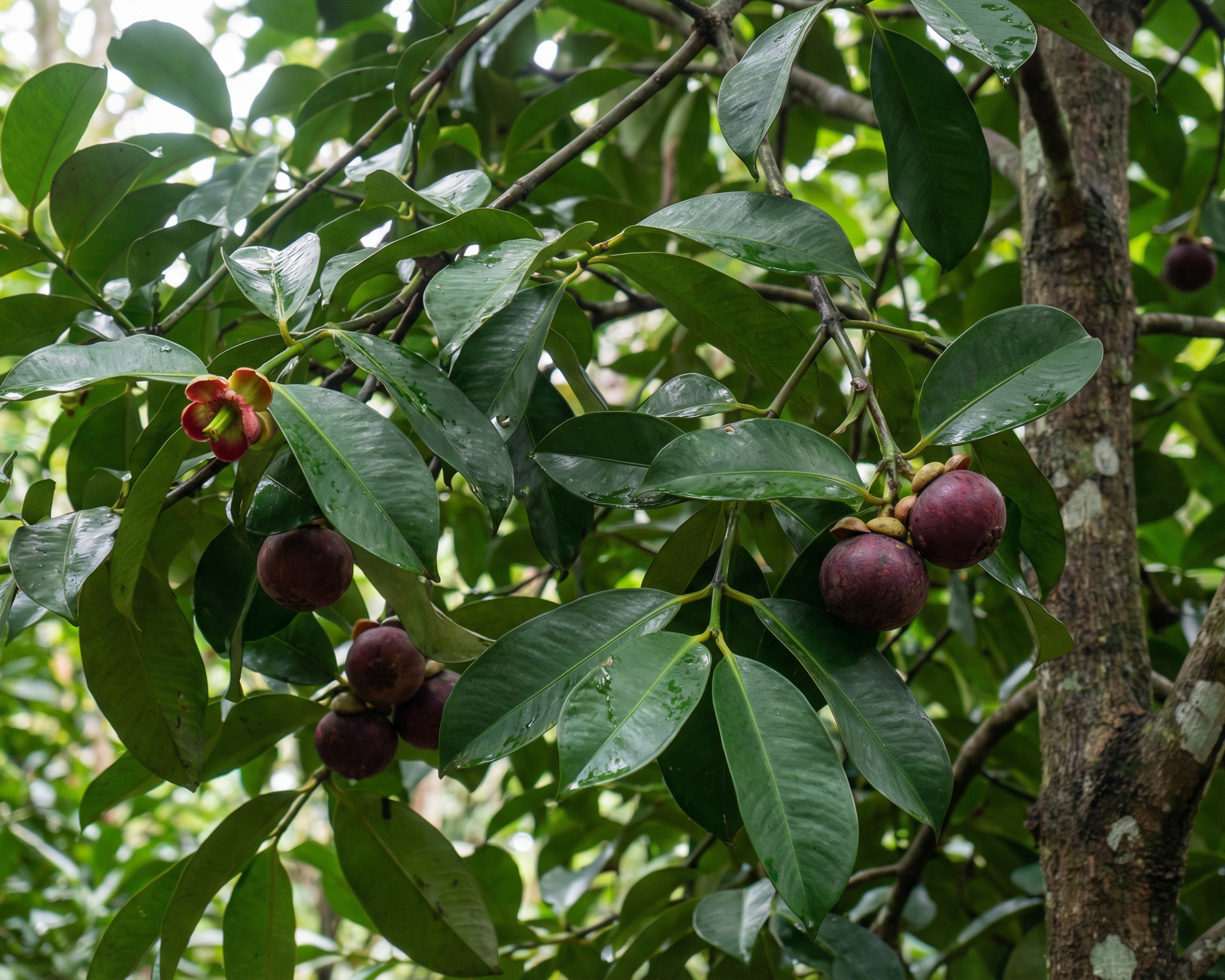
Garcinia mangostana, commonly known as the mangosteen, is a tropical evergreen tree famed for its exquisite fruit. Native to the Sunda Islands and the Moluccas, this so-called "queen of fruits" is a member of the family Clusiaceae. The tree itself is slow-growing, with a pyramidal crown, and can reach heights of 6 to 25 meters. It has thick, dark green, glossy leaves and large, pink, fleshy flowers. The mangosteen tree is ultra-tropical and must be grown in consistently warm conditions, as exposure to temperatures below 4 °C (40 °F) can be lethal. The fruit is the main attraction of the mangosteen tree. It is round, with a smooth, thick, deep purple rind that encloses a sweet, juicy, and fragrant white pulp. The pulp is arranged in segments, similar to an orange, with each segment containing a seed. The flavor is a delicate balance of sweet and tangy notes, often described as a combination of lychee, peach, strawberry, and pineapple. The fruit is highly prized for its unique flavor and is typically eaten fresh. Beyond its culinary appeal, the mangosteen has a long history of use in traditional medicine in Southeast Asia. The rind, in particular, is rich in polyphenols, including xanthones, which are under investigation for their potential health benefits. These compounds are believed to have antioxidant, anti-inflammatory, and other medicinal properties. The rind has been used to treat a variety of ailments, including skin infections, wounds, and dysentery. In addition to its medicinal uses, the mangosteen tree is also valued for its timber, and the rind yields a black dye.
Plant facts
- Sun
- Partial Shade, Partial Sun
- Water
- Regular, High
- USDA zones
- 10-11
- Lifecycle
- Perennial