Fieldstone Gardens
Vassalboro, ME
1 option
Call for pricing
Catalog checked Oct 4, 2026. Confirm availability before visiting.
Podophyllum peltatum
3 nurseries listed
3 nurseries · 4 matching options
Vassalboro, ME
1 option
Call for pricing
Catalog checked Oct 4, 2026. Confirm availability before visiting.
Mukwonago, WI
1 option
From $10.95
Catalog checked Oct 1, 2026. Confirm availability before visiting.
Robesonia, PA
2 options
From $8.00
Catalog checked Oct 1, 2026. Confirm availability before visiting.
Showing 1–3 of 3 nurseries
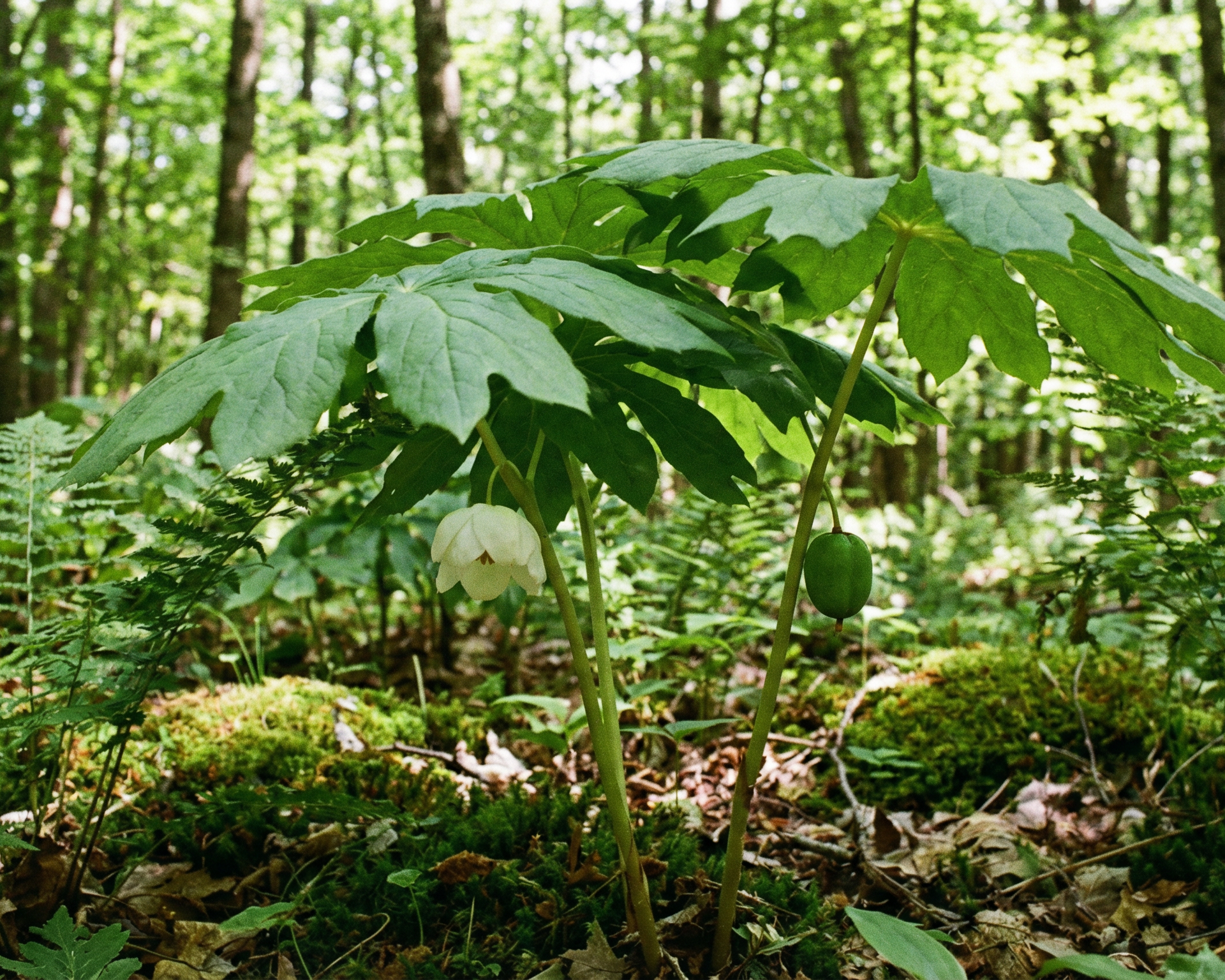
Mayapple (Podophyllum) is a genus of herbaceous perennial plants in the barberry family (Berberidaceae). The most well-known species is Podophyllum peltatum, native to eastern North America, which is commonly referred to as the Mayapple. The genus also includes several Asian species. The name Podophyllum originates from the Greek words pous or podos (foot) and phyllon (leaf), referring to the foot-like shape of the leaves. Mayapples are characterized by their large, umbrella-like leaves that can reach up to 12 inches in diameter. Each plant typically has one or two deeply lobed leaves on a single stem that grows 12-18 inches tall. Plants with two leaves may produce a single, nodding, white flower in the spring, which is often hidden by the leaves. The flower gives way to a fleshy, lemon-sized fruit that ripens to a golden-yellow color in the summer. While the ripe fruit is edible and can be used to make jellies and preserves, all other parts of the plant, including the leaves, roots, and unripe fruit, are poisonous. Mayapples are woodland plants that thrive in shady, moist, and well-drained soils. They often form large colonies through their spreading rhizomes. In a garden setting, they are excellent for naturalizing in woodland or shade gardens. However, because they go dormant in the summer and their foliage disappears, they are not ideal for border plantings. They are generally resistant to deer and rabbits and have no serious insect or disease problems. The plant has a history of medicinal use by Native Americans. The roots and rhizomes contain a resin called podophyllin, which has been used to treat a variety of ailments, including as a cathartic and for the removal of warts. Podophyllotoxin, a component of podophyllin, is a cytotoxic agent that has been used in the development of anti-cancer drugs. Due to its toxicity, all parts of the plant should be handled with care, and gloves should be worn to prevent skin irritation.