Heron's Head Nursery LLC
San Francisco, CA
3 options
Call for pricing
Catalog checked Oct 4, 2026. Confirm availability before visiting.
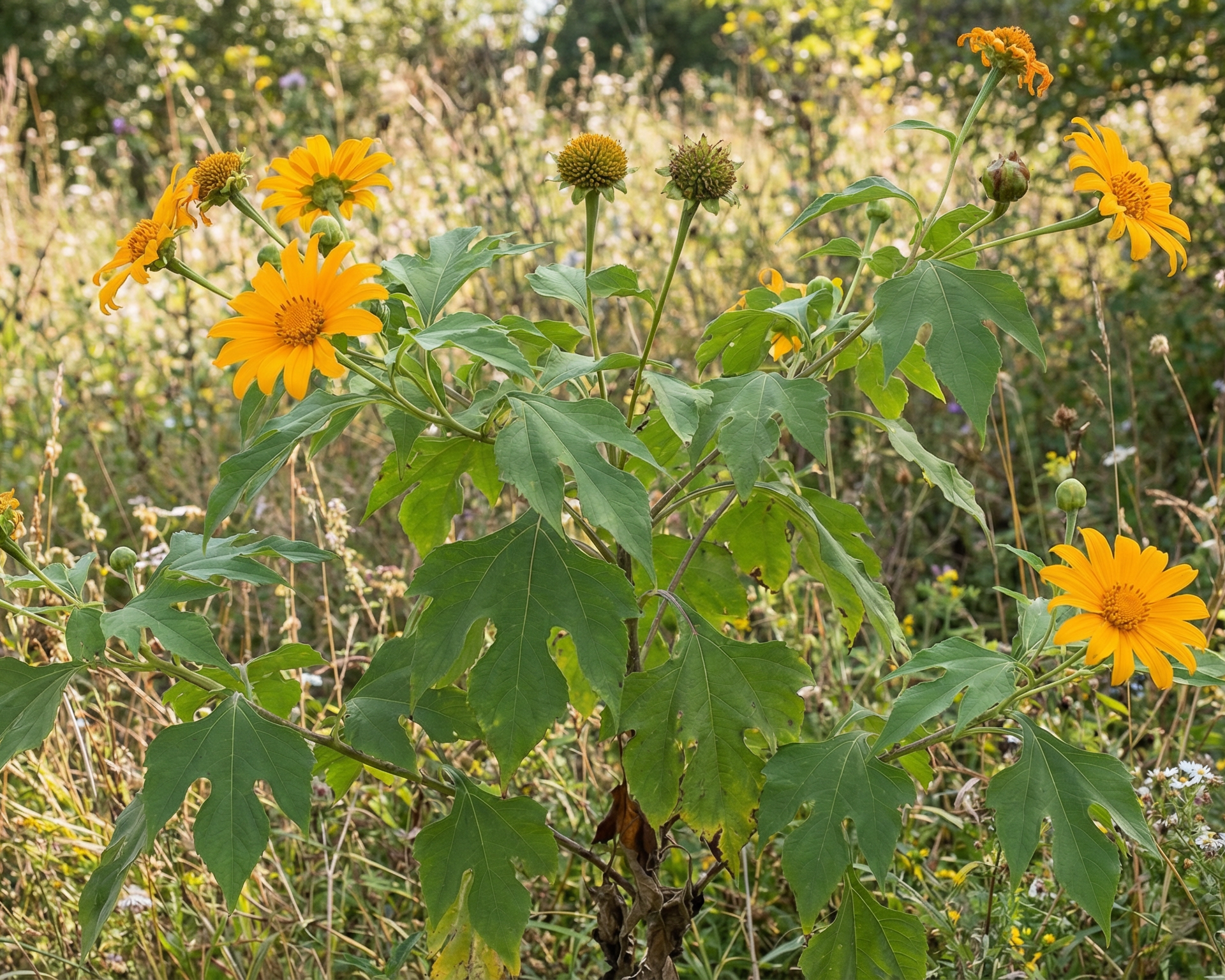
Tithonia diversifolia
4 nurseries listed
4 nurseries · 8 matching options
San Francisco, CA
3 options
Call for pricing
Catalog checked Oct 4, 2026. Confirm availability before visiting.
Loxahatchee, FL
2 options
From $8.00
Catalog checked Oct 1, 2026. Confirm availability before visiting.
Loxahatchee, FL
1 option
From $25.00
Catalog checked Oct 1, 2026. Confirm availability before visiting.
Bonsall, CA
2 options
Call for pricing
Catalog checked Oct 1, 2026. Confirm availability before visiting.
Showing 1–4 of 4 nurseries
The genus Tithonia, commonly known as Mexican Sunflower, belongs to the Asteraceae family, the same family as daisies and sunflowers. Native to Mexico and Central America, this group of plants comprises about 10 to 15 species of bushy annuals, perennials, and shrubs. The most well-known species is Tithonia rotundifolia, often simply called Mexican Sunflower or Red Sunflower. These plants are celebrated for their vigorous growth and brilliant, cheerful flowers that bloom from mid-summer until the first frost, adding a vibrant splash of color to any garden. Mexican Sunflowers are characterized by their impressive height, typically reaching 4 to 6 feet tall with a sturdy, central stalk and a somewhat branching habit. The dark green leaves are large, with a coarse texture and a soft, downy fuzz covering both the leaves and stems. The flowers are the main attraction, featuring showy, 3-inch blossoms with bright orange to orange-red ray petals surrounding a central cluster of yellow-orange disk florets. These striking flowers are held aloft on thick, hollow stems. In the garden, Tithonia serves multiple purposes. Its tall stature makes it an excellent choice for the back of borders or as a temporary summer screen. It is highly valued in pollinator gardens, as its nectar-rich flowers are a magnet for a wide array of bees, butterflies, and hummingbirds. The spent flower heads also provide seeds for birds in the fall. Beyond its ornamental use, some species like Tithonia diversifolia (Tree Marigold) are utilized in permaculture and agroforestry systems as a nutrient-rich green manure, often through a "chop and drop" mulching technique to enrich the soil. Cultivation of Mexican Sunflower is relatively straightforward, as it is a hardy and resilient plant. It thrives in full sun and prefers average to poor, well-drained soils; overly rich soil can lead to excessive foliage and weak, leggy stems that are prone to breaking. The plants are notably drought-tolerant once established and are also resistant to deer. Due to their height, staking may be necessary to prevent them from toppling over in wind or heavy rain. Propagation is easily done from seed, sown directly in the garden after the danger of frost has passed.
Explore the complete plant collection, including varieties with no nursery listings yet.