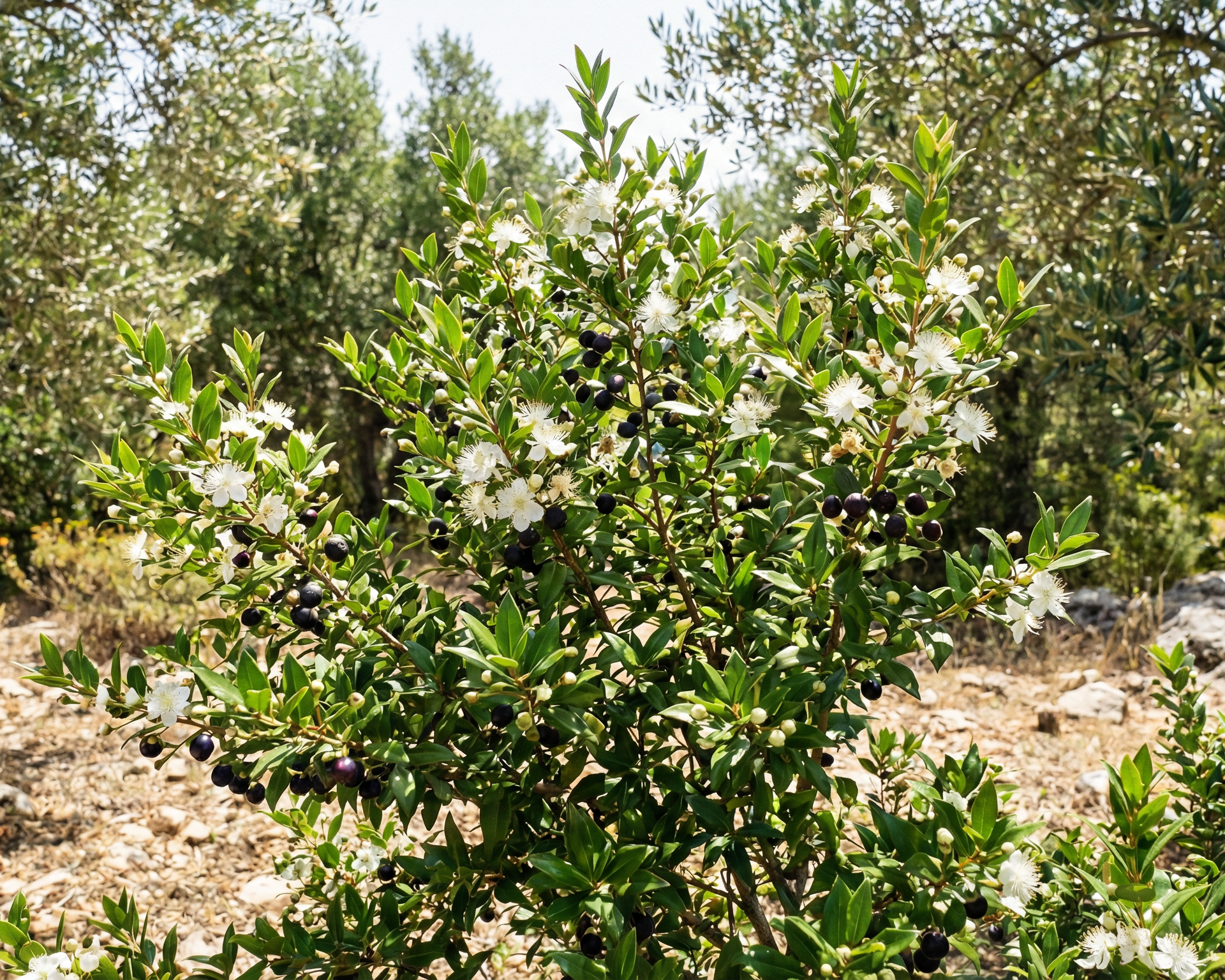
Common myrtle
Myrtus communis
4 nurseries listed
Compare nurseries
4 nurseries · 12 matching options
4 locations on the map. Select a marker or a nursery to compare.
Preparing the map…
Your location isn’t saved. Confirm availability and visiting hours with the nursery.
About Common myrtle
Myrtus, commonly known as myrtle, is a genus of one or two species of flowering plants in the family Myrtaceae, native to the Mediterranean region and the Middle East. The most well-known species is Myrtus communis, or common myrtle, which is an evergreen shrub or small tree. It has a long history of cultivation for its aromatic foliage and flowers, as well as its cultural and medicinal significance. The leaves are small, glossy, and dark green, releasing a fragrant aroma when crushed. The flowers are white, star-shaped, and have numerous stamens, followed by purple-black berries. Myrtle is characterized by its dense, bushy growth habit, typically reaching a height of 5-6 feet. It thrives in well-drained soil and full sun, and is relatively drought-tolerant once established. The plant's fragrant essential oils, found in its leaves, flowers, and berries, have been used for centuries in perfumes, cosmetics, and traditional medicine. The berries are also edible and can be used to make liqueurs and jellies. In terms of uses and significance, myrtle holds a prominent place in various cultures. In Greek mythology, it was sacred to the goddess Aphrodite and symbolized love and beauty. It has been used in wedding ceremonies for centuries. Medicinally, myrtle has been employed for its antiseptic and anti-inflammatory properties. In permaculture, myrtle is a valuable addition to a garden, attracting pollinators and beneficial insects. Its dense foliage can also provide a habitat for wildlife.
Plant facts
- Sun
- Full Sun, Partial Sun
- Water
- Drought Tolerant, Regular
- USDA zones
- 8-10
- Lifecycle
- Perennial