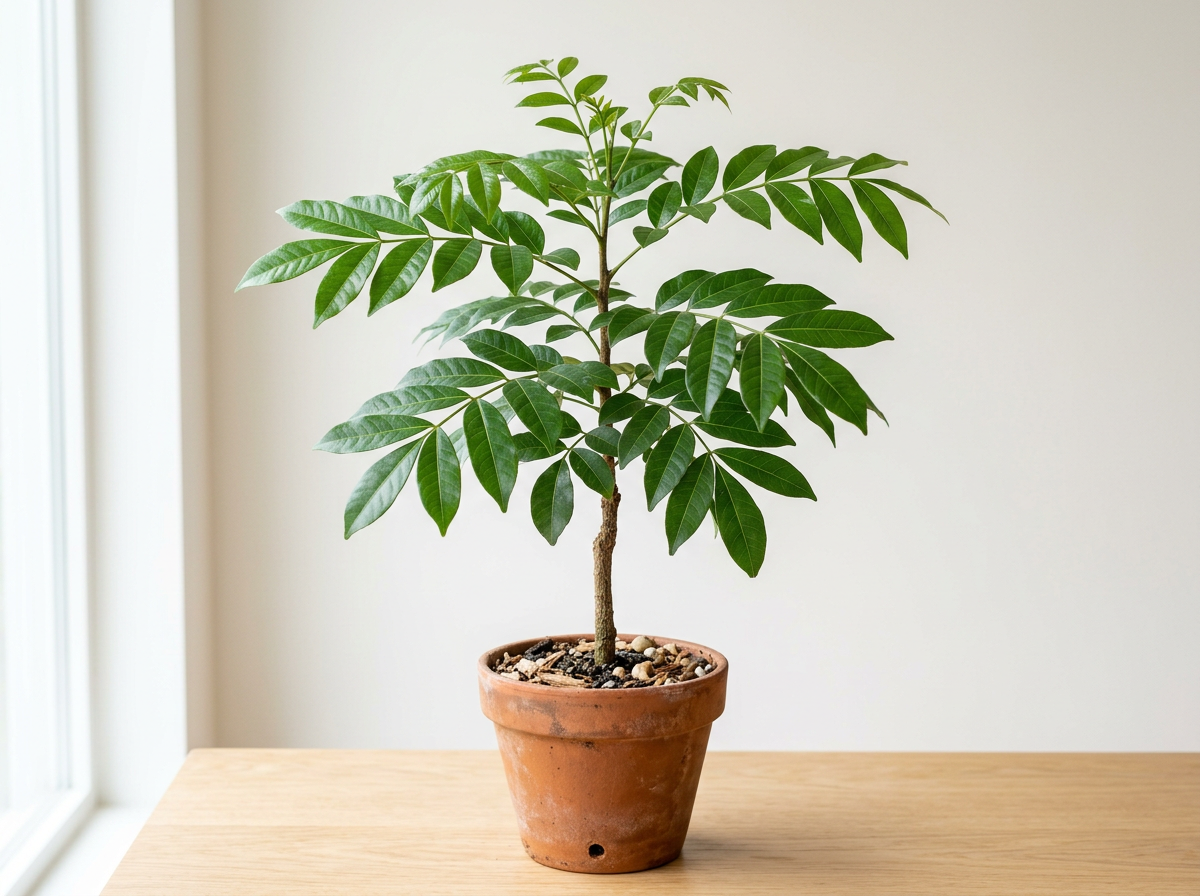
Natal mahogany
Trichilia emetica
2 nurseries nationwide
Compare nurseries
2 nurseries · 4 matching options
2 locations on the map. Select a marker or a nursery to compare.
Preparing the map…
Your location isn’t saved. Confirm availability and visiting hours with the nursery.
About Natal mahogany
Natal Mahogany, the common name for the genus Trichilia, represents a group of flowering plants belonging to the mahogany family, Meliaceae. These plants are primarily found in the tropical and subtropical regions of the Americas and Africa, with a significant diversity in sub-Saharan Africa and South America. The genus encompasses a wide range of species, from large forest trees to smaller shrubs, all sharing certain fundamental characteristics. The most well-known species include Trichilia emetica and Trichilia dregeana, both of which are commonly referred to as Natal Mahogany. Key characteristics of the Trichilia genus include their pinnately compound leaves, which are often large and glossy, contributing to their ornamental value. The flowers are typically small, greenish-white, and arranged in panicles. The fruit is a dehiscent capsule, usually containing large, oil-rich seeds. These seeds are often brightly colored, with a fleshy appendage called an aril, which attracts birds and other animals that aid in seed dispersal. The trees themselves are often evergreen, providing dense shade and contributing to the structure of the forests they inhabit. The significance of the Trichilia genus is multifaceted, with various species being utilized for medicinal, cultural, and economic purposes. The wood of several species, particularly T. emetica and T. dregeana, is highly valued for its durability and attractive grain, making it suitable for furniture, carving, and construction. The oil extracted from the seeds of T. emetica is used in cooking and for making soap and cosmetics. In traditional medicine, various parts of the plant are used to treat a range of ailments, from malaria to digestive issues. Furthermore, some species, like T. catigua, are known for their stimulant and aphrodisiac properties and are used in traditional herbal remedies.
Plant facts
- Sun
- Full Sun, Partial Sun
- Water
- Regular
- USDA zones
- 10-11
- Lifecycle
- Perennial