Emerald Island Garden Center
Cocoa, FL
2 options
From $14.95
Catalog checked Oct 1, 2026. Confirm availability before visiting.
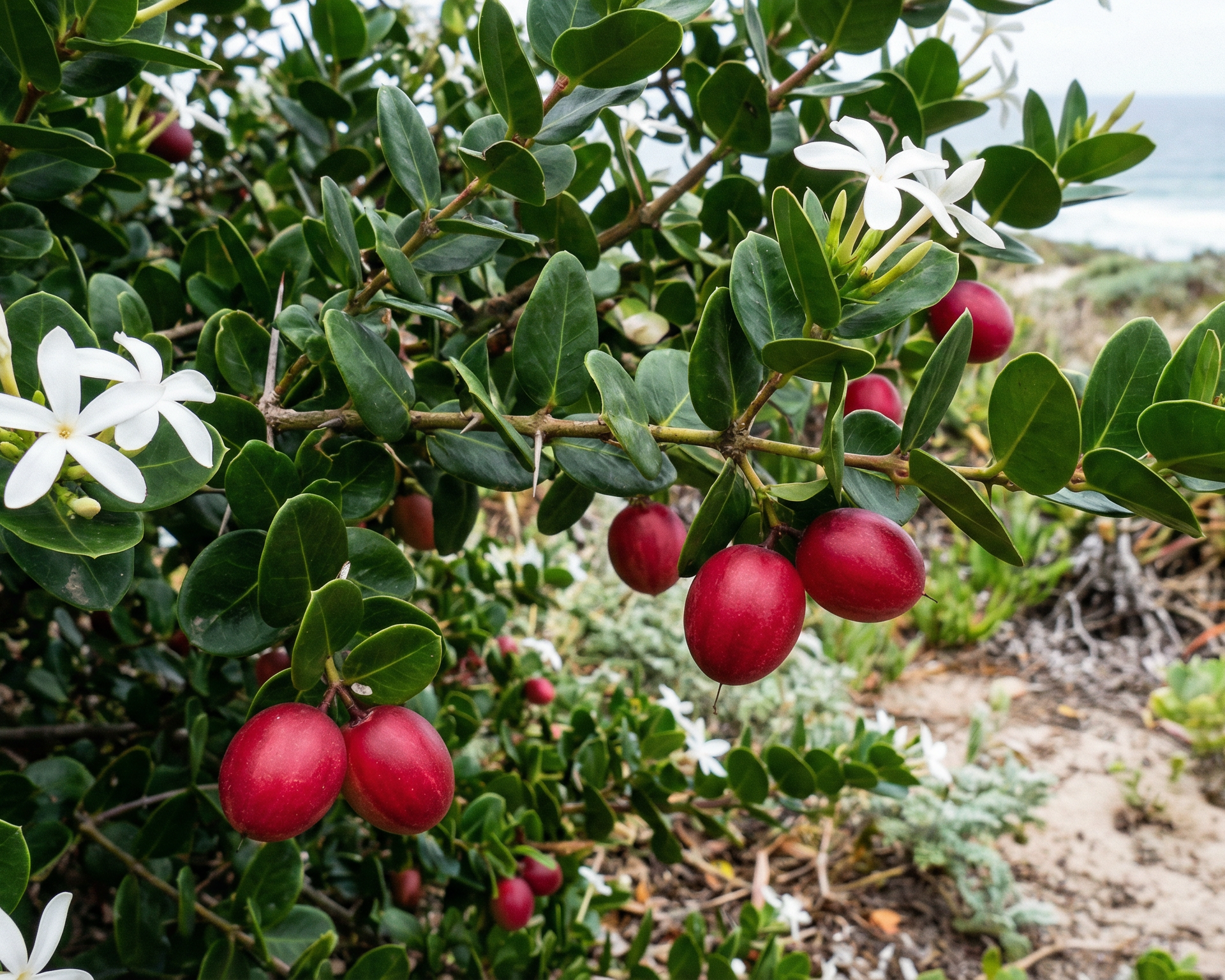
Carissa macrocarpa
7 nurseries listed
7 nurseries · 23 matching options
Cocoa, FL
2 options
From $14.95
Catalog checked Oct 1, 2026. Confirm availability before visiting.
Miami, FL
4 options
From $19.99
Catalog checked Oct 1, 2026. Confirm availability before visiting.
Mililani, HI
1 option
Call for pricing
Catalog checked Oct 4, 2026. Confirm availability before visiting.
Carpinteria, CA
2 options
From $10.00
Catalog checked Oct 1, 2026. Confirm availability before visiting.
Loxahatchee, FL
1 option
From $45.00
Catalog checked Oct 1, 2026. Confirm availability before visiting.
Miami, FL
12 options
From $6.88
Catalog checked Oct 1, 2026. Confirm availability before visiting.
Bunnell, FL
1 option
Call for pricing
Catalog checked Oct 1, 2026. Confirm availability before visiting.
Showing 1–7 of 7 nurseries
Carissa is a genus of evergreen shrubs and small trees belonging to the Apocynaceae family, native to the tropical and subtropical regions of Africa, Australia, and Asia. While the genus includes several species, it is most famously represented by Carissa macrocarpa, from which the common name for the group, Natal Plum, is derived. These plants are highly valued in horticulture for their dense, thorny structure, which makes them an excellent choice for creating ornamental and protective hedges. Their attractive foliage and fragrant flowers further enhance their appeal in gardens and landscapes. Natal Plums are easily recognizable by their formidable, forked spines and their rich, glossy green, leathery leaves. Throughout the year, under the right climate conditions, they produce fragrant, star-shaped white flowers that are reminiscent of gardenias. The fruit of the Natal Plum is a small, oval-shaped berry that resembles a small plum. It is important to note that the unripe fruit is toxic; however, as it matures, it ripens to a vibrant red or deep purple-black color and becomes edible, offering a tart flavor that is often compared to that of a cranberry or raspberry. The primary significance of the Natal Plum lies in its ornamental and culinary uses. The dense, thorny branches make it an ideal plant for creating natural fences and barriers in landscaping. The ripe fruits are a versatile ingredient in the kitchen, commonly used to make jams, jellies, syrups, and pies. In some cultures, particularly with the related species Carissa carandas (Karonda) in India, the fruits are pickled or used as a souring agent in various dishes. Beyond its culinary and ornamental value, various parts of the plant have been used in traditional medicine. In terms of cultivation, the Natal Plum is a resilient and relatively low-maintenance plant. It thrives in full sun to light shade and is adaptable to a wide range of soil types, provided they are well-draining. One of its most notable characteristics is its exceptional tolerance for salt spray and wind, making it a perfect choice for coastal gardens. Propagation is typically done through seeds or cuttings. While it is a tropical and subtropical plant, it can tolerate light frosts, and in cooler climates, it is sometimes grown in containers and brought indoors during the winter months.
Explore the complete plant collection, including varieties with no nursery listings yet.