Norman's Nursery Residential
Carpinteria, CA
4 options
From $10.00
Catalog checked Oct 1, 2026. Confirm availability before visiting.
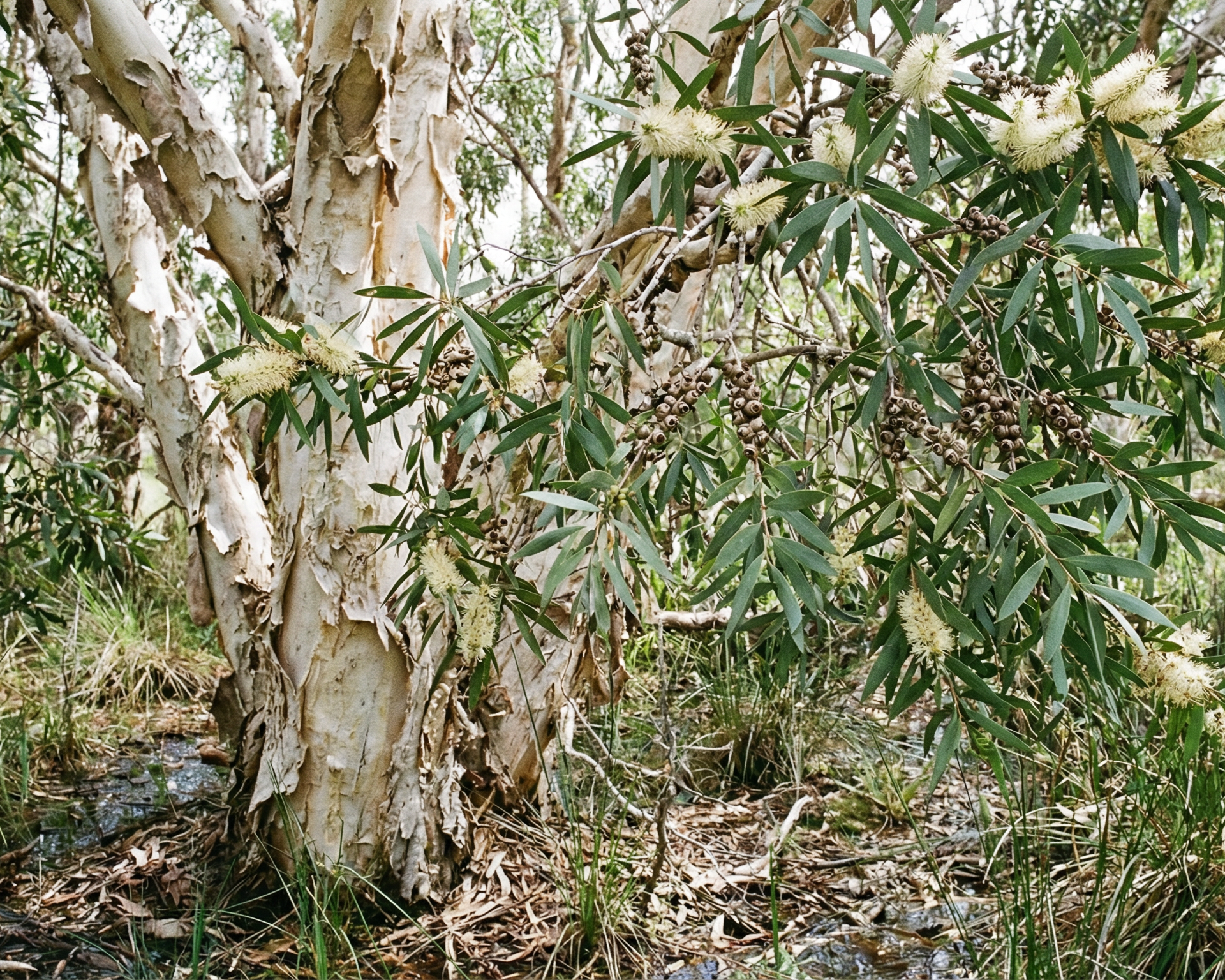
Melaleuca quinquenervia
1 nursery nationwide
Choose a city or ZIP to find nearby growers. Showing nationwide listings until you choose an area.
1 nursery · 4 matching options
Carpinteria, CA
4 options
From $10.00
Catalog checked Oct 1, 2026. Confirm availability before visiting.
Showing 1–1 of 1 nurseries
Melaleuca is a diverse genus of flowering plants belonging to the myrtle family, Myrtaceae. Comprising nearly 300 species, these plants are most commonly known as Paperbarks, Honey-myrtles, or Tea Trees. The majority of species are endemic to Australia, with a significant concentration in the southwest of Western Australia. They are a vital part of the Australian landscape, ranging in form from small, hardy shrubs to towering trees that can reach heights of up to 35 meters. The genus is notable for its characteristic bark, which in many species is white and peels off in thin, papery layers, giving rise to the common name "Paperbark." The name Melaleuca itself is derived from the Greek words for "black" and "white," likely referencing the fire-blackened trunks and white branches of early specimens. The key characteristics of the Melaleuca genus are its distinctive flowers and aromatic leaves. The flowers are arranged in showy spikes or heads that resemble a bottlebrush, composed of numerous small, individual flowers. The most conspicuous parts of the flowers are the stamens, which come in a variety of colors, including white, cream, yellow, pink, red, and mauve. The leaves are evergreen and contain conspicuous oil glands; when crushed, they release a fragrant aroma. The fruit is a woody capsule that often clusters along the stems, protecting the seeds within. In many species, these capsules will only open to release their seeds in response to fire or the death of the plant, a survival strategy adapted to the fire-prone Australian environment. Melaleuca species have long been significant for their practical and medicinal uses. Indigenous Australians have traditionally used the papery bark for roofing, bandages, and wrapping food for cooking. The flowers are a rich source of nectar, supporting a wide range of insects, birds, and mammals, and are also used in honey production. The most well-known commercial product derived from the genus is tea tree oil, extracted from the leaves of Melaleuca alternifolia. This essential oil is renowned for its antiseptic and anti-inflammatory properties and is a key ingredient in many cosmetic and health products. Several species are also popular in horticulture, valued for their attractive flowers and used as ornamental plants, screens, or street trees. In terms of cultivation, Melaleuca plants are generally hardy and adaptable. They thrive in a wide range of habitats, from swamps and riverbanks to poor, sandy soils. Many species are tolerant of both waterlogged conditions and drought, making them suitable for various garden settings. They typically prefer full sun to partial shade and can be propagated from either seed or cuttings. While most species are well-behaved in cultivation, Melaleuca quinquenervia has become a serious invasive weed in the Florida Everglades, where it has had a detrimental impact on the native ecosystem.