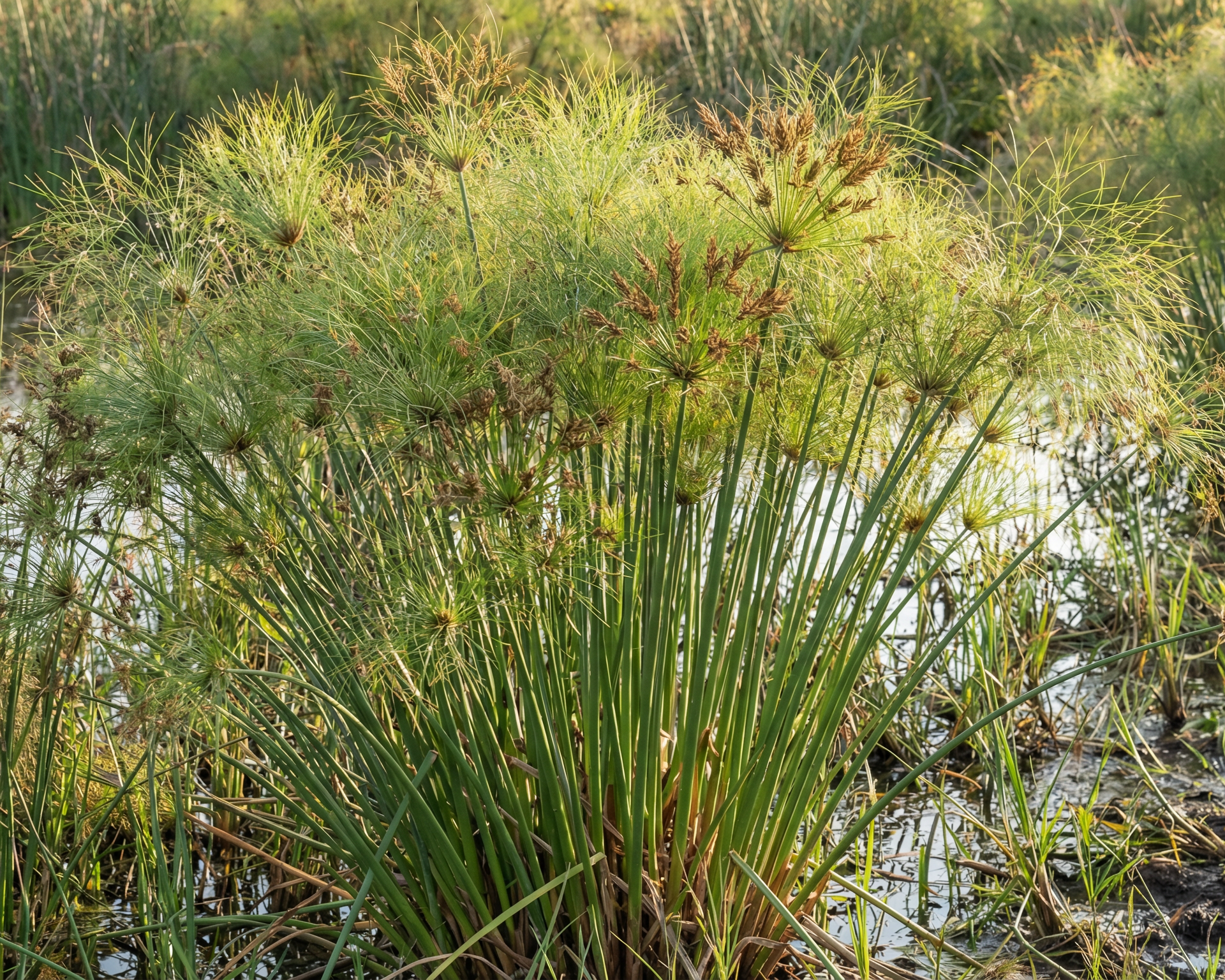
Papyrus
Cyperus papyrus
4 nurseries listed
Compare nurseries
Nurseries with recorded shipping, across all locations. Confirm delivery to your address and availability on the nursery website.
No nursery options match these filters
Try another size or variety, or broaden your location. Options with unconfirmed variety names are included when All varieties is selected.
About Papyrus
Papyrus is a genus of aquatic and semi-aquatic sedges in the family Cyperaceae, comprising about 700 species found in tropical and temperate regions worldwide. While the genus is diverse, its most famous member is Cyperus papyrus, the plant used by ancient Egyptians to make paper. Many species in this genus are referred to as flatsedges, nutsedges, or umbrella-sedges, and they are characterized by their grass-like appearance and preference for moist environments. Members of the Papyrus genus are typically perennial plants, though some are annuals. They range in size from just a few inches to over 16 feet tall. A key characteristic of many Cyperus species is their triangular or round stems, which are often leafless along most of their length. The leaves are typically found at the base of the plant and in a whorl at the top of the flowering stems. The flowers are small, greenish, and wind-pollinated, producing a small nutlet as a seed. The significance of the Papyrus genus extends beyond its most famous species. Cyperus esculentus, commonly known as tigernut, is cultivated for its edible tubers, which are eaten as a snack or used to make a milky drink called horchata. Other species, such as Cyperus textilis and Cyperus pangorei, are used in weaving to create mats and other textiles. Several species, including Cyperus alternifolius (umbrella papyrus), are popular ornamental plants for water gardens and as houseplants. The rhizomes of some species, like Cyperus rotundus, have been used in traditional medicine for centuries. Most Papyrus species thrive in wet, boggy conditions and are often found along the margins of ponds, streams, and marshes. They generally prefer full sun to partial shade and can be grown in containers or directly in the ground. While some species are prized for their ornamental or economic value, others, such as purple nutsedge (Cyperus rotundus), are considered invasive weeds in many parts of the world due to their aggressive growth and ability to spread via underground tubers.
Plant facts
- Sun
- Full Sun, Partial Sun, Partial Shade
- Water
- Likes Wet Feet, High
- USDA zones
- 9-11
- Lifecycle
- Perennial