Paspalum
Paspalum spp.
2 nurseries listed
Compare nurseries
Nurseries with recorded shipping, across all locations. Confirm delivery to your address and availability on the nursery website.
No nursery options match these filters
Try another size or variety, or broaden your location. Options with unconfirmed variety names are included when All varieties is selected.
About Paspalum
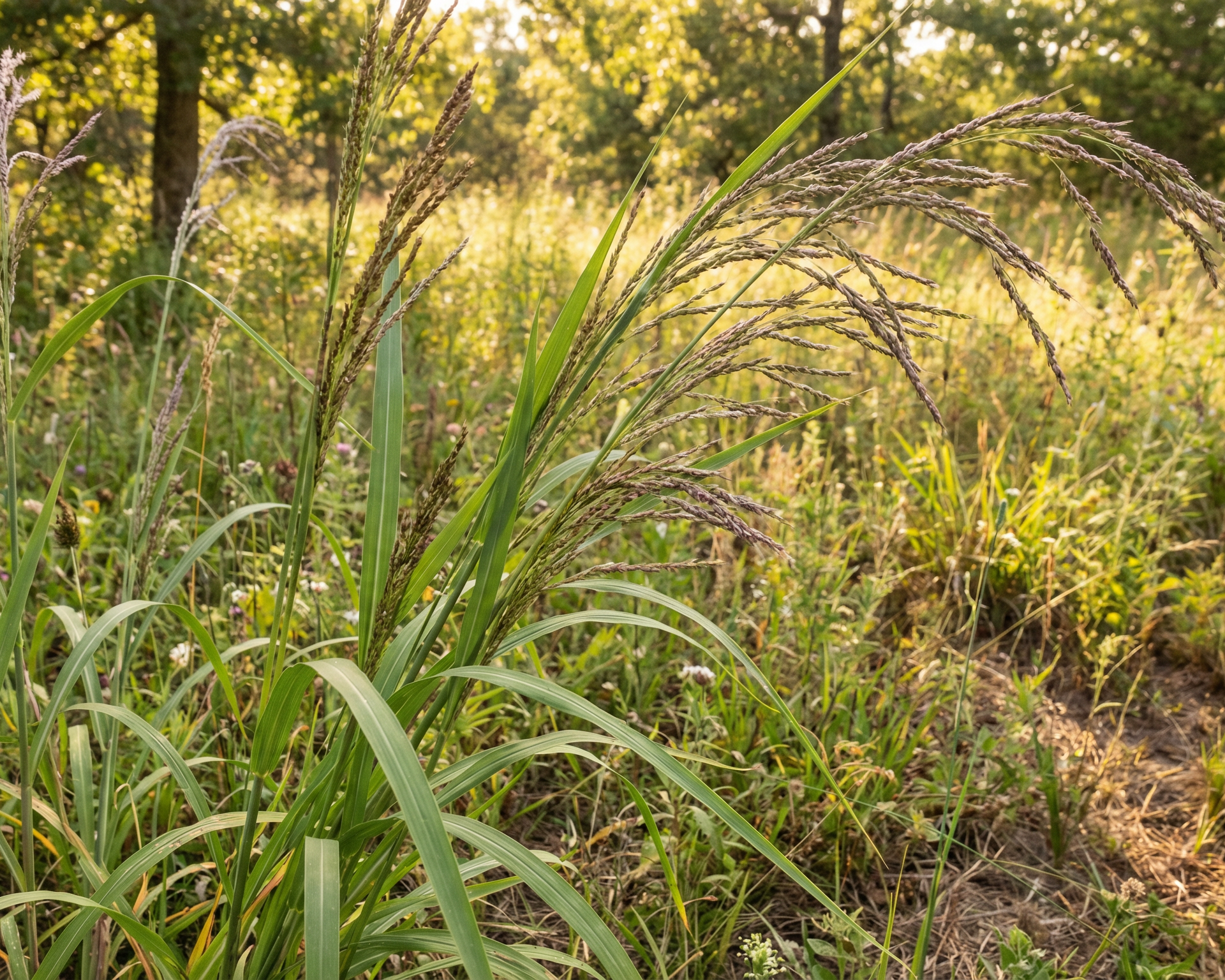
Paspalum is a large and diverse genus of grasses belonging to the Poaceae family, comprising over 300 species of annual and perennial plants. Commonly known as paspalum, crowngrass, or dallis grass, these grasses are predominantly found in tropical and warm temperate regions across the globe, with a significant presence in the Americas, Asia, Africa, and Australia. The genus is characterized by its adaptability to a wide range of environmental conditions, which has contributed to its widespread distribution and, in some cases, its classification as an invasive species outside of its native habitat. Physically, Paspalum grasses exhibit a variety of growth habits, ranging from tufted, upright clumps to creeping forms that spread via rhizomes or stolons. Their leaves are typically flat and linear, and they possess a C4 photosynthetic pathway, which allows for efficient growth in high-temperature and high-light environments while conserving water. The flowers are small and are arranged in spike-like structures called racemes. This combination of traits makes many Paspalum species particularly resilient and well-suited for challenging landscapes. The economic and ecological significance of the Paspalum genus is considerable. Several species, most notably bahiagrass (Paspalum notatum) and dallis grass (Paspalum dilatatum), are cultivated extensively as forage for livestock due to their nutritional value and grazing tolerance. In the realm of turf management, certain species like seashore paspalum (Paspalum vaginatum) are highly valued for their exceptional salt tolerance, making them ideal for use on golf courses, sports fields, and lawns in coastal areas. Furthermore, one species, kodo millet (Paspalum scrobiculatum), is cultivated as a food grain in parts of Asia and Africa. Beyond these direct uses, Paspalum grasses also play a role in erosion control and as a food source for various wildlife, including the caterpillars of some lepidopteran species and granivorous birds. Cultivation and care of Paspalum grasses depend on the specific species and its intended use. As warm-season grasses, they thrive in full sun and are generally well-adapted to a variety of soil types, from sandy to clay loams. Many species exhibit good drought tolerance once established, although they perform best with regular moisture. When used as turf, they require regular mowing to maintain a desirable height and density. While generally robust, some Paspalum species can be susceptible to diseases such as ergot, which can be toxic to grazing animals. Due to their vigorous growth, some species can become weedy and may require management to prevent them from encroaching on unwanted areas.
Plant facts
- Sun
- Full Sun, Partial Sun
- Water
- Drought Tolerant, Regular
- USDA zones
- 5-11
- Lifecycle
- Perennial