Smarty Plants Nursery
Miami, FL
4 options
From $37.50
Catalog checked Oct 1, 2026. Confirm availability before visiting.
Cereus repandus
1 nursery listed
1 nursery · 4 matching options
Miami, FL
4 options
From $37.50
Catalog checked Oct 1, 2026. Confirm availability before visiting.
Showing 1–1 of 1 nurseries
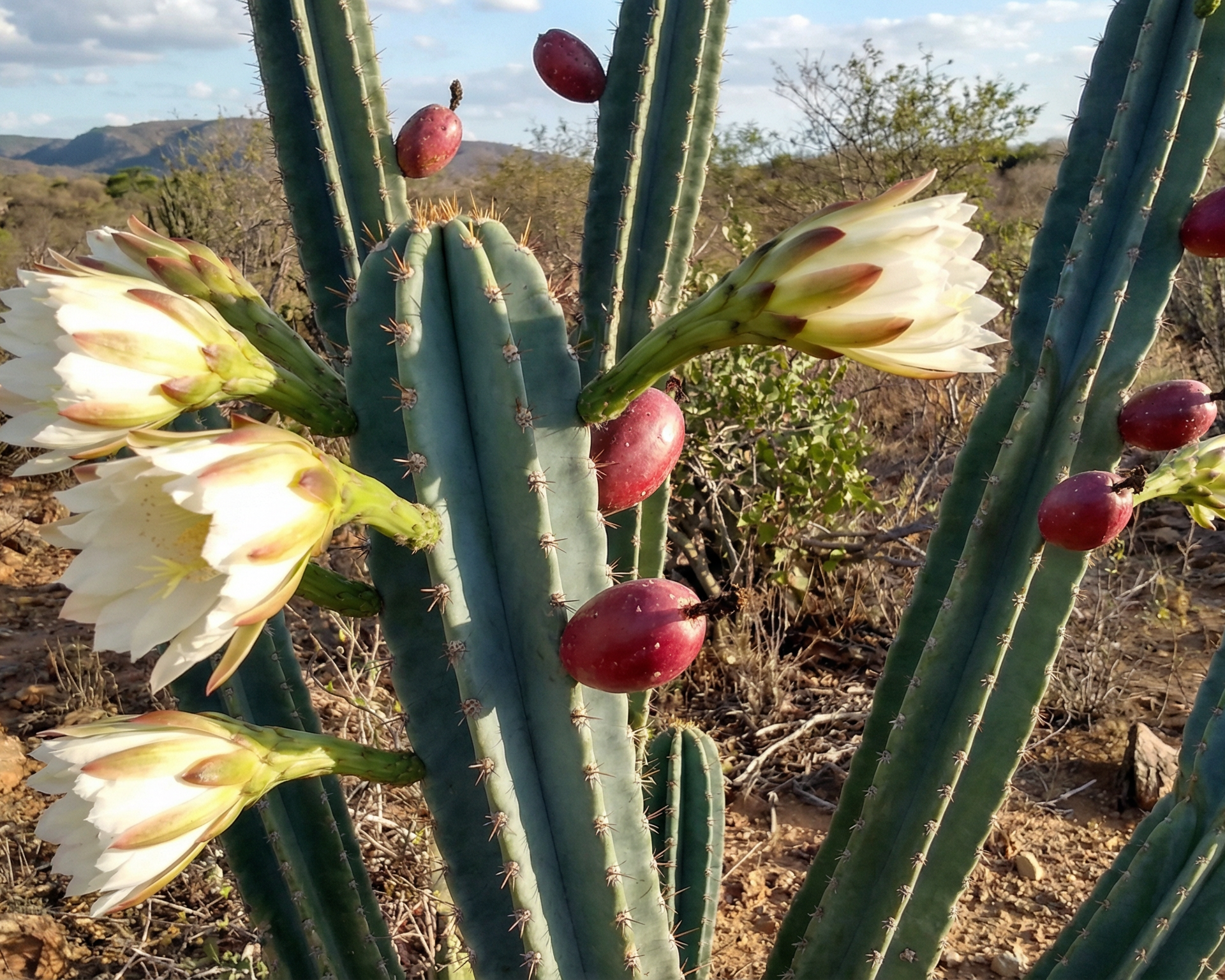
The Peruvian Apple Cactus (Cereus repandus), also known as Giant Club Cactus or Hedge Cactus, is a large, columnar cactus native to South America. It belongs to the genus Cereus, which encompasses about 33 species of large, tree-like cacti. While the term 'cereus' can refer to the genus itself, it is also used more broadly to describe any cactus with an elongated, cylindrical body. The Peruvian Apple Cactus is one of the most well-known species within the Cereus genus, widely cultivated for its ornamental value and its edible fruit. This cactus is characterized by its tall, erect, and branching stems that can grow up to 33 feet (10 meters) in height. The stems are cylindrical, have a gray-green to blue-green color, and feature 9 to 10 prominent, rounded ribs. Along these ribs are areoles, which bear clusters of sharp, brownish spines. One of the most spectacular features of the Peruvian Apple Cactus is its enormous, fragrant, night-blooming flowers. These funnel-shaped blossoms can be up to 6 inches (15 cm) in diameter and are typically white or cream-colored, opening at dusk and closing by morning. Following the bloom, the plant produces a large, round, reddish fruit that resembles an apple, giving the cactus its common name. The fruit's flesh is white with crunchy black seeds and has a sweet, mild flavor. The Peruvian Apple Cactus has a variety of uses. The fruit is edible and can be eaten fresh, and is sometimes compared to a cross between a dragon fruit and cotton candy. The woody skeletons of dead cactus stems have been used in construction and for making furniture. Due to its size and spiny nature, it is also frequently planted as a living fence. In some traditional medicine practices, parts of the plant have been used for treating various ailments. Cultivation of the Peruvian Apple Cactus is relatively straightforward, making it a popular choice for xeriscaping and as a houseplant. It thrives in well-draining soil and requires plenty of bright, indirect sunlight. While it is drought-tolerant, it benefits from regular watering during the growing season, allowing the soil to dry out completely between waterings. It is not frost-tolerant and should be protected from freezing temperatures. Propagation is easily achieved through cuttings, which can be rooted in dry, sandy soil.