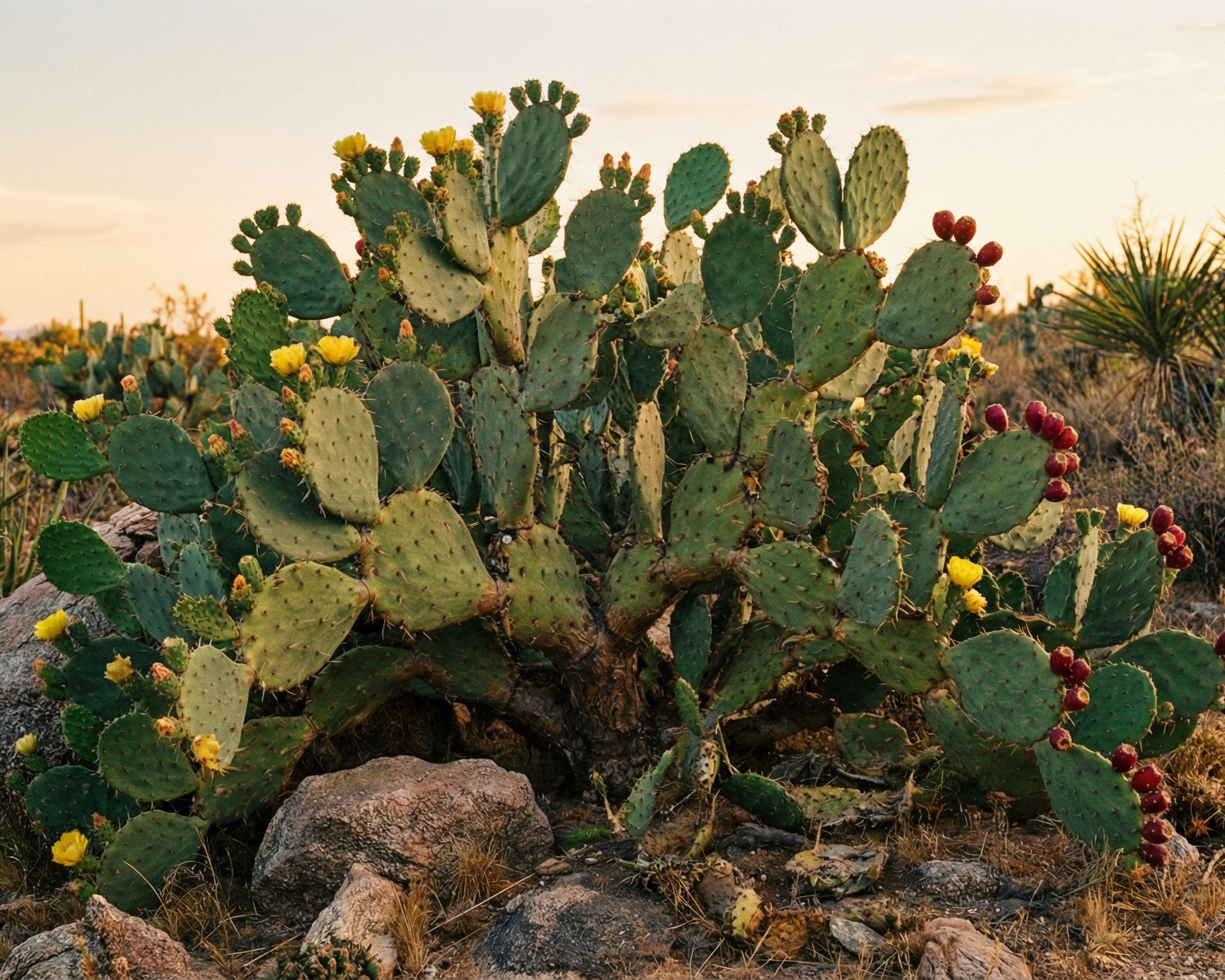
Prickly pear
Opuntia spp.
15 nurseries listed
Compare nurseries
15 nurseries · 45 matching options
15 locations on the map. Select a marker or a nursery to compare.
Preparing the map…
Your location isn’t saved. Confirm availability and visiting hours with the nursery.
About Prickly pear
Opuntia, commonly known as the prickly pear cactus, is a diverse and widespread genus of flowering plants in the cactus family, Cactaceae. Native to the Americas, these cacti have been introduced to various parts of the world, including southern Europe, Africa, and Australia, where some species have become invasive. The genus comprises approximately 150 species, ranging from low-growing shrubs to tree-like specimens. Prickly pears are a vital component of their native ecosystems, providing food and shelter for a wide array of wildlife, including tortoises, rabbits, deer, and various bird species. The most recognizable feature of the prickly pear cactus is its distinctive segmented stems, which are flattened into paddle-like structures called cladodes or pads. These pads, which can be green to bluish-gray, are covered in areoles that produce both large, fixed spines and small, hair-like prickles known as glochids. The glochids can easily detach and cause skin irritation. In the spring and early summer, the plant produces large, showy flowers in vibrant shades of yellow, orange, red, or magenta. These blossoms give way to fleshy, oval-shaped fruits called "tunas," which can be red, green, or yellow-orange and are a food source for both humans and animals. Prickly pear cacti have a long history of human use for food, medicine, and other purposes. The young, tender pads, known as "nopales," are a staple in Mexican cuisine and are eaten raw in salads or cooked in a variety of dishes. The sweet, fleshy fruits, or "tunas," are also widely consumed, either fresh or used to make juices, jams, and candies. Beyond its culinary uses, the prickly pear has been utilized in traditional medicine for its anti-inflammatory and other healing properties. Furthermore, the cactus serves as a host for the cochineal insect, from which a natural red dye is derived. In some regions, prickly pears are also used for fencing and as a source of fodder for livestock.
Plant facts
- Sun
- Full Sun
- Water
- Drought Tolerant, Low
- USDA zones
- 8-11
- Lifecycle
- Perennial