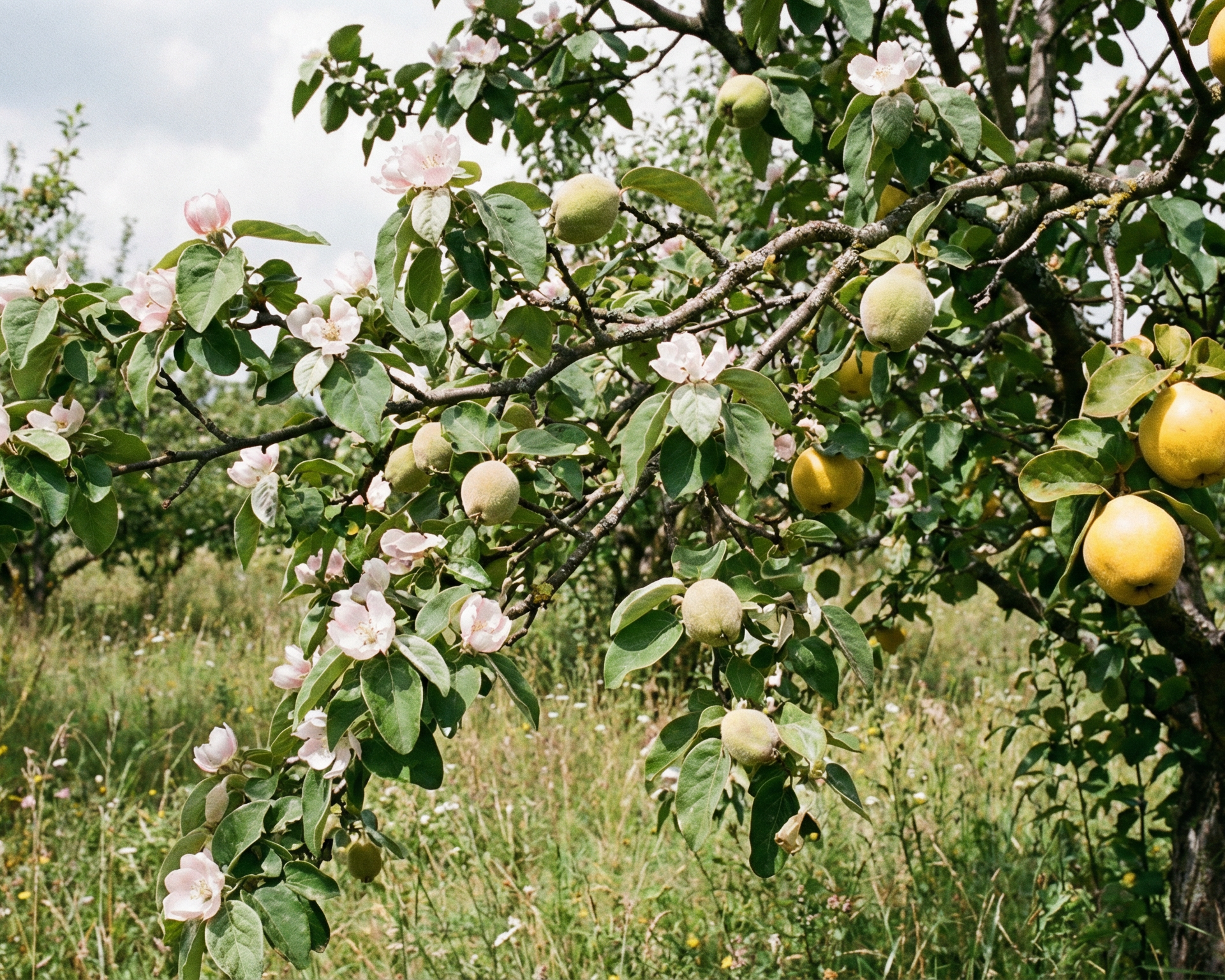
Quince
Cydonia oblonga
2 nurseries listed · 3 named varieties
Compare nurseries
2 nurseries · 14 matching options
2 locations on the map. Select a marker or a nursery to compare.
Preparing the map…
Your location isn’t saved. Confirm availability and visiting hours with the nursery.
About Quince
The quince is the sole member of the genus Cydonia, belonging to the Rosaceae family, which also includes apples and pears. Native to the Trans-Caucasus region of Western Asia, this deciduous tree is cultivated for its hard, aromatic, and golden-yellow pome fruit. While the raw fruit is often hard, tart, and astringent, it transforms when cooked, becoming soft and developing a rich, complex flavor and aroma, making it a prized ingredient in jams, jellies, and desserts. Quince trees are relatively small, typically growing to a height of 12 to 15 feet, with a crooked and spreading habit. The leaves are large and oval, with a downy-white underside, and the tree produces large, pale-pink to white blossoms in the spring. The fruit itself is large and pear-shaped or round, with a fuzzy, golden-yellow skin when ripe. The flesh is firm and contains gritty stone cells, which soften with cooking. Beyond its culinary uses, the quince holds cultural and medicinal significance. In ancient Greece, it was associated with the goddess Aphrodite and considered a symbol of love and fertility. The fruit is rich in pectin, vitamins, and minerals, and has been used in traditional medicine for its anti-inflammatory and digestive properties. In permaculture, the quince tree is valued for its hardiness, drought tolerance, and resistance to pests and diseases, making it a low-maintenance and productive addition to a food forest or orchard.
Plant facts
- Sun
- Full Sun, Partial Sun
- Water
- Regular, Drought Tolerant
- USDA zones
- 5-9
- Lifecycle
- Perennial
Variety guides
Explore the complete plant collection, including varieties with no nursery listings yet.