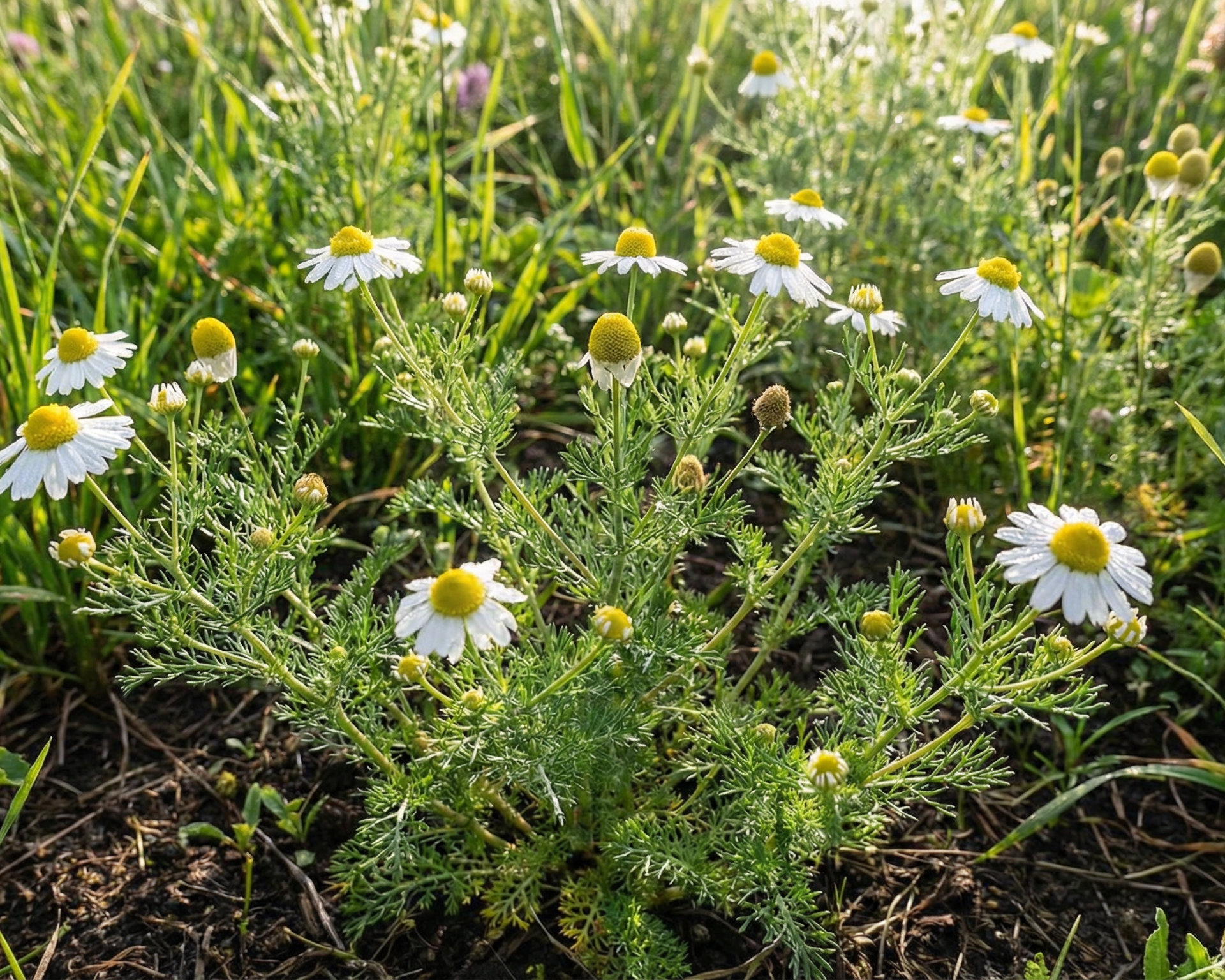
Roman chamomile
Chamaemelum nobile
2 nurseries listed
Compare nurseries
2 nurseries · 2 matching options
2 locations on the map. Select a marker or a nursery to compare.
Preparing the map…
Your location isn’t saved. Confirm availability and visiting hours with the nursery.
About Roman chamomile
Roman Chamomile (Chamaemelum nobile), a member of the daisy family (Asteraceae), is a low-growing perennial herb celebrated for its aromatic and therapeutic properties. Native to Western Europe and North Africa, this plant is the most well-known species within the small Chamaemelum genus. Its name, derived from the Greek words "chamos" (ground) and "melos" (apple), aptly describes its low-growing habit and the sweet, apple-like fragrance released when its leaves are bruised. For centuries, Roman Chamomile has been a staple in traditional herbal medicine and is a common feature in cottage gardens and herbal landscapes. This charming herb forms a dense, spreading mat of evergreen foliage, typically reaching a height of only 3-6 inches. Its leaves are finely dissected and fern-like, creating a soft, feathery texture. From late spring through summer, the plant produces an abundance of small, daisy-like flowers with white petals surrounding a bright yellow central cone. These flowers are not only visually appealing but are also the primary part of the plant used for their medicinal and aromatic qualities. The plant spreads via creeping stems that root as they travel along the ground, allowing it to form a fragrant, living carpet. Roman Chamomile is renowned for its calming effects and is most famously consumed as an herbal tea to promote relaxation and aid in sleep. The dried flowers are used to create this soothing infusion, which has also been traditionally employed to alleviate a variety of ailments, including headaches, indigestion, and anxiety. Beyond its use in teas, Roman Chamomile is incorporated into cosmetics for its skin-soothing properties and in hair care products to enhance blonde tones. In landscaping, its tolerance for light foot traffic and its pleasant scent have made it a popular choice for creating aromatic lawns, paths, and seats, a practice dating back to Elizabethan times. Cultivating Roman Chamomile is relatively straightforward, as it is a hardy and adaptable plant. It thrives in full sun to partial shade and prefers well-drained, sandy soils. While it can tolerate periods of drought, it performs best with consistent moisture. This plant is easily propagated from seed or by dividing established clumps. Due to its spreading nature, it can be an aggressive grower in optimal conditions and may require some management to keep it within its intended boundaries. It can be mowed when grown as a lawn substitute, which helps to encourage a denser, more compact growth habit and releases its delightful fragrance into the air.
Plant facts
- Sun
- Full Sun, Partial Sun, Partial Shade
- Water
- Regular, Low
- USDA zones
- 4-9
- Lifecycle
- Perennial