Advanced Nursery Growers
Defuniak Springs, FL
2 options
From $8.00
Catalog checked Oct 1, 2026. Confirm availability before visiting.
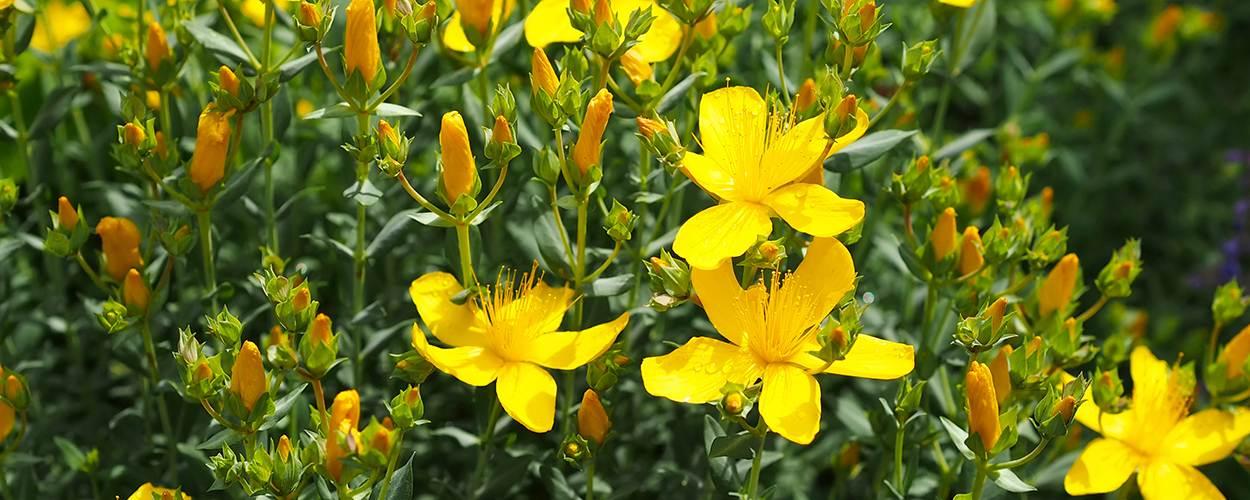
Hypericum perforatum
2 nurseries listed
2 nurseries · 3 matching options
Defuniak Springs, FL
2 options
From $8.00
Catalog checked Oct 1, 2026. Confirm availability before visiting.
Oakland, CA
1 option
Call for pricing
Catalog checked Oct 1, 2026. Confirm availability before visiting.
Showing 1–2 of 2 nurseries
St. John's Wort, the common name for the genus Hypericum, encompasses a diverse group of flowering plants with a nearly worldwide distribution, absent only from tropical lowlands, deserts, and polar regions. The name "St. John's Wort" is derived from the plant's traditional blooming and harvesting time around St. John's Day, June 24th. The genus holds significant cultural and historical importance, with some species, particularly Hypericum perforatum, having been used for centuries in traditional medicine. The etymology of Hypericum itself is rooted in Greek, with "hyper" (above) and "eikon" (image), referring to the ancient practice of hanging the flowers over religious icons to ward off evil spirits. The plants within the Hypericum genus are quite varied in appearance, ranging from small annual herbs to larger shrubs and even small trees. A defining characteristic of many species is the presence of translucent dots on the leaves, which are actually oil glands containing various chemical compounds. These glands can appear as perforations, giving species like Hypericum perforatum its specific epithet. The flowers are typically a vibrant yellow, with five petals and a prominent cluster of numerous stamens, giving them a sunburst-like appearance. When the flowers or buds are crushed, they often release a reddish-purple liquid, a result of the pigment hypericin, which was historically associated with the blood of St. John the Baptist. Hypericum perforatum, or Common St. John's Wort, is the most well-known species in the genus and has a long history of medicinal use. It is most famously used as an herbal remedy for mild to moderate depression, and its effectiveness has been the subject of numerous clinical studies. Beyond its medicinal applications, many Hypericum species are cultivated as ornamental plants in gardens and landscapes for their attractive, sunny-yellow flowers and long blooming season. Some species are also used to create yellow dyes. However, it is important to note that some species, including H. perforatum, can be invasive in certain regions and are considered noxious weeds, outcompeting native flora. The plant can also be toxic to livestock. In terms of cultivation, St. John's Wort is generally considered a low-maintenance plant. Most species thrive in full sun to partial shade and prefer well-drained soil. They are adaptable to a range of soil types, from sandy to clay, and can tolerate a variety of pH levels. Once established, many species are drought-tolerant. Propagation can be achieved through seeds, cuttings, or division. While generally hardy, some species can be susceptible to root rot in overly moist conditions. Pruning is typically done in the spring to remove any dead or damaged growth and to encourage a more compact, bushy form.
Explore the complete plant collection, including varieties with no nursery listings yet.