Teasel
Dipsacus spp.
2 nurseries listed
Compare nurseries
2 nurseries · 3 matching options
2 locations on the map. Select a marker or a nursery to compare.
Preparing the map…
Your location isn’t saved. Confirm availability and visiting hours with the nursery.
About Teasel
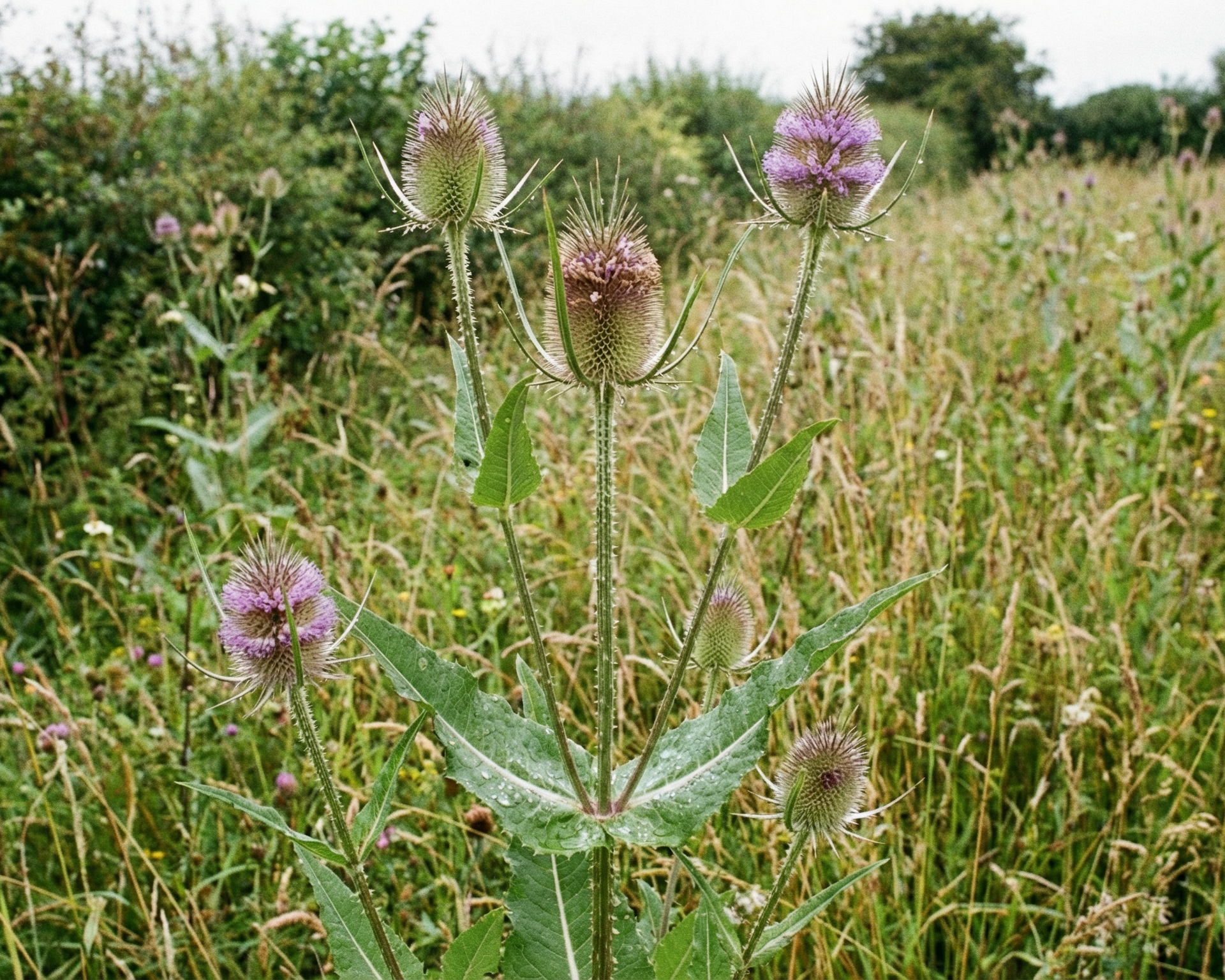
Teasel (Dipsacus) is a genus of flowering plants known for their distinctive, spiny flower heads and robust, architectural form. Comprising about 15 species, these herbaceous biennial or short-lived perennial plants are native to Europe, Asia, and North Africa. The most well-known species is Dipsacus fullonum, or common teasel, which has naturalized in many parts of the world, including North America, where it is often considered an invasive weed. The genus name Dipsacus is derived from the Greek word for thirst, dipsa, which refers to the cup-like structures formed where the leaves meet the stem, collecting rainwater. Teasels are characterized by their tall, prickly stems that can reach heights of up to 2.5 meters. The leaves are lance-shaped and arranged in opposite pairs along the stem, fusing at the base to form the characteristic water-collecting cups. The most prominent feature of the teasel is its flower head, a dense, egg-shaped or cylindrical cluster of small flowers. These flower heads are surrounded by spiny bracts, giving them a thistle-like appearance. The flowers, typically pale purple or white, bloom in a ring around the head, starting from the middle and moving towards the top and bottom. After flowering, the heads dry and persist through the winter, providing architectural interest in the garden and a food source for birds, such as goldfinches, which feed on the seeds. Historically, teasels have had a significant, albeit niche, industrial use. The dried flower heads of one variety, Dipsacus sativus, known as Fuller's teasel, were once attached to spindles and used to raise the nap on woolen fabrics, a process known as "teasing" the cloth. This traditional use gave the plant its common name. While this practice has been largely replaced by modern machinery, the dried flower heads are still valued in floristry for their unique and enduring structure. In traditional medicine, some species of Dipsacus have been used for their purported diuretic and diaphoretic properties. However, their aggressive, invasive nature in non-native environments is a primary concern for land managers, as they can outcompete native vegetation. From a horticultural perspective, teasels can be a striking addition to a garden, particularly in wilder, more naturalistic plantings. They thrive in a wide range of conditions but prefer sunny locations with well-drained soil. Due to their prolific self-seeding, it is advisable to manage their spread by removing the flower heads before they set seed if they are not desired in other parts of the garden. Despite their invasive tendencies in some regions, their unique appearance and value to wildlife make them a plant of interest, embodying a blend of utility, beauty, and wildness.
Plant facts
- Sun
- Full Sun, Partial Sun
- Water
- Regular, Low, Drought Tolerant
- USDA zones
- 4-9
- Lifecycle
- Biennial