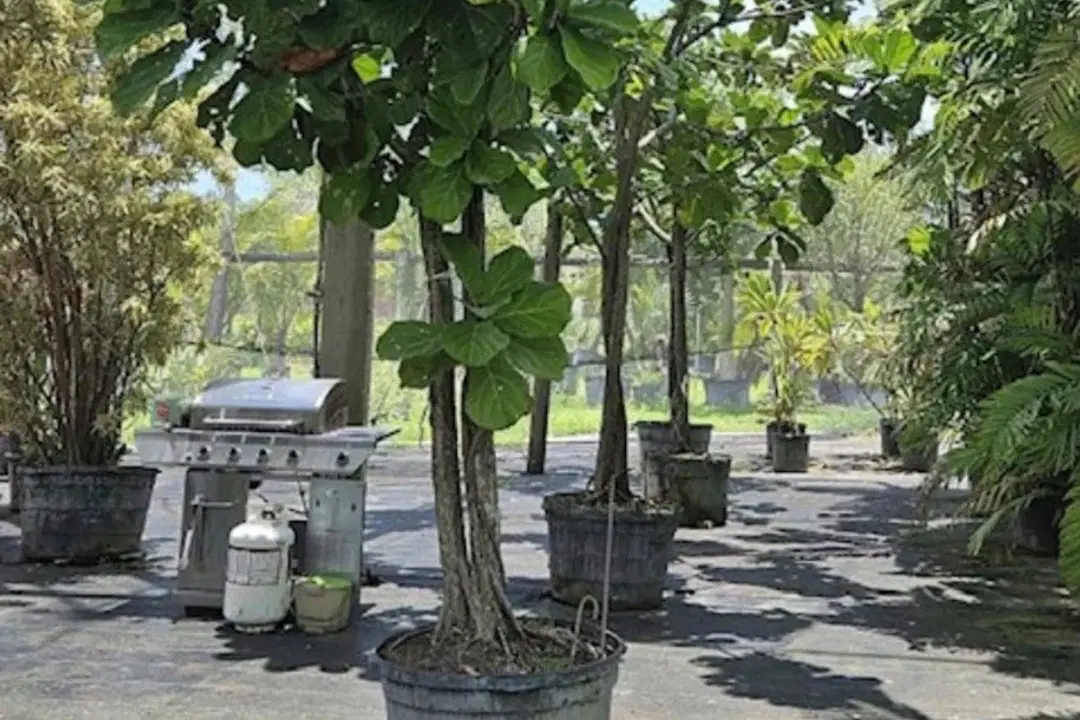
Terminalia is a genus of large trees, comprising nearly 300 species distributed in tropical regions of the world. The genus name is derived from the Latin word terminus, referring to the fact that the leaves appear at the very tips of the shoots. While the genus as a whole is sometimes referred to as "Cluster-leafs," the most well-known species is Terminalia catappa, commonly known as the Tropical Almond or Indian Almond. This large, deciduous tree is widely cultivated in tropical regions for its ornamental value and edible nuts.
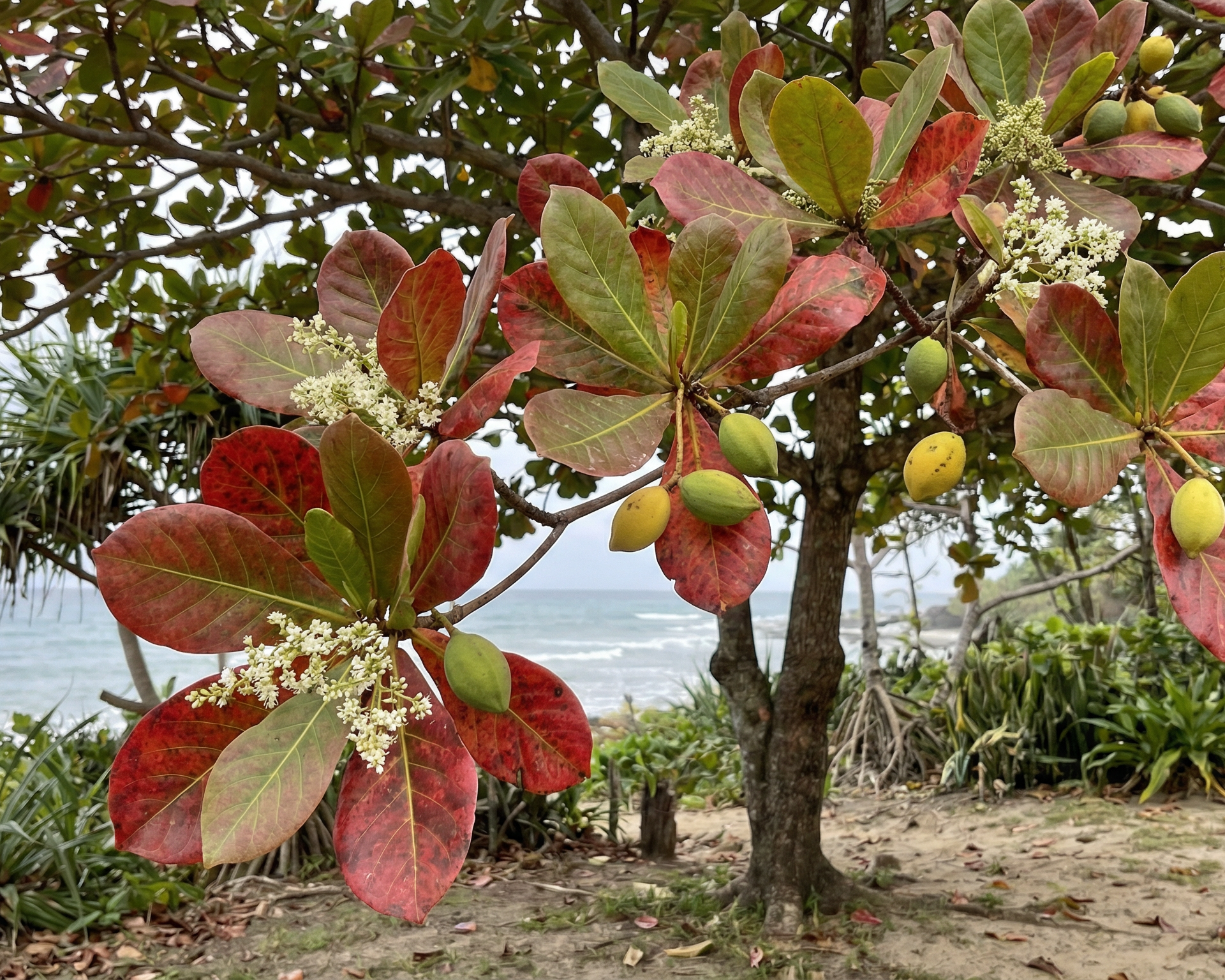
The Tropical Almond tree is characterized by its distinctive pagoda-like shape, with a single, upright trunk and horizontal branches that grow in tiers. The leaves are large, leathery, and obovate, turning red, yellow, or purple before falling. The trees produce small, greenish-white flowers that are followed by almond-shaped, drupaceous fruits. The fruit has a fibrous, fleshy pericarp that encloses a hard stone containing an edible, almond-like seed. The tree is fast-growing and can reach heights of up to 35 meters.
Beyond its ornamental use, the Tropical Almond has a variety of applications. The seeds are edible and can be eaten raw or roasted, and are often used in desserts and confections. The oil extracted from the seeds is used in cooking and for cosmetic purposes. The leaves, bark, and fruit have a long history of use in traditional medicine for treating a range of ailments, including dysentery, coughs, and skin diseases. The wood is used for construction, furniture, and boat-building. The tree is also valued in agroforestry systems for its ability to provide shade and act as a windbreak.
Tropical Almond trees thrive in warm, tropical climates with well-drained, sandy or loamy soils. They are tolerant of salt spray and are often found growing in coastal areas. The trees are relatively low-maintenance and require minimal pruning. They are propagated by seed, which should be soaked in water for 24 hours before planting. The trees are relatively pest and disease resistant, but can be susceptible to attack by termites and other wood-boring insects.
 On site