2 options
Call for pricing
Catalog checked Oct 2, 2026. Confirm availability before visiting.
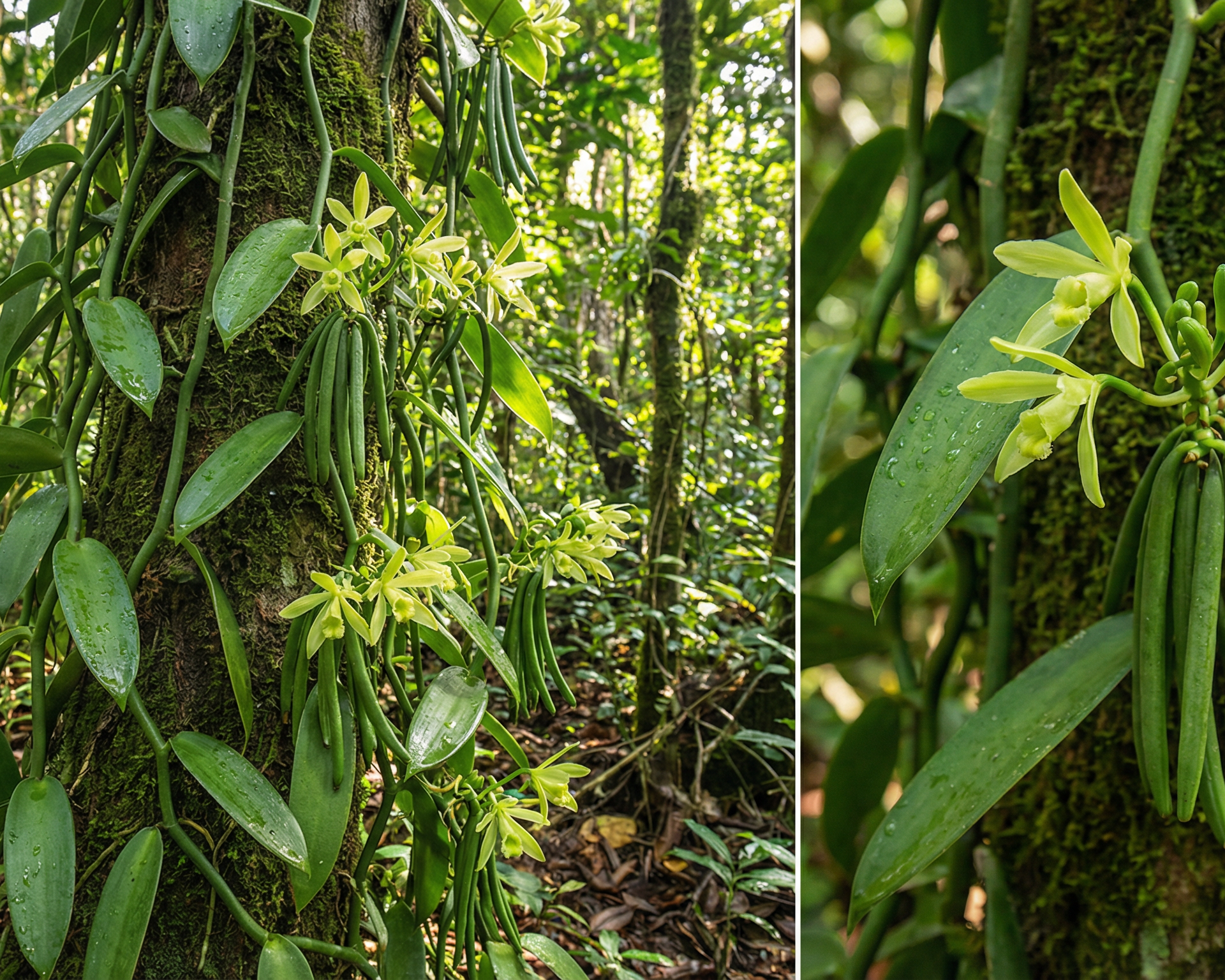
Vanilla spp.
9 nurseries listed
9 nurseries · 16 matching options
2 options
Call for pricing
Catalog checked Oct 2, 2026. Confirm availability before visiting.
Homestead, FL
1 option
From $39.95
Catalog checked Oct 1, 2026. Confirm availability before visiting.
Loxahatchee, FL
1 option
From $35.00
Catalog checked Oct 1, 2026. Confirm availability before visiting.
Pawtucket, RI
2 options
Call for pricing
Catalog checked Oct 4, 2026. Confirm availability before visiting.
Mililani, HI
5 options
Call for pricing
Catalog checked Oct 4, 2026. Confirm availability before visiting.
Ojai, CA
2 options
Call for pricing
Catalog checked Oct 1, 2026. Confirm availability before visiting.
Loxahatchee, FL
1 option
From $35.00
Catalog checked Oct 1, 2026. Confirm availability before visiting.
Seffner, FL
1 option
From $60.00
Catalog checked Oct 1, 2026. Confirm availability before visiting.
Showing 1–8 of 9 nurseries
Load more nurseriesVanilla is a genus of about 110 species of flowering plants in the orchid family (Orchidaceae). The genus was established in 1754 by Plumier, after J. Miller. The word vanilla, derived from the diminutive of the Spanish word vaina (vaina itself meaning sheath or pod), simply translates as little pod. These orchids are found in tropical and subtropical regions worldwide, from tropical America to tropical Asia, New Guinea and West Africa. The most widely known member is the flat-leaved vanilla (V. planifolia), native to Mexico and Belize, from which commercial vanilla flavoring is derived. It is the only orchid widely used for industrial purposes in flavoring such products as foods, beverages and cosmetics, and is recognized as the most popular aroma and flavor. This genus of vine-like plants has a monopodial climbing habitus. They can form long thin stems with a length of more than 35 m, with alternate leaves spread along their length. The short, oblong, dark green leaves of Vanilla are thick and leathery, even fleshy in some species. But there are also a significant number of species that have their leaves reduced to scales or have become nearly or totally leafless and appear to use their green climbing stems for photosynthesis. Long and strong aerial roots grow from each node. The racemose inflorescence's short-lived flowers arise successively on short peduncles from the leaf axils or scales. There may be up to 100 flowers on a single raceme, but usually no less than 20. The flowers are quite large and attractive with white, green, greenish yellow or cream colors. The flowers' sepals and petals are similar. The lip is tubular-shaped and surrounds the long, bristly column, opening up, as the bell of a trumpet, at its apex. Vanilla was prized as an incense, flavoring, and perfume in ancient Mesoamerica by the Maya, Aztec, and Totonac cultures. The ancient Aztecs flavored a chocolate beverage, called Xoco-lall, with vanilla and to this day vanilla is a common ingredient in chocolate candies and beverages. Spanish conquistador Hernan Cortéz sampled this drink and returned to Spain with reports it contained magical powers. The characteristic flavor of vanilla comes from the aromatic compound “vanillin” which is described as tasting like a marshmallow. In vanilla pods of exceptionally high quality, the crystallized vanillin may be visible on the surface in the form of tiny white needles. Up to 85% of vanilla essential oil is vanillin. Many artificial vanilla flavors are primarily vanillin and consequently this is what is most associated with vanilla flavor.
Explore the complete plant collection, including varieties with no nursery listings yet.