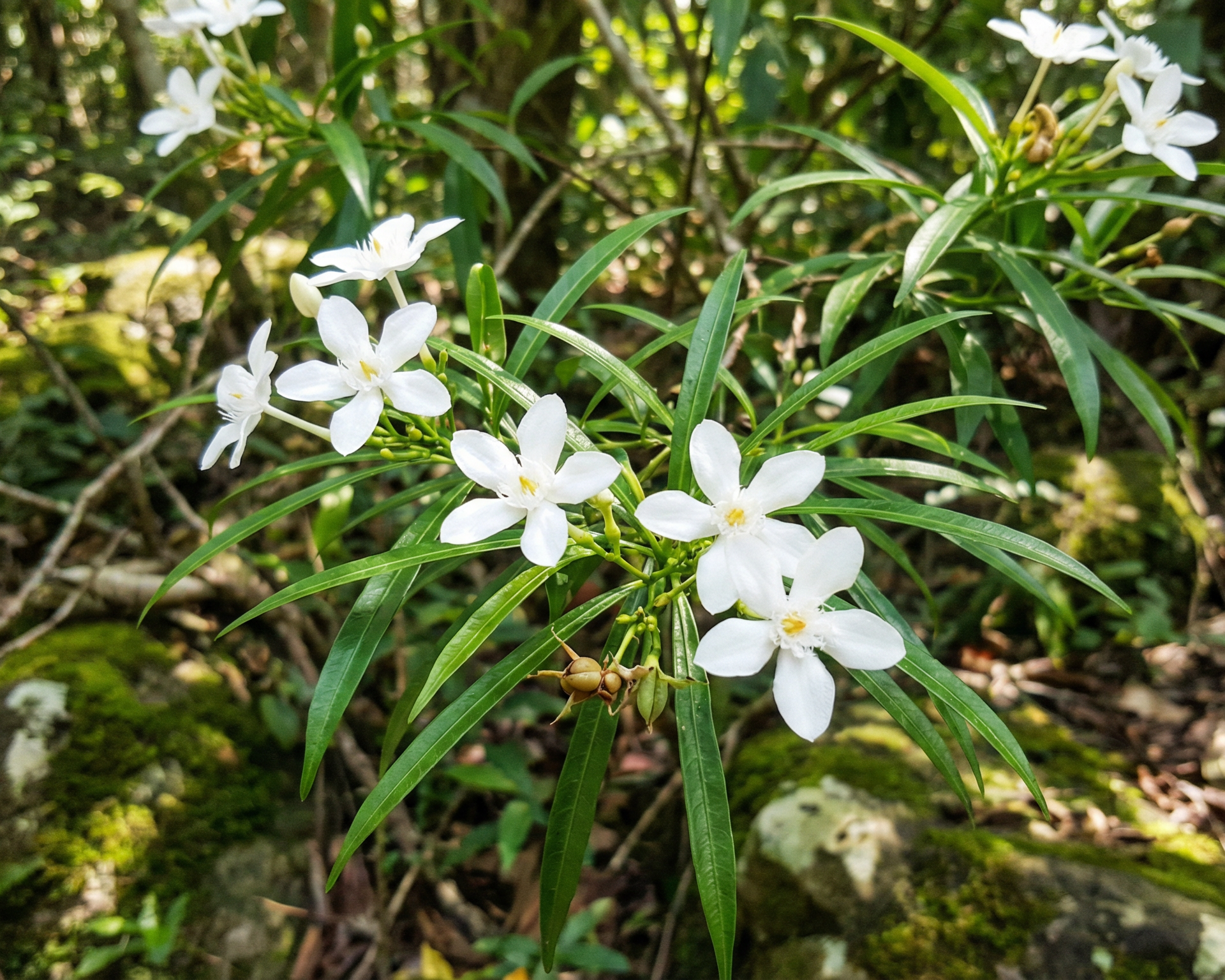
Water jasmine
Wrightia religiosa
1 nursery listed
Compare nurseries
1 nursery · 1 matching option
1 location on the map. Select a marker or a nursery to compare.
Preparing the map…
Your location isn’t saved. Confirm availability and visiting hours with the nursery.
About Water jasmine
Wrightia is a genus of flowering plants in the family Apocynaceae, commonly known as Water Jasmine. The genus comprises around 34 species of small trees and shrubs native to tropical Africa, Asia, and Australia. The plants are characterized by their milky sap, simple, oppositely arranged leaves, and often fragrant, star-shaped white flowers. The genus was named in honor of William Wright, a Scottish physician and botanist. Key Characteristics Members of the Wrightia genus are typically small, deciduous or evergreen trees or shrubs. They feature simple, elliptical to lance-shaped leaves arranged in opposite pairs along the stems. The most prominent feature of the genus is its flowers, which are usually white, although some species have yellowish or reddish blooms. The flowers are funnel-shaped with five petals that are often twisted or curled, giving them a pinwheel-like appearance. Many species, such as Wrightia religiosa (Water Jasmine), are prized for their intensely fragrant blossoms. The fruits are typically long, slender, and paired follicles, which split open when mature to release seeds tufted with silky hairs. Uses and Significance Several species of Wrightia have a long history of use in traditional medicine, particularly in Ayurveda. Wrightia tinctoria, known as Sweet Indrajao, is used to treat a variety of ailments, including skin diseases, dysentery, and fever. The bark, leaves, and seeds of various species are reported to have medicinal properties. In addition to their medicinal uses, some Wrightia species are cultivated as ornamental plants. Wrightia religiosa is a popular choice for bonsai and is often planted in gardens and near temples in Southeast Asia for its fragrant flowers. Wrightia antidysenterica, with its profusion of white, star-like flowers, is also a popular ornamental shrub, known by common names such as Snowflake and Arctic Snow. Growing Conditions and Care Wrightia species generally thrive in tropical and subtropical climates. They prefer well-drained soil and a position in full sun to partial shade. Regular watering is required, especially during dry periods, but the soil should not be allowed to become waterlogged. These plants can be propagated from seeds or cuttings. Pruning can be done to maintain a desired shape and size, and to encourage bushier growth and more prolific flowering. With their attractive flowers and relatively easy care, Wrightia species make excellent additions to gardens, parks, and as container plants.
Plant facts
- Sun
- Full Sun, Partial Sun
- Water
- Regular, Low, Drought Tolerant
- USDA zones
- 10-12
- Lifecycle
- Perennial