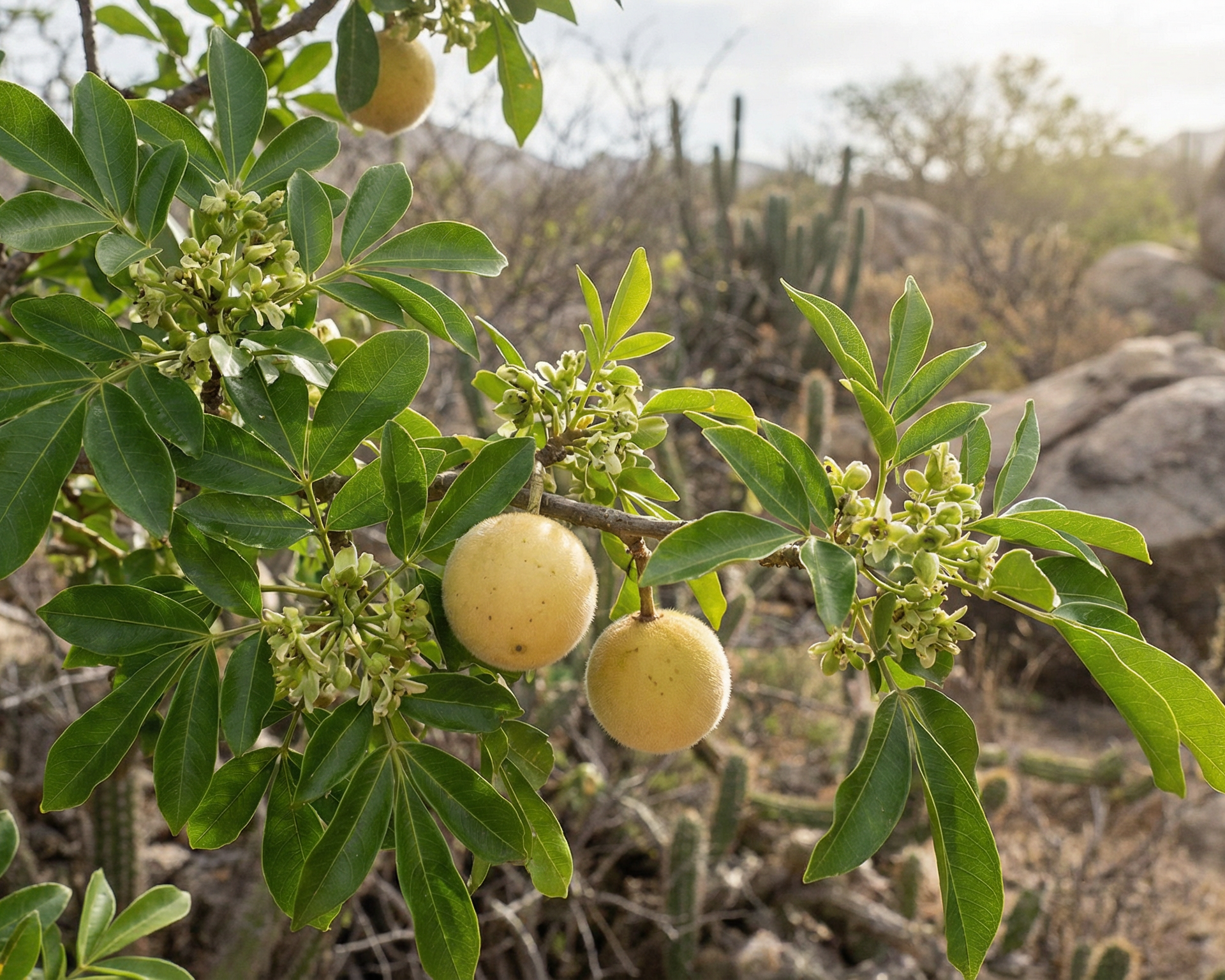
White Sapote
Casimiroa edulis
4 nurseries listed · 2 named varieties
Compare nurseries
4 nurseries · 40 matching options
4 locations on the map. Select a marker or a nursery to compare.
Preparing the map…
Your location isn’t saved. Confirm availability and visiting hours with the nursery.
About White Sapote
White Sapote (Casimiroa edulis), a member of the genus Casimiroa and the family Rutaceae, is a fruit-bearing tree native to the highlands of central Mexico and Central America. The genus, which includes about ten species, is named in honor of Casimiro Gómez, an Otomi Indian who was a hero in Mexico's war of independence. While the general common name for plants in this genus is sapote, White Sapote is the most widely recognized and cultivated species, also known by names such as Mexican apple and casimiroa. Despite its common name, it is not a true sapote from the Sapotaceae family but is more closely related to citrus. The White Sapote is a medium to large evergreen tree that can reach heights of 15 to 50 feet, with a dense, spreading canopy that provides ample shade. Its leaves are palmately compound, with five or six glossy, bright green leaflets, each about 5-6 inches long. The tree produces small, greenish-yellow flowers in terminal and axillary panicles, which are followed by the main attraction: the fruit. The fruit is round to oval, with a thin, delicate skin that ranges from green to yellow. The flesh has a creamy, custard-like texture and a sweet flavor often compared to a blend of peach, banana, and pear. Each fruit contains between one to five large seeds. Beyond its delicious fruit, the White Sapote tree has several other uses. It is often planted as a shade tree in coffee plantations and as an ornamental in parks and gardens. The fruit is highly nutritious, rich in carbohydrates and a good source of Vitamin C. In traditional medicine, the leaves, bark, and seeds have been used for their purported hypnotic and sedative properties, which is the origin of the Nahuatl name for the plant, cochitzapotl, meaning "sleep-sapote". The wood, though not widely used, is suitable for lumber. White Sapote trees thrive in subtropical climates with cool or dry periods, which are necessary to induce flowering. They prefer well-drained soil with a pH between 5.5 and 7.5 and are relatively drought-tolerant once established. Propagation is typically done by grafting to ensure the desired fruit qualities, as seedlings can take many years to bear fruit and their quality is variable. While generally low-maintenance, the trees benefit from regular pruning to manage their size and shape, and to improve fruit production. They are susceptible to some pests, such as fruit flies and scale insects, but are resistant to common root diseases like Phytophthora and Armillaria.
Plant facts
- Sun
- Full Sun
- Water
- Regular, Drought Tolerant
- USDA zones
- 9-11
- Lifecycle
- Perennial
Variety guides
Explore the complete plant collection, including varieties with no nursery listings yet.
- Smathers1 nursery listed
- Vernon1 nursery listed
- Blumenthal0 nurseries listed
- Coleman0 nurseries listed
- Cuccio0 nurseries listed
- Dade0 nurseries listed
- Denzler0 nurseries listed
- Gillespie0 nurseries listed
- Golden0 nurseries listed
- Harvey0 nurseries listed
- Lemon Gold0 nurseries listed
- Maltby0 nurseries listed
- McDill0 nurseries listed
- Michele0 nurseries listed
- Parroquia0 nurseries listed
- Pike0 nurseries listed
- Suebelle0 nurseries listed
- Wilson0 nurseries listed
- Yellow0 nurseries listed