Cornell Farm
Portland, OR
2 options
Call for pricing
Catalog checked Oct 4, 2026. Confirm availability before visiting.
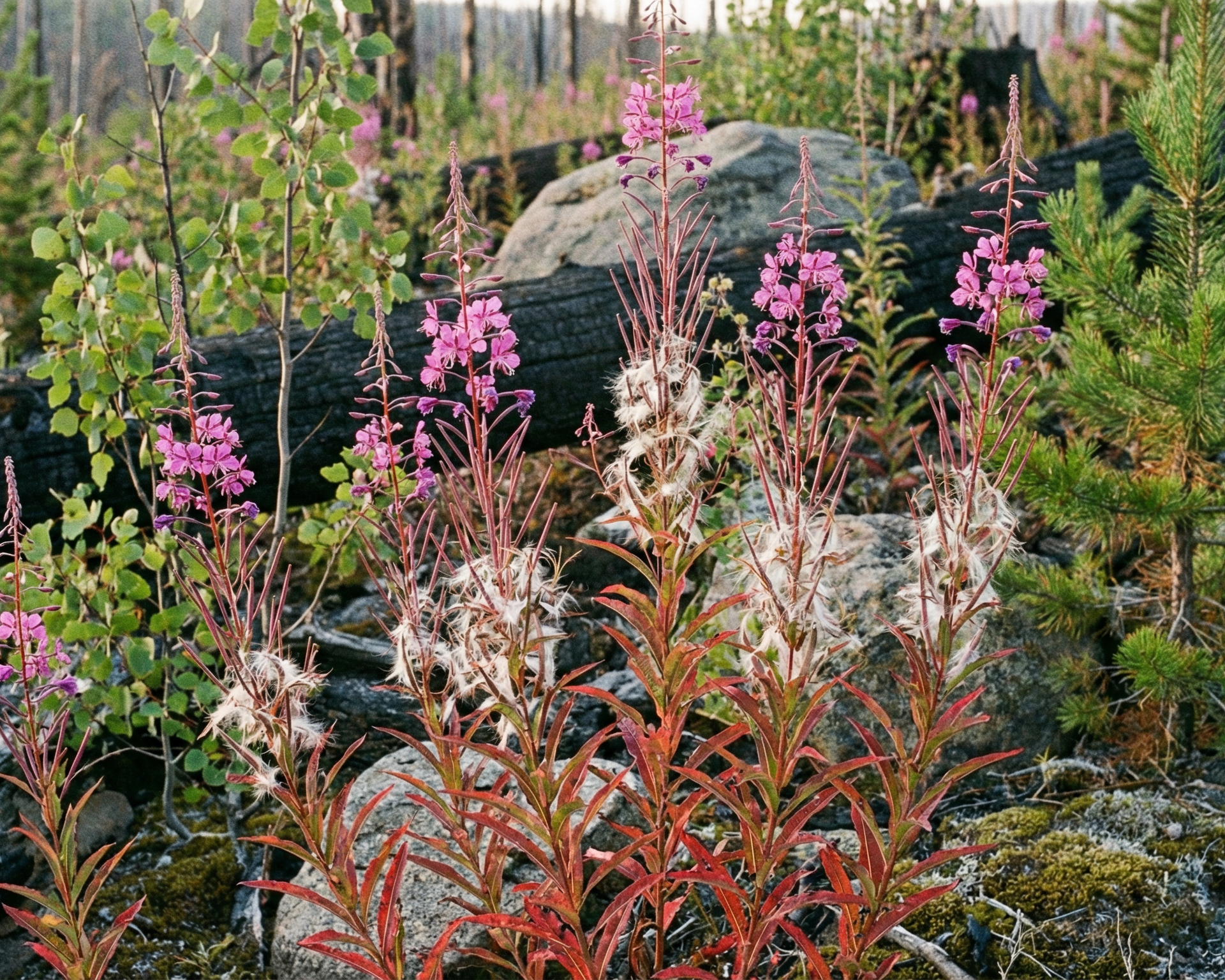
Epilobium spp.
2 nurseries listed
2 nurseries · 5 matching options
Portland, OR
2 options
Call for pricing
Catalog checked Oct 4, 2026. Confirm availability before visiting.
Rhinebeck, NY
3 options
Call for pricing
Catalog checked Oct 4, 2026. Confirm availability before visiting.
Showing 1–2 of 2 nurseries
Willowherb, scientifically known as Epilobium, is a genus of about 197 species of flowering plants in the evening primrose family, Onagraceae. The name Epilobium comes from the Greek words "epi" (upon) and "lobos" (a lobe), referring to the position of the petals above the ovary. The genus has a worldwide distribution, most prevalent in subarctic, temperate, and subantarctic regions. In subtropical and tropical areas, they are restricted to cooler, montane biomes. Many species are known as "willowherbs" because of their willow-like leaves. The genus now includes plants formerly classified under Boisduvalia, which are sometimes called "spike-primroses" or "boisduvalias". Willowherbs are mostly herbaceous annual or perennial plants, with a few subshrub species. Their leaves are typically simple, ovate to lanceolate, and arranged oppositely or in whorls. The flowers are generally radially symmetrical with four notched petals, usually small and pink, though some species have red, orange, or yellow flowers. The fruit is a long, slender capsule that contains numerous seeds. These seeds are embedded in fine, silky fluff, which allows for effective wind dispersal. Willowherbs are known for their ability to quickly colonize large areas of ground and can become dominant species in their local ecosystems. Several species of Epilobium have a history of use by humans. Epilobium angustifolium, commonly known as fireweed, is used as a sweetener in northwestern North America in various food products like candy, jellies, and syrups. Its young leaves, roots, and shoots are also edible and rich in vitamins. In traditional medicine, Epilobium has been used as a herbal supplement for treating prostate, bladder, and hormone disorders. Extracts have been reported to have anti-inflammatory, antibacterial, and anti-aging properties. Some species are cultivated as ornamental plants, but they can also be invasive weeds in gardens and nurseries.