Just Fruits and Exotics
Crawfordville, FL
1 option
From $19.99
Catalog checked Oct 1, 2026. Confirm availability and delivery area.
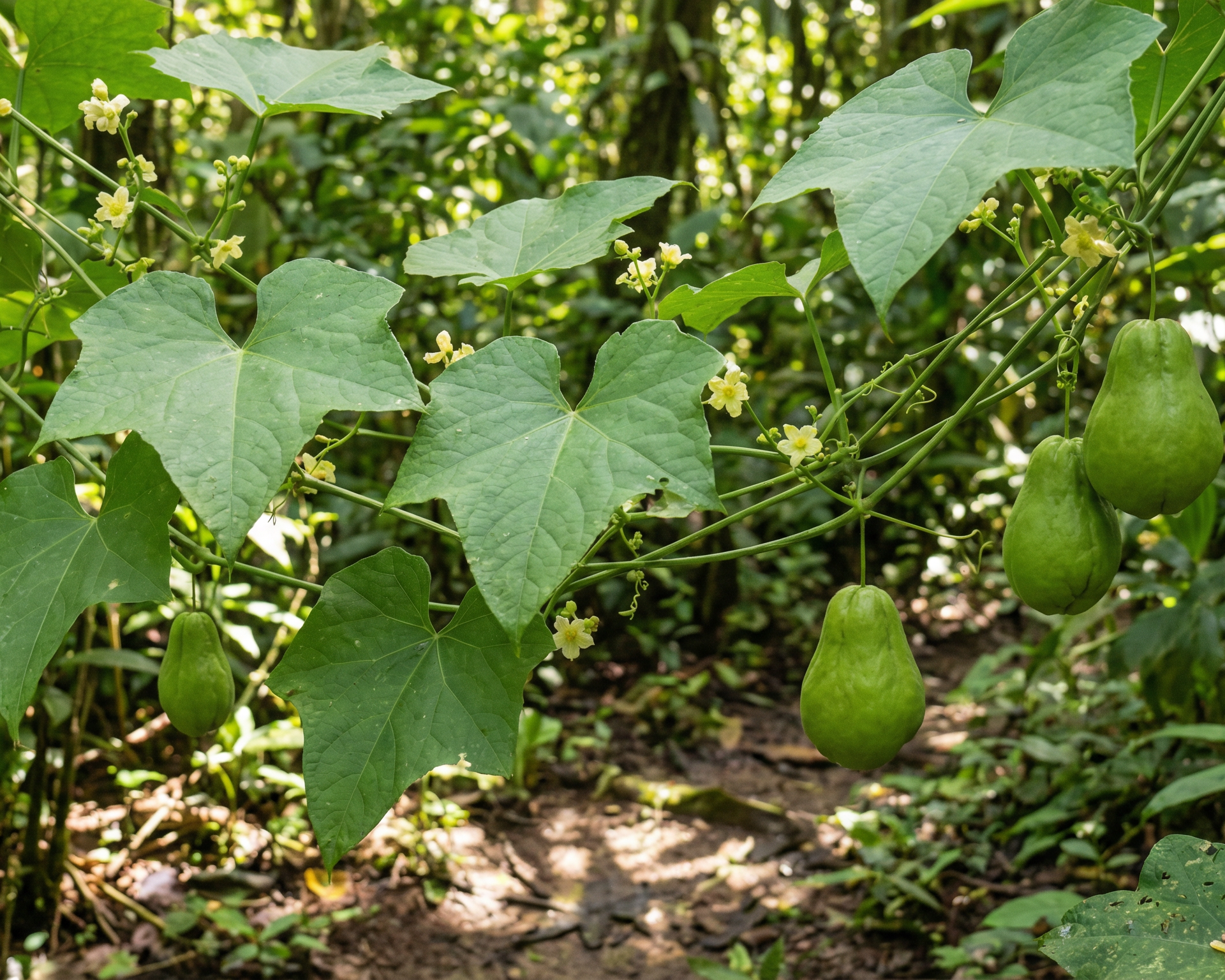
Sechium edule
1 nursery listed
Nurseries with recorded shipping, across all locations. Confirm delivery to your address and availability on the nursery website.
1 nursery · 1 matching option
Crawfordville, FL
1 option
From $19.99
Catalog checked Oct 1, 2026. Confirm availability and delivery area.
Showing 1–1 of 1 nurseries
Chayote (Sechium edule), a member of the gourd family Cucurbitaceae, is an edible plant that originated in Mesoamerica, specifically between southern Mexico and Honduras. Though the genus Sechium is now often included within the genus Sicyos, Chayote remains the common name for this widely cultivated species. It is known by various names around the world, including christophine, mirliton, and vegetable pear. As a food source introduced to the Old World during the Columbian Exchange, it has since been integrated into the cuisines of many tropical and subtropical regions globally. The plant is a vigorous, sprawling perennial vine with large, tuberous roots. It climbs with the help of tendrils and requires a trellis or other support for optimal growth. The leaves are heart-shaped, and the plant produces small, typically white to greenish-white flowers. The most recognizable part of the plant is its fruit, which is typically pear-shaped, with pale green, often ridged or furrowed skin. The flesh is crisp and white, containing a single, soft, edible seed. While the fruit is the most common part consumed, the starchy, tuberous roots, young stems, and leaves are also edible and used in various culinary preparations. Chayote is a versatile vegetable with numerous culinary applications. The fruit is most often cooked and can be handled like a summer squash, being boiled, stuffed, mashed, baked, fried, or pickled. Its mild flavor allows it to absorb the tastes of other ingredients, making it a valuable addition to soups, stews, and stir-fries. Raw chayote can be added to salads and salsas, often marinated in citrus juice to enhance its flavor and texture. The tuberous roots are prepared similarly to potatoes, while the tender shoots and leaves are popular in Asian cuisine, often used in salads and stir-fries. For successful cultivation, Chayote thrives in warm climates with high humidity and ample rainfall. It prefers humus-rich, well-drained soils with a slightly acidic to neutral pH. The plant is not frost-tolerant and grows best in temperatures between 13–21°C (55–70°F). Propagation is unique in that the entire fruit is planted, as the seed germinates within it. A strong trellis is essential to support the climbing vine, which can grow to a considerable length. With proper care, a single Chayote plant can be highly productive, yielding a large number of fruits throughout its growing season.
Explore the complete plant collection, including varieties with no nursery listings yet. Counts reflect your location and shopping filters.