- Sun
- Full Sun, Partial Sun, Partial Shade
- Water
- Regular
- USDA zones
- 3-11
Perilla
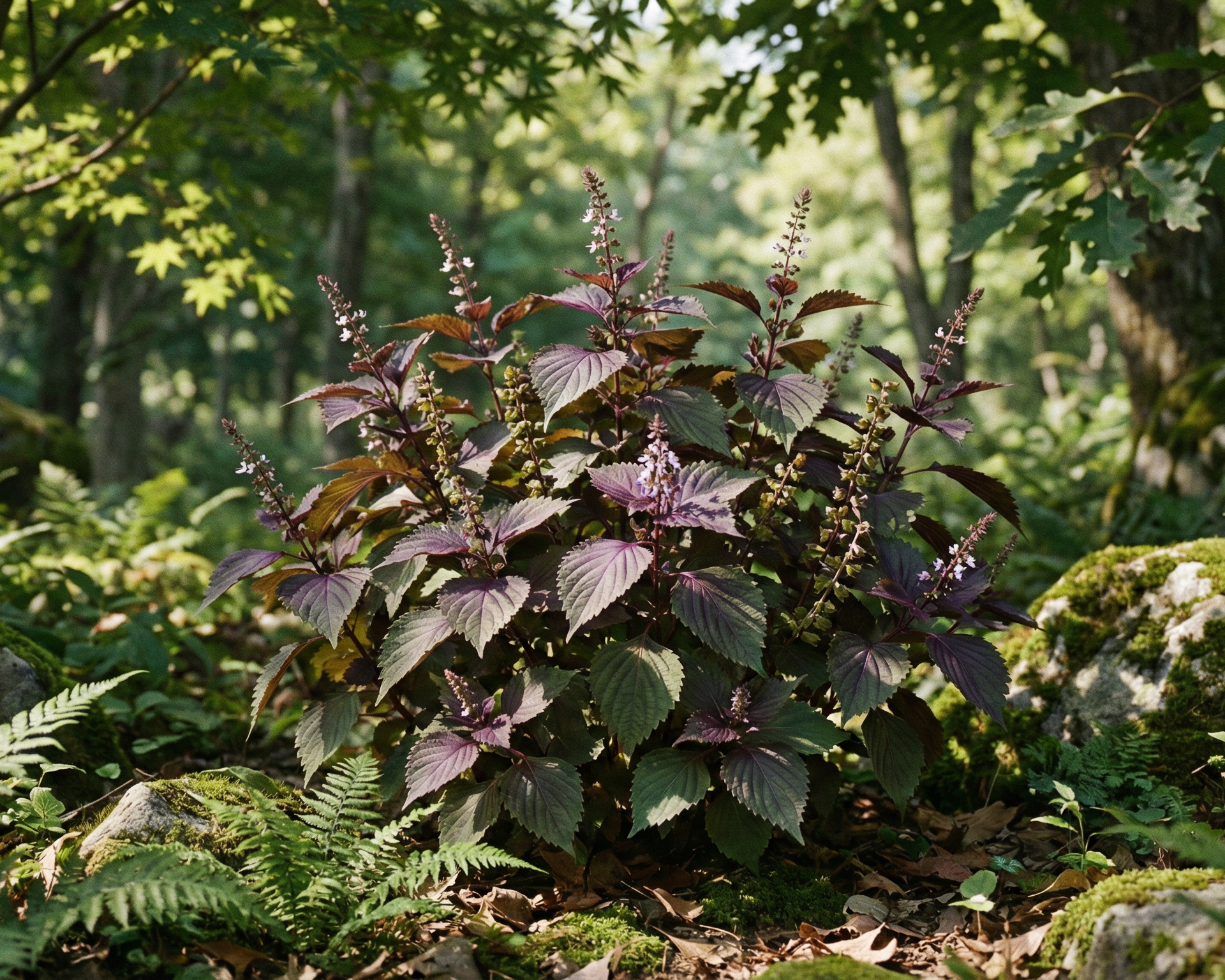
Perilla frutescens
Perilla is a genus of annual herbs in the mint family, Lamiaceae, native to mountainous regions of Asia. Read more
Compare nurseries
1 nursery · 1 matching option
1 location on the map. Select a marker or a nursery to compare.
Preparing the map…
Your location isn’t saved. Confirm availability and visiting hours with the nursery.
Variety guides
Explore the complete plant collection, including varieties with no nursery listings yet.
Not yet listed: Atropurpurea, Bicolored Shiso, Britton, Magilla, Magilla Vanilla, Virginia Beach Feral
0 nurseries listed
About Perilla
Perilla is a genus of annual herbs in the mint family, Lamiaceae, native to mountainous regions of Asia. While the genus technically includes a few wild species, it is overwhelmingly dominated by its single cultivated species, Perilla frutescens, which has a long history of use in culinary and traditional medicine practices across East and Southeast Asia [1]. The plant is known by various common names, with "shiso" referring to the Japanese variety and "perilla" or "beefsteak plant" used more broadly [2].
Morphologically, perilla plants are characterized by their square stems and opposite leaves, typical of the mint family. The leaves are broadly ovate, with serrated edges, and can be either green or a deep reddish-purple, depending on the cultivar. The plant produces small, inconspicuous flowers in terminal spikes. Its flavor is complex and distinct, often described as a combination of mint, basil, and anise or licorice, which makes it a versatile ingredient in the kitchen [3].
The culinary uses of perilla are extensive. The leaves are used fresh as a wrap or garnish, or cooked in soups and stews. In Korean cuisine, perilla leaves (known as kkaennip) are a staple, often used in kimchi or as a wrap for grilled meat. The seeds are pressed to produce a rich, nutty oil that is used for cooking and as a flavoring agent. Beyond its culinary significance, perilla has a prominent place in traditional medicine. The leaves, stems, and seeds are all utilized for their purported health benefits, which are now being explored by modern scientific research [4].