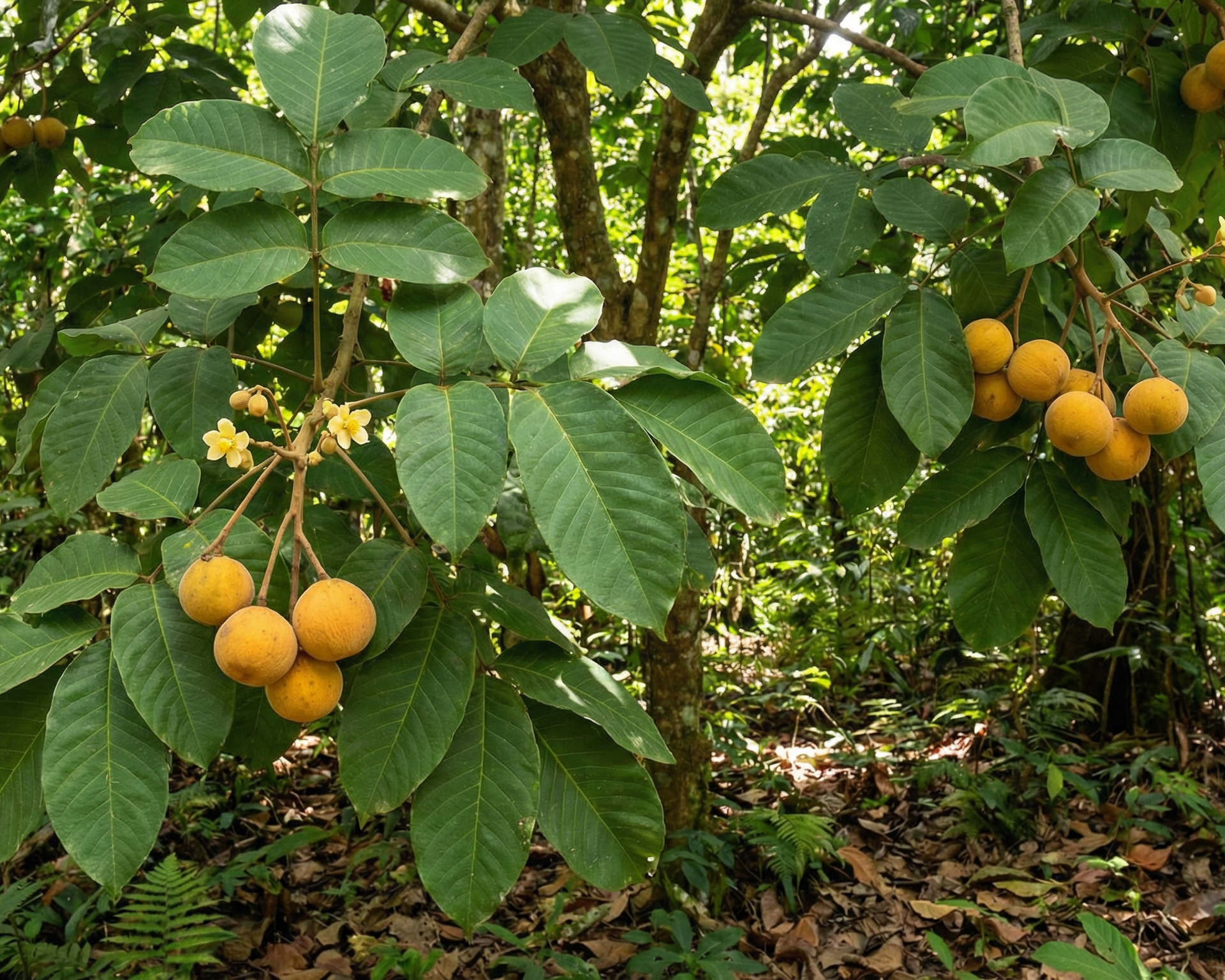
Santol (cotton fruit)
Sandoricum koetjape
1 nursery listed
Compare nurseries
Nurseries with recorded shipping, across all locations. Confirm delivery to your address and availability on the nursery website.
No nursery options match these filters
Try another size or variety, or broaden your location. Options with unconfirmed variety names are included when All varieties is selected.
About Santol (cotton fruit)
Santol Sandoricum koetjape, commonly known as Santol or Cotton Fruit, is a tropical fruit tree belonging to the mahogany family, Meliaceae. Native to maritime Southeast Asia, including the Philippines and former Indochina, this fast-growing tree is now cultivated throughout the region for its edible fruit, durable timber, and ornamental value. The tree is a significant part of the local ecosystem and economy, with its fruits being a seasonal favorite in many local and international markets. The Santol tree is a large, semi-deciduous tree that can reach heights of up to 50 meters. It has a straight to sometimes fluted trunk and a dense, narrow crown. Its leaves are trifoliate, with three leaflets that are shiny green on the upper side and pale green with fine hairs on the underside. Before falling, the leaves turn a vibrant red-yellow, adding to the tree's ornamental appeal. The tree produces small, fragrant, yellow-green flowers that grow in clusters. The fruit is a round, yellowish-orange drupe, often the size of a small apple or peach, with a skin that can be either thin or thick depending on the variety. Inside, the fruit contains a sweet or sour, white, translucent pulp surrounding 2-5 large, inedible brown seeds. The Santol fruit is versatile in its uses. The ripe pulp is eaten raw, with or without spices, or cooked into jams, jellies, and marmalades. In Filipino cuisine, the grated rind is cooked in coconut milk to create a dish called sinantolan, and the sour, unripe fruit is used as a souring agent in soups like sinigang. In Thai cuisine, unripe Santol is used in salads like som tam and in various curries. Beyond its culinary uses, the Santol tree has a long history of use in traditional medicine. Various parts of the plant are used to treat a range of ailments, and scientific studies have suggested that extracts from the tree may have anti-inflammatory and anti-cancer properties. The wood, known for being easy to work with, is used in construction, for furniture, and as a source of fuel. Santol trees thrive in the humid tropics, from sea level to elevations of 1,000 meters. They are well-suited to areas with evenly distributed rainfall but can also tolerate long dry seasons. The tree prefers deep, well-drained, organic soils and full sun, although it can tolerate some shade. Propagation is typically done by seed, with trees bearing fruit within 5-7 years, though some cultivars can produce fruit in as little as 3-4 years. A mature tree is highly productive, capable of yielding between 18,000 and 24,000 fruits annually.
Plant facts
- Sun
- Full Sun, Partial Sun
- Water
- Regular, Drought Tolerant
- USDA zones
- 10-12
- Lifecycle
- Perennial
Variety guides
Explore the complete plant collection, including varieties with no nursery listings yet. Counts reflect your location and shopping filters.