Parsley
Petroselinum crispum
24 nurseries listed · 2 named varieties
Compare nurseries
Nurseries with recorded shipping, across all locations. Confirm delivery to your address and availability on the nursery website.
No nursery options match these filters
Try another size or variety, or broaden your location. Options with unconfirmed variety names are included when All varieties is selected.
About Parsley
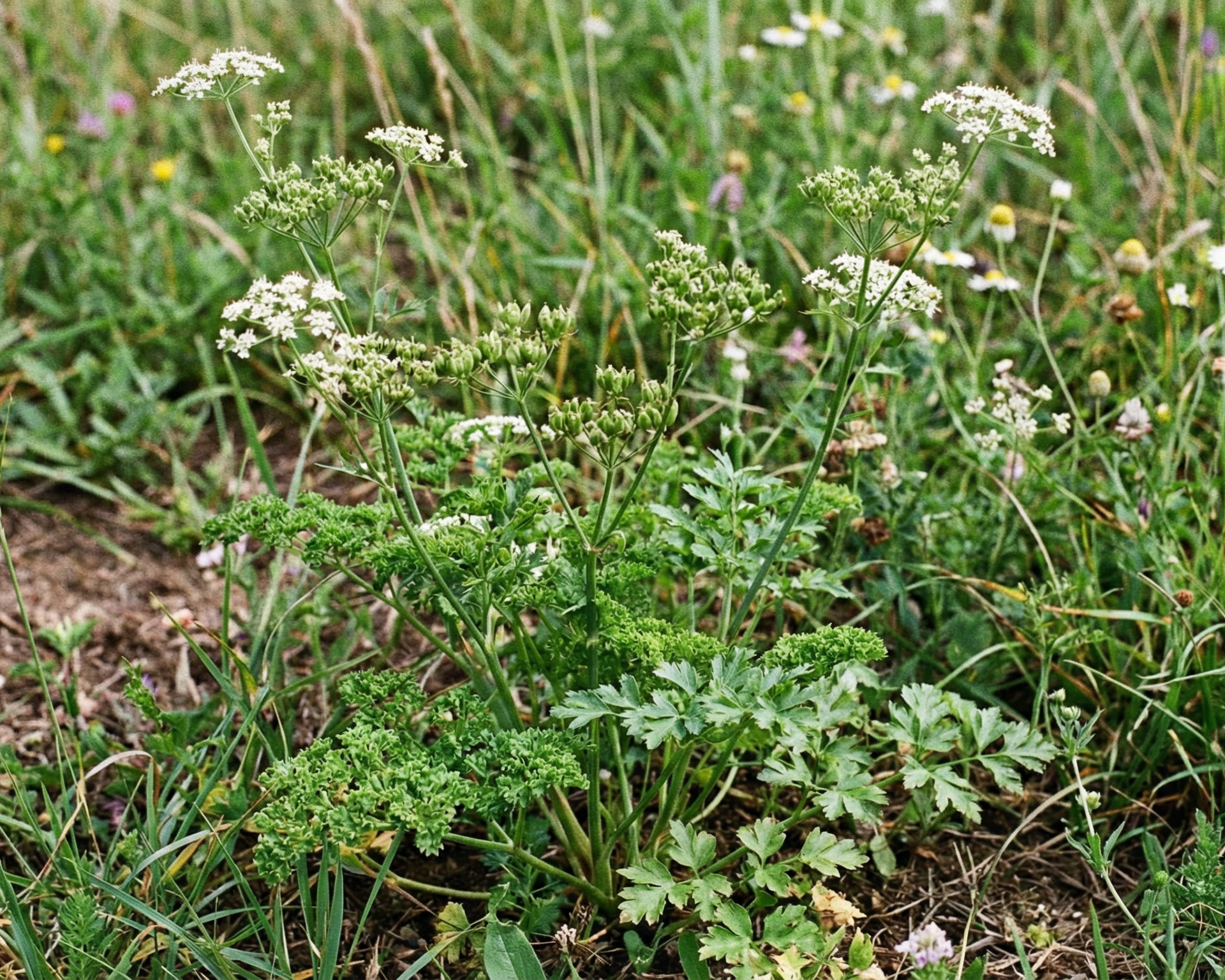
Parsley (Petroselinum crispum) is a popular biennial herb belonging to the Apiaceae family, which also includes carrots, celery, and dill. Native to the central and eastern Mediterranean region, parsley is now cultivated worldwide for its aromatic leaves, which are used as a fresh or dried culinary ingredient and garnish. The genus name Petroselinum is derived from the Greek words "petros," meaning rock, and "selinon," meaning celery, as it was often found growing on rocky hillsides in Greece. While there are a few species within the genus, the most common and widely recognized is Petroselinum crispum, which has two main varieties: the curly-leaved parsley and the flat-leaved or Italian parsley. The two main varieties of parsley are distinguished by their leaf structure. Curly-leaved parsley (P. crispum) has bright green, finely divided, and tightly curled leaves, making it a popular choice for garnishing. Flat-leaved parsley (P. crispum var. neapolitanum), also known as Italian parsley, has flat, serrated leaves and a more robust flavor, which makes it a favorite for cooking. Parsley plants grow in a rosette of leaves in their first year. If left to overwinter, they will send up a flowering stalk in their second year with small, yellow-green flowers that grow in umbels, characteristic of the Apiaceae family. Parsley is a versatile herb with a wide range of culinary applications. Its fresh, slightly peppery flavor complements a variety of dishes, including soups, stews, salads, and sauces. It is a key ingredient in many traditional recipes, such as tabbouleh and chimichurri. Beyond its culinary uses, parsley is also valued for its nutritional and medicinal properties. It is a rich source of vitamins K, C, and A, as well as antioxidants. Historically, parsley has been used in traditional medicine to treat a variety of ailments, including urinary tract infections and kidney stones, although more research is needed to confirm these benefits. Growing parsley is relatively easy, making it a popular choice for home gardens. It thrives in well-drained, rich soil and prefers full sun to partial shade. The plant requires consistent moisture but should not be overwatered. As a biennial, it is often grown as an annual, with seeds sown in the spring. The leaves can be harvested throughout the growing season. Parsley is a valuable addition to any herb garden, providing a continuous supply of fresh flavor for the kitchen.
Plant facts
- Sun
- Full Sun, Partial Sun, Partial Shade
- Water
- Regular
- USDA zones
- 3-9
- Lifecycle
- Biennial
Variety guides
Explore the complete plant collection, including varieties with no nursery listings yet. Counts reflect your location and shopping filters.
- Curled Leaf0 nurseries listed
- curly leaf0 nurseries listed
- Dark Green Italian0 nurseries listed
- Dark Green Italian Plain0 nurseries listed
- flat leaf0 nurseries listed
- Forest Green0 nurseries listed
- Gigante D'Italia0 nurseries listed
- Hamburg0 nurseries listed
- Improved Market Gardeners0 nurseries listed
- Italian0 nurseries listed
- Italian Dark Green0 nurseries listed
- Italian Large Leaf Organic0 nurseries listed
- Jade0 nurseries listed
- Mersin0 nurseries listed
- Moss Curled0 nurseries listed
- South Ossetia0 nurseries listed
- Triple Curled Organic0 nurseries listed
- Wega0 nurseries listed